Clodagh Finn: Time to recall our overlooked female conductors and composers
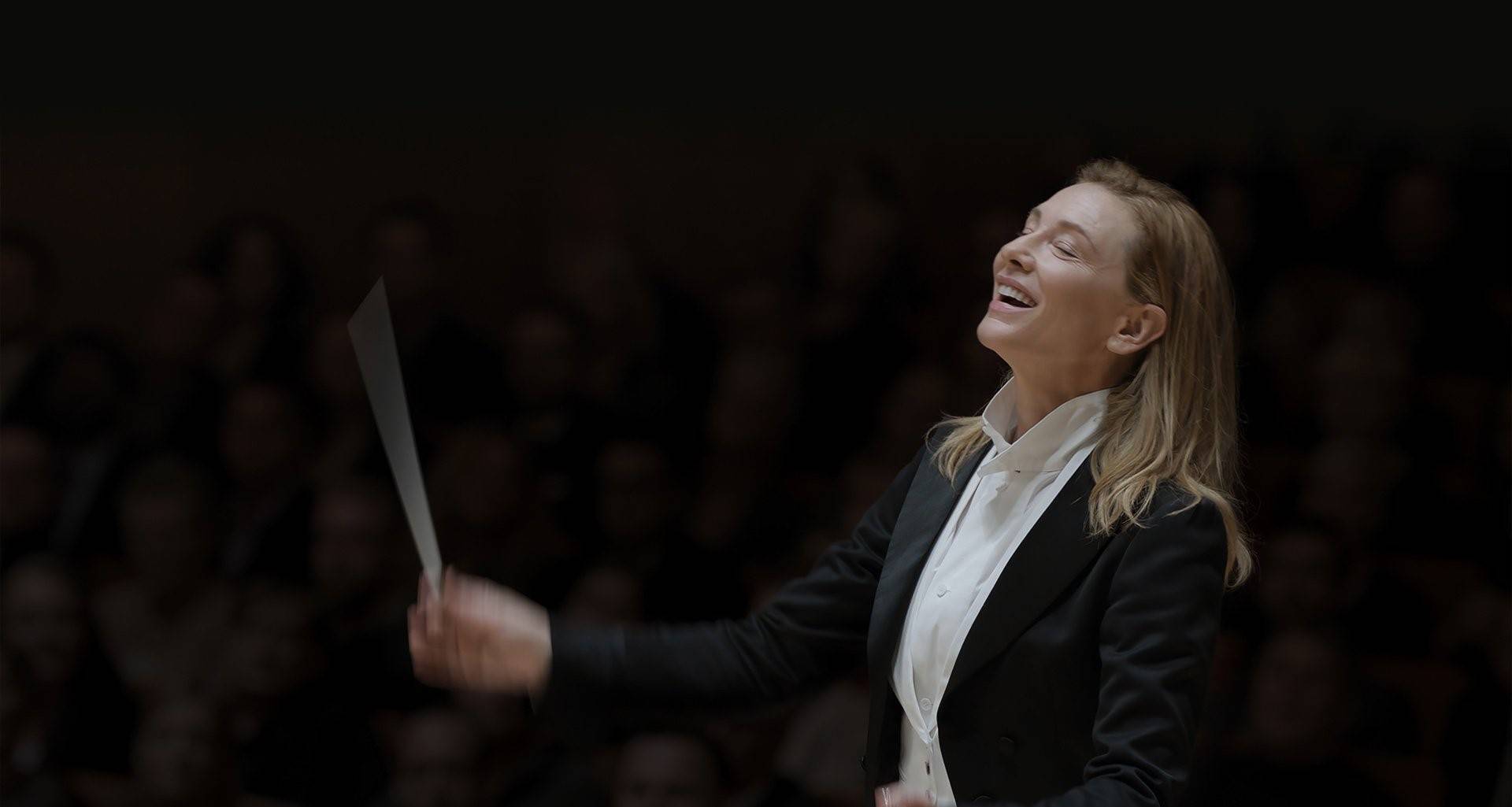
Tár stars Cate Blanchett as Lydia Tár, a distinguished composer.
I wonder how many are familiar with the name Alicia Needham, the world-renowned Irish composer and one of the first women to conduct at the Royal Albert Hall in London more than a century ago?
I thought of her taking the baton in 1914 at the St Patrick’s Day Grand Irish Festival performance — and the impact of that — following the release yesterday of the mesmerising starring Cate Blanchett as a distinguished (and predatory) conductor.
The number of women who make it as conductors is still a short and shimmering list, to quote a line from the film, but in 1914 only three other women had conducted at the Royal Albert Hall before Meath-born Alicia Adelaide Needham, to give her her full name.
During her lifetime, she was widely celebrated and was regularly referred to as “the greatest Irish woman composer of the day”. When she converted to Catholicism in 1934, one newspaper described her, in glowing terms, as a pianist, composer, and conductor.
It read: “Mrs Needham has composed no fewer than about 700 Irish songs, song-cycles, marches and hymns. One of her best-known musical compositions is My Dark Rosaleen. But she has not confined herself to Irish songs. She has composed 100 songs for American public schools, 50 French songs, and 50 Christmas carols.”
There were prizes too; one of £100 for writing the best song for King Edward Vll’s coronation in 1902. And there were honours. She was the first female president of the National Eisteddfod of Wales, a cultural festival, in 1906.

Little wonder Irish composer Eímear Noone mentioned her when she made history herself by becoming the first woman to conduct an orchestra at the Oscars in 2020.
At the time, the Galway-born conductor said she had recommended Alicia Adelaide Needham for a bust because the life of this conductor, composer (and suffragette) should be much better known.
“I didn’t know she existed,” she said. “I could have looked at her as a child and thought: ‘There! That’s what I want to be like’.”
It is indeed time for a bust. And it is also time to write a more complete history of Ireland’s many overlooked female composers and conductors.
Alicia Needham was far from being the only woman of note, if you pardon the expression, as an appreciation written by S De Maistre in this paper in 1927 beautifully illustrates.
“On Friday night [in Cork],” De Maistre wrote, “I found myself in the presence of two distinguished Irishwomen — the gifted composer, whose songs are known the world over… and that other gigantic worker in the cause of Irish music, Dr. Annie Patterson, who has the proud distinction of being the first woman in the world to gain the title of Doctor of Music in open competition.”
The writer compared Alicia Needham to singers John McCormack and Joseph O’Mara, as she radiated happiness, and continued: “She is a citizen of the world, but she is a Celt first, and if she spoke of celebrities she had met, it was not like the man who tells you that he was cousin to Brian Boru, but rather, that if she met the great ones of the earth, they were not her superiors, but she was their equal.” Why, then, has her name faded from memory?
Annie Patterson is perhaps a little better known as she was one of the main organisers of the first Feis Ceoil when it met in Dublin in 1897.
She was also a respected conductor and conducted the choir that was assembled to sing Gaelic songs when the first Oireachtas, or Irish literary festival, met in the Rotunda, Dublin, in the same year.
She conducted the Dublin Choral Union, too, and the Hampstead Harmonic Society in London in the late 19th century before taking up a post as lecturer in music at University College Cork in 1924.
Another composer with a little-known Cork connection is Augusta Holmès (1847-1903), whose father Charles Holmes (the accent over the ‘e’ appears to have been added later) was born in Youghal.
Her mother discouraged her interest in music, but after her death, Augusta embarked on a career that would see her become a celebrity in Paris.
She held a very popular salon and knew the cultural elite in Europe. Franz Liszt was a friend and he encouraged her to compose, according to Anastasia Belina who is casting more light on this woman as part of a project for the BBC and the Arts and Humanities Research Council.
In her time, though, Augusta clearly had what was needed to make it in a male-dominated profession. “I must show the males what I’m made of!” she once said.
“Her success is strikingly ‘modern’: she was entrepreneurial, and an excellent self-promoter with a highly developed emotional intelligence,” writes Ms Belina.
She also flouted convention. She inherited her father’s fortune so she had means. She published under her own name and had five children with French poet Catulle Mendès, but never married him.
She is certainly worthy of a film in her own right.
But back to the film of the moment, . Expect lots of heated debate ahead of the Oscars about the corrupting influence of power and director Todd Field’s decision, inspired in my view, to cast a woman as a manipulative abuser.

The distorting nature of power goes beyond gender, a point that is perhaps not yet clear enough as we still don’t have large numbers of women in high positions.
Cate Blanchett’s Lydia Tár is an exception. She’s referred to as the maestro and, as the film opens, is lead conductor at the Berlin Philharmonic which is preparing for a live recording of ‘Mahler’s 5th Symphony’.
The film quotes real people and features writer Adam Gopnik playing himself, so it feels as if it is based on a real person, though it is not.
Real-life American conductor Marin Alsop has pointed out that many of Lydia Tár’s superficial aspects echo her own life. She said the character offended her as a woman, a conductor, and a lesbian.
If you see the film, you will have to admit that she has a point. On the other hand, Cate Blanchett has countered that the film is a meditation on power. She, too, is right.
There will be much more on the subject — and here’s to having those testy conversations. My hope for , though, is that it will prompt us to recall the female conductors and composers who passed on the baton to this generation.









