Paul Hosford: Public is right to take interest in what officials declare
Regardless of whether Robert Troy believed the homes should be on the register, it stands to reason that any member of the Oireachtas who has a material or even circumstantial interest in a topic should let the House and, by extension, the public, know about it
Paul Hosford: Public is right to take interest in what officials declare

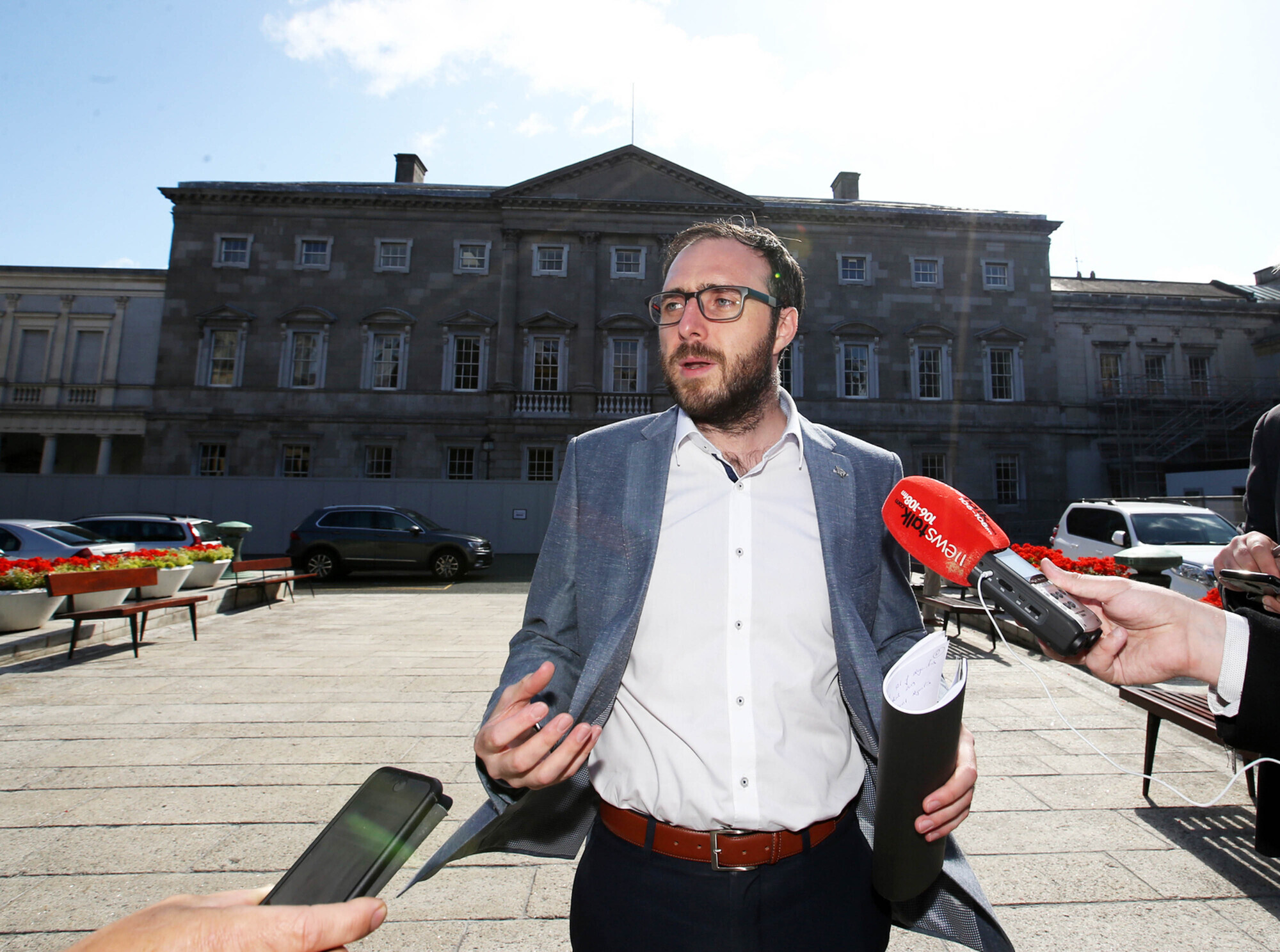
Robert Troy. Picture: Sam Boal/Rollingnews.ie

IN the course of the 30-minute interview with Bryan Dobson on Tuesday which preceded his resignation as a junior minister, Robert Troy illuminated a number of facets of Irish public life.

While much focus was, rightly, put on Troy’s assets, there was an exchange about his use of Dáil speaking time in 2014 to discuss increased funding for the Rental Assistance Scheme, which at the time was a source of income for him.

Troy was adamant that because he didn’t believe the properties were required to be included in the register of members’ interests, he didn’t see why he would tell the Dáil of this situation.

Dobson: When you were availing of the RAS, were you availing of it when you spoke in the DĂĄil when you called for increased funding?

Troy: I think what we have to put in context is the debate on the Housing Miscellaneous Bill in 2014. And that bill, I took the opportunity to speak on a range of issues — the Tenant Purchase Scheme, antisocial behaviour, domestic abuse.

Dobson: Let’s stick to RAS. You were availing of RAS when you spoke in relation to the scheme in the Dáil.

Troy: At that time, I had two RAS schemes, yes.

Dobson: Did you declare that income at the time?

Troy: At the time, I didn’t think I had to declare RAS on the members’ interest statement.

Dobson: Leaving that aside, in the course of your speaking to the Dáil on this issue, did it occur to you that you should say ‘actually, I have an interest in this and this is my interest’?

Troy: Well, I don’t think to be frank I can leave it aside. Because if I felt that it was a conflict of interests, I would have declared it...

Dobson: But you didn’t feel like it was a conflict of interests — speaking about the scheme while benefitting from it?

Troy would respond that because he did not believe at the time that RAS properties should be declared — mistakenly, as it transpires — he did not feel the need to tell the House that he would personally benefit from an increase in funding.

Regardless of whether Troy believed the homes should be on the register, does it not stand to reason that any member of the Oireachtas who has a material or even circumstantial interest in a topic should let the House and, by extension, the public, know?

Michael Healy-Rae is consistent about declaring his material interests in debates. 	Picture: Gareth Chaney
Michael Healy-Rae is consistent about declaring his material interests in debates. Picture: Gareth Chaney

It is something that many have done. Michael Healy-Rae, whose members’ interest declaration shows various business and land interests, is consistent about declaring his material interests in debates.

A perusal of the official Oireachtas record shows that Fine Gael senator John McGahon declared an interest in a Seanad debate on transport because he happened to use the Matthews bus service from Dundalk for a number of years.

Cork South West TD Holly Cairns told the Dáil in a March topical issues discussion on agriculture that her family owns “a small seed business”.

Senator Gerry Horkan told the Oireachtas transport committee in a discussion on motor insurance that he buys his insurance from the AA.

Sinn Féin senator Paul Gavan disclosed membership of Siptu, TD Chris Andrews spoke of his work with the Mendicity Institution, and Independent TD Marc MacSharry that he is a licensed auctioneer. And so on.

And these declarations don’t automatically mean that a person should be disqualified from speaking or that their intentions are in any way mendacious. Indeed, in many cases having someone with direct experience of a topic or the consequences of a piece of legislation is immensely helpful.

It is real-time stakeholder engagement and if we accept the bona fides of those involved, their contributions help us form a fuller, clearer picture of the world around them.

But at the same time, it is not much to ask that those who we elect would say openly that they have an interest, vested or otherwise, in a topic. That, surely, is the baseline for transparency in public life.

Some will point to the fact that the register of members’ interests is publicly available and there are rules about what has to be declared. But as the Troy affair has shown, that register is often incomplete and there are things that don’t have to be declared, such as tenancies under the HAP scheme.

The register is also not a rolling document and is published roughly once a year, with TDs and senators able to amend it on an ongoing basis.

In recent months, supplementary declarations have been made by Green Party junior minister Ossian Smyth, who declared a directorship of a company which never traded; Sinn FĂ©in senator Fintan Warfield who began work as a barista in a Dublin cafe; and Independent TD Richard O’Donoghue, who had left a 1.08-hectare site where he cuts hay off his original document.

So, when a member of the Oireachtas speaks on an issue in their respective chamber, there is no way of the public knowing if they have a current interest without the member declaring it.

In any other job, you or I would be expected to make real-time declarations about our interests if they were material or could even be seen to be material to a decision in the workplace.

It should not be the case that TDs and senators can use whether something is declarable on what must be said is a pretty flimsy form for not being open about their dealings.

The issue is not even confined to concerns over actual wrongdoing. The issue is that every time the public — which is already weary about standards in public office — hears about undeclared interests, they lose a little more faith in the transparency of the entire system. And that damages our democracy.

How to address the situation? Handily, there is a template there, if anyone wants to act on it. While Public Expenditure Minister Michael McGrath is overseeing an overhaul of ethics legislation, the latest Standards in Public Office Commission annual report shows that something could have and should have been done a long time ago.

In its annual report, Sipo said despite a Government review of ethics legislation, “major outstanding proposals” have failed to be acted upon, despite many of them being many years old. In total, 49 recommendations have not been progressed.

The Sipo report’s top recommendation is that powers should be given to Sipo to appoint an officer to initiate investigations as opposed to having to wait for a complaint to be made. This would seem like an eminently sensible idea. After all, what good is a watchdog that’s kept in a kennel?

But while the argument about Sipo’s powers is wider, asking TDs and senators to be upfront when speaking to the Houses of the Oireachtas about their interest in a subject is a simple idea — it’s better for transparency and for democracy.

x

More in this section

Revoiced

Newsletter

Sign up to the best reads of the week from irishexaminer.com selected just for you.

Cookie Policy Privacy Policy Brand Safety FAQ Help Contact Us Terms and Conditions

© Examiner Echo Group Limited