Clodagh Finn: Let me show you why Ireland's Heritage Week is my favourite week of the year
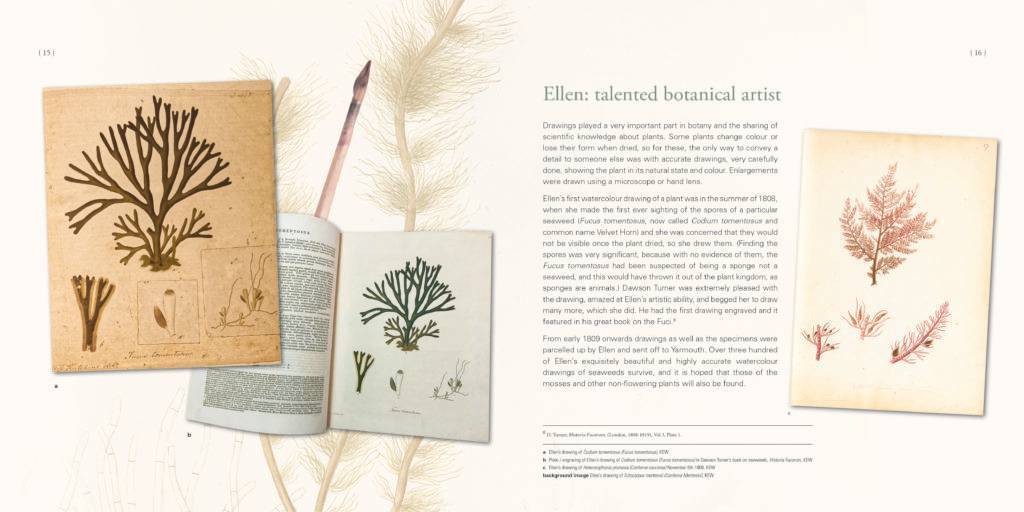
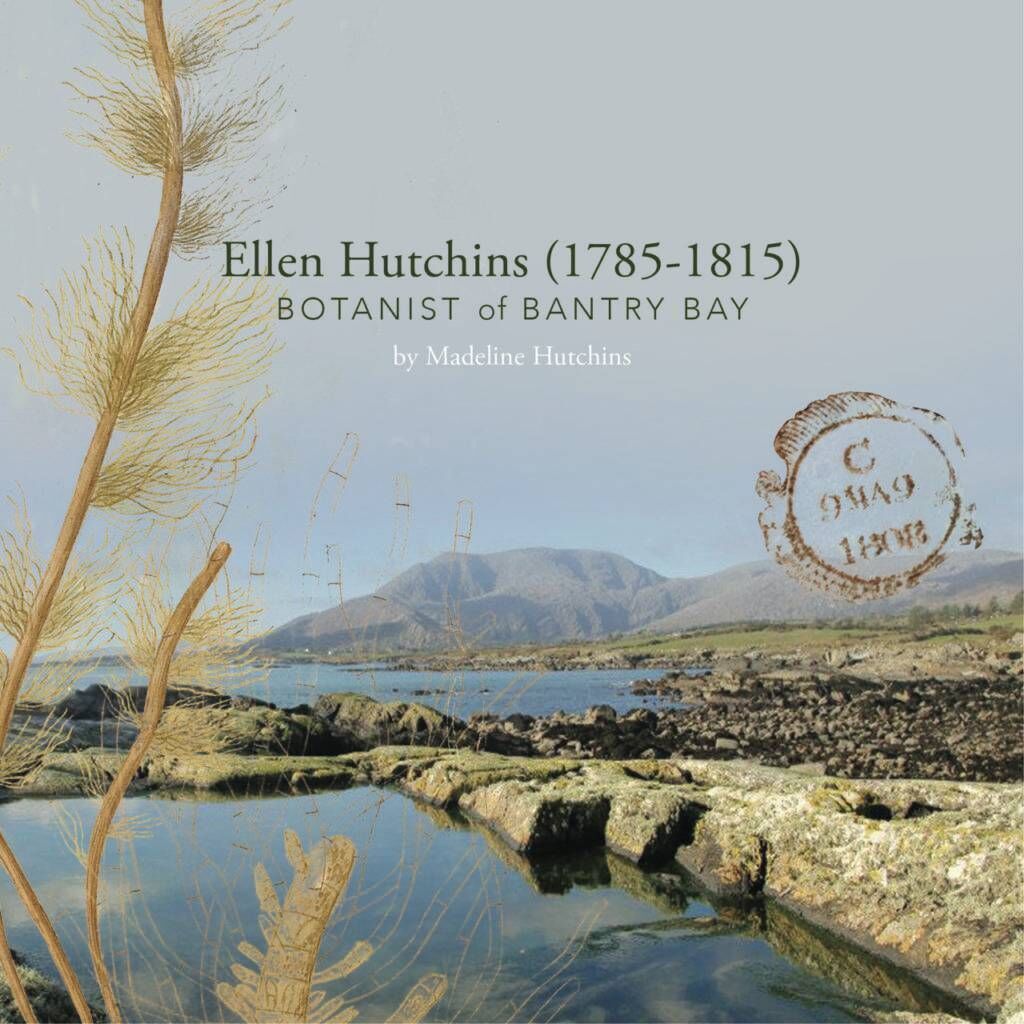
Original drawings by the groundbreaking botanist Ellen Hutchins are beautifully presented in the book by her great, great, grand-niece, Madeline Hutchins.

When I think of Ellen Hutchins, Ireland’s first female botanist and the focus of a festival during this year’s Heritage Week, I always wonder how she felt when she made that bone-jolting journey home in the early 1800s.
Her niece, Alicia Maria Hutchins, described it in such evocative detail that the image of men filling boggy potholes with furze branches and stones so the carriage could continue on its long journey from Dublin to West Cork stayed with me.
But more than that, it was the thought of a teenage Ellen Hutchins returning home to care for her grand-aunt Bel, who had not left her room in three years, her brother Thomas, who had been paralysed as a schoolboy after a fall on ice, and her elderly mother that made the deepest impression.
She had just recovered from her own illness, which today we might refer to as an eating disorder. At the time, however, her disinclination to eat was caused, her niece thought, by the simple fact that she had been “insufficiently fed” at boarding school in Dublin — “healthy appetites not being considered ladylike”, as her niece described it.
A physician and family friend, Whitley Stokes, gradually nursed Ellen back to health at his home in Harcourt St in Dublin. He was also the one who nurtured her interest in botany, an interest she would go on to develop to make an internationally important contribution to science.
Yet, sometime in the early 1800s, as she made that arduous journey home, Ellen Hutchins must have wondered how she would carry out her familial duties. It was expected of a young woman, of course, but by any standards she faced a demanding situation.
She describes the difficulties herself in one of hundreds of surviving letters: “My poor brother requires to have me always near to write for him and attend him in all the little matters that make him comfortable and that no person who has not nursed the sick can imagine.”
Aunt Bel died shortly after she arrived home, reportedly at the age of 100, and later Ellen had to contend with her own ill health. She described it as her “bilious complaint”. It’s not clear what the illness was, but her health deteriorated further as she was treated with mercury.
And yet, in seven short years, she established herself as Ireland’s first female botanist, discovered many plants new to science, earned the respect of international botanists — and a place in history.
At least her niece, Alicia Maria, believed her aunt’s botanising adventures around the shores of Bantry Bay and in the Caha mountains between 1805 and 1813 were worthy of note, although she tried many times, without success, to get her story published.
Many decades later, another niece, this time a great, great, grand-niece Madeline Hutchins, had more success and deserves her own place in history for bringing the story of our first female botanist to so many.
Bantry Historical Society, too, deserves huge credit as it initiated the first Ellen Hutchins Festival in 2015, an event that illustrates what can happen when you cast a light on a different aspect of Irish history.
The story of Ellen Hutchins is now relatively well known but, this National Heritage Week, it is worth taking stock of how her story has resonated so deeply.
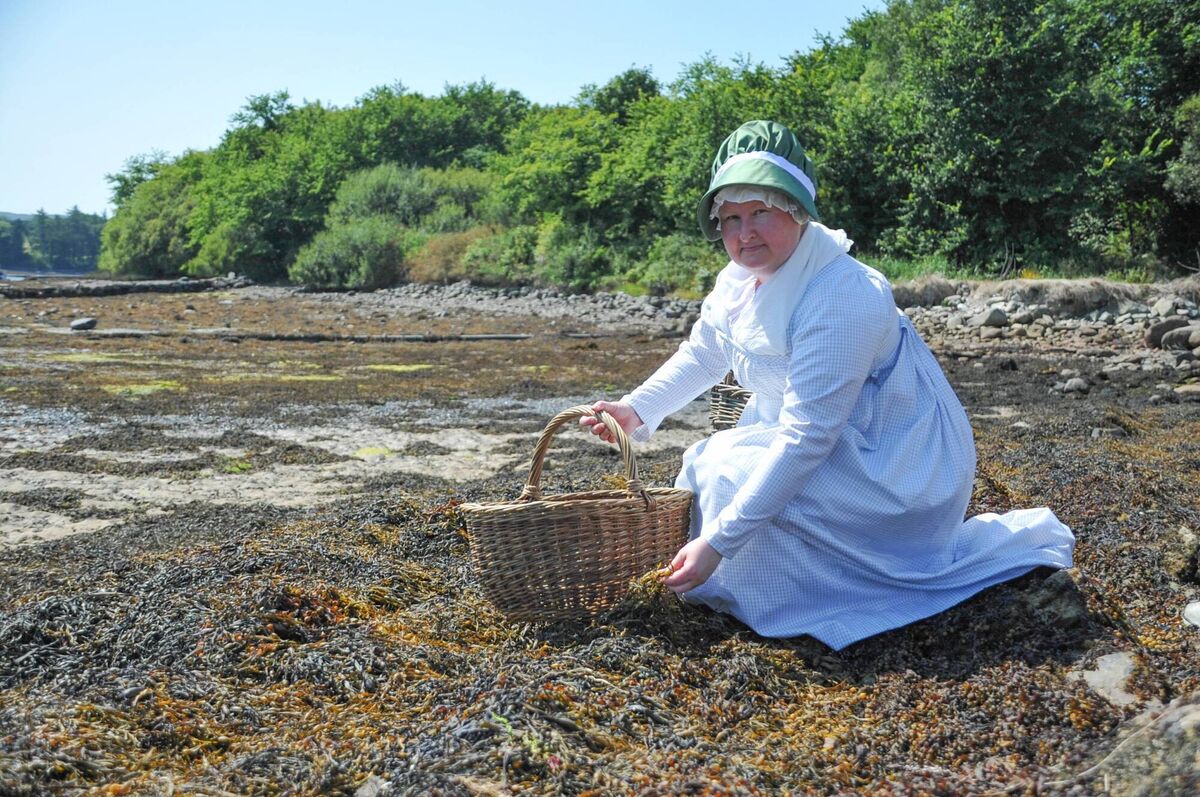
She has inspired a festival which, in turn, has generated more widespread interest in the plant specimens that gave her such solace during her short 29 years on earth. She called the non-flowering plants she studied — seaweeds, lichens, mosses, and liverworts — her “dear friends” and “exquisite little beauties”.
That in itself fulfils the Heritage Council’s stated aim for the 1,700 in-person events and digital projects taking place around Ireland this week — “to look to the past to create a more resilient future”.
What better way to nurture an interest in our poor scorched planet than to look at the seaweeds, mosses and other treasures in the waters around Bantry Bay with the respectful, appreciative eye of Ellen Hutchins.
In one letter, dated December 7, 1812, to fellow botanist Dawson Turner, she writes that she is glad he likes the sample of moss she sent him: “You could not but like so wonderful a plant. I spent five days admiring it and often wished your eye had been in place of mine.”
How different our ailing planet might look if everyone had even a fraction of the respect Ellen had for the wonders of the natural world.
More than that, the retrieval of her story has already enriched the present day by inspiring a number of writers, poets, and artists to draw on an experience that is too often lost to us.
Little wonder there is such hunger to represent the life of a talented young woman living at the start of the 19th century because it is a voice we so seldom hear.
The focus is too often elsewhere. In Ellen’s case, on her father Thomas Hutchins, a magistrate and landowner. Or on the dispute between her brothers Emanuel and Arthur which, at one point, caused a local sensation when 40 armed men stormed Ballylickey House to evict one of the brothers (it’s not clear which one was in residence at the time).
This Heritage Week, however, it is a singular joy to reflect on all the new stories that are being told, each one fleshing out our history and reminding us that our past is far more diverse than we imagine it.
It is especially illuminating to read not of the exploits of Ellen’s brothers but of her relationship with them.
The 2022 Ellen Hutchins Festival takes place 13th-21st August in and around Bantry. There are walks, talks, craft events, botanical art workshops, a kayaking trip, a short play, Wild Child Day activities and more! Click on the link for full events list.https://t.co/OJXnPIfgot pic.twitter.com/LyPpBBVJV9
— Ellen Hutchins Festival (@hutchins_ellen) July 25, 2022
At one point, she wrote to her eldest brother Emanuel seeking his advice because botanists in the UK wanted to name her as the discoverer of a new plant.
She wrote: “I beg you to tell me what I should do… I hope you will excuse my troubling you on this subject & that you will tell me what is right for me to do.”
When she heard nothing from him, she wrote to her youngest brother Sam, who was still at school and living with Emanuel in London: “I wrote to Manny [Emanuel] some time ago but as he has a habit of putting letters in his pocket without opening, I fear he has not read mine — will you ask him?”
A month later, she still hasn’t heard from either brother and wrote to Sam again.
The exchanges would make your blood boil. There are earlier ones where she asked them to send her books on botany, or at least to enquire about them. Those letters, too, often went unanswered.
If advice was finally forthcoming, there is no record of it. But, in December 1807, Ellen wrote to her friend Dawson Turner, giving him permission for her name to be published.
It is one small victory, singing to us down through the centuries.
Go out and attend some of the myriad events taking place this Heritage Week to hear so many more.
• Discover more about Ellen Hutchins at www.ellenhutchins.com where you can also buy items including prints of her original drawings, and the book, .
CONNECT WITH US TODAY



Be the first to know the latest news and updates