Maeve Higgins: Young activist willing to go to jail in her fight to save the planet

'What the Government is doing now is killing people with its inaction, and challenging that is right, and it is just. And if that means getting arrested, that’s neither a good or a bad thing'
Maeve Higgins: Young activist willing to go to jail in her fight to save the planet

Orla Murphy with fellow Extintion Rebellion activist Zac Lumley outside the Criminal Courts of Justice with other supporters where they appeared in relation to an alleged paint attack on the Department of Foreign Affairs. Picture: Colin Keegan, Collins Dublin

At 21 years old, with multiple arrests and court appearances, and five weeks in prison behind her, Orla Murphy’s life is different from the one she had imagined for herself growing up in Whitechurch, Cork. 

“I’m from a middle-class family, my dad is a dairy farmer, and my mam is a nurse. I don’t think I even know anyone who has been arrested before.”

Last week she was convicted of causing criminal damage to Iveagh House, which holds the Department of Foreign Affairs after she painted “No more empty promises” on the building last year. She was fined and ordered to pay compensation of €2,000. 

Murphy told me: “This isn’t what I thought my life would look like. I didn’t think I’d be thinking like this; it’s just the context.”

The context she means is the global climate crisis.

The planet is burning and flooding because of human-caused climate chaos. You already know that the future of our species, and millions of other species too, hangs in the balance. 

In this historic year of record high temperatures and ever-increasing numbers of people killed by sudden climate events like wildfires and hurricanes, as well as the longer-term but equally deadly repercussions of global warming like air pollution and pregnancy complications, we all understand that there is a crisis.

Direct action

Yet only some are moved to take direct action that risks arrest and imprisonment to force everyone — and ultimately politicians — to stop making it worse.

Around the world, the number of people taking direct action is growing by the day. In Canada, indigenous people have been camping out on their land to prevent a massive fracking operation. 

In Ecuador, thousands dedicated themselves to a general strike, one of their core demands is a halt to extractive industries. 

In the past weeks, two women in Glasgow glued their hands to the frames around artworks in galleries to protest the British government’s commitment to the fossil fuel industry.

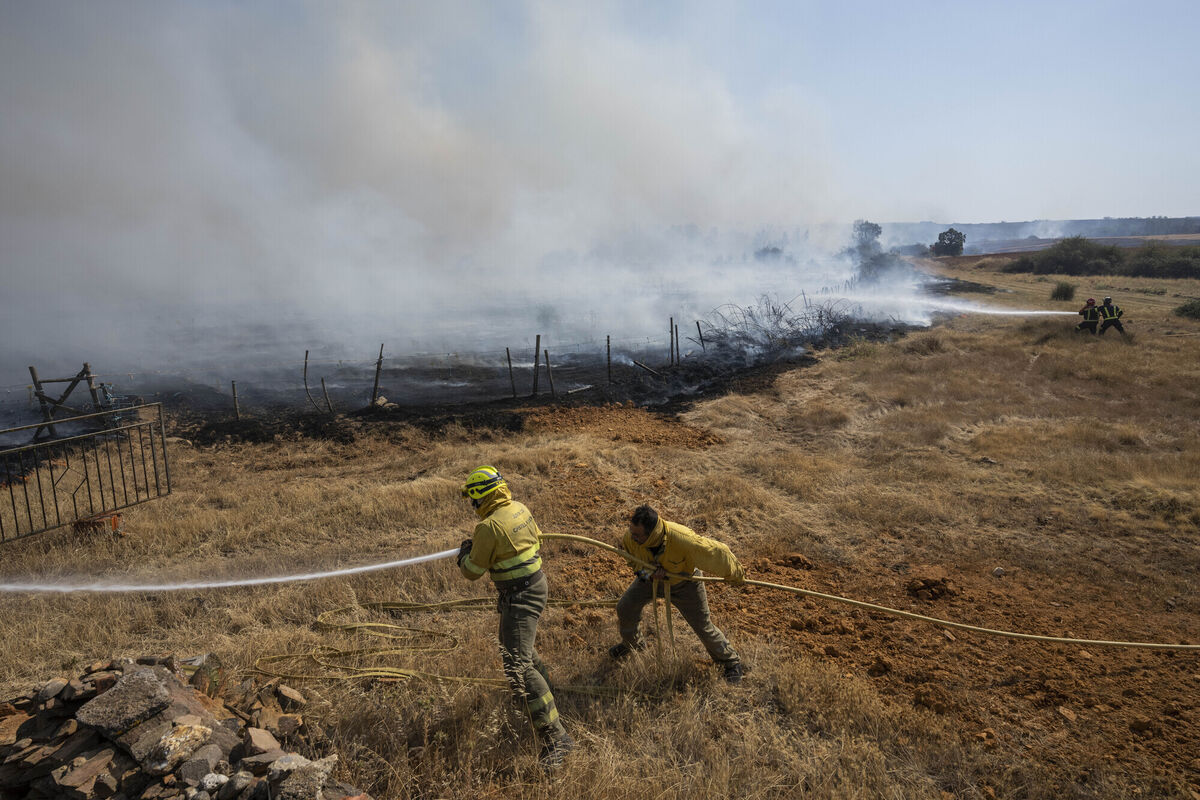
Firefighters work at the scene of a wildfire in Tabara, north-west Spain, last week. Picture: AP Photo/Bernat Armangue

Thousands of miles away in Sydney, dozens sat down on the roads and the entrance to the harbour tunnel to call their government to task. Many of these activists are of a similar age to Orla Murphy and younger, which makes sense considering their generation came of age during this mass extinction event.
Murphy was not yet born when Simon Coveney first took office as a TD. In the weeks leading up to her direct action, she listened to a warning from the biologist and broadcaster David Attenborough.

“If we continue on our current path we will face the collapse of everything that gives us our security: food production, access to fresh water, habitable ambient temperature and ocean food chains,” he said, speaking at a meeting of the UN Security Council, which Ireland was a member of at that time.

“And if the natural world can no longer support the most basic of our needs, then much of the rest of civilisation will quickly break down.”

Attenborough ended with a plea to the lawmakers in attendance: "Please make no mistake, climate change is the biggest threat to security that modern humans have ever faced."

Following his attendance at that meeting, Mr Coveney pledged to do better, and to be a voice for women, young people, and the least developed countries in global efforts to tackle the climate crisis.

This year, Ireland fell to 46th position in the Climate Change Performance Index (CCPI), an independent monitoring tool for tracking countries’ climate protection performance.

Ireland remains among the ‘very low performers’ category of Greenhouse Gas Emissions. It also received a low rating in the climate policy category because although new policies have been developed, this government, and all previous iterations, have stalled massively on implementing and enforcing these policies.

This is ultimately what moved Murphy to action. When faced with the facts of the Irish Government’s inaction on climate, it’s impossible to fault Murphy’s assessment of Coveney’s words as “empty promises”.

'No more empty promises'

“What the Government is doing now is killing people with their inaction, and challenging that is right, and it is just. And if that means getting arrested, that’s neither a good or a bad thing,” Murphy told me.

“The law is not actually moral; it’s just because people say it’s what we should do that makes it the law, and they are not always right.”

As with direct action takers throughout history, from suffragettes in Britain to black civil rights leaders in the US, climate activists today are often met with confusion, ridicule, or even scorn from the public. Their non-violent actions are seized on by the police and the courts and aggressively punished by the State. This is nothing new.

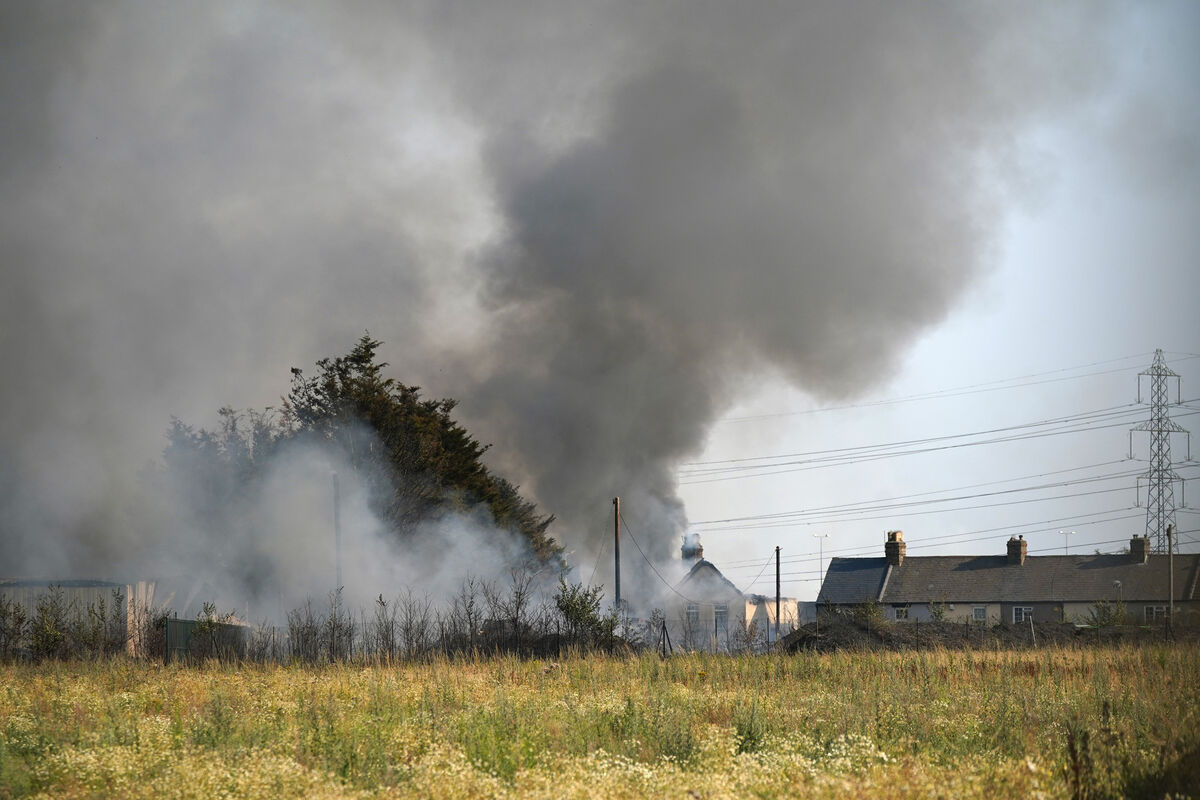
London Fire Brigade declared a major incident this week due to 'a huge surge' in blazes across the capital amid the 40C heat. 

Historically, people who take direct action are often criminalised, but later, many see that their actions were wholly justified and may even be revered.

I ask Murphy how she sees her future, and she hesitates for the first time in our conversation: “We can do a lot, but it does look pretty grim, physically and climate-wise, because you can’t negotiate with CO2. It doesn’t listen to you, and feedback loops can’t be stopped once they’re triggered.”

She expects the crisis to deepen and people like her and her friends to continue getting arrested and imprisoned. She sees these personal risks as slight compared with the dangers ahead for us all and is adamantly against much of society’s focus on profit and growth at all costs.

“What we’re doing right now is highly destructive. But it doesn’t have to be so heartless and grind-focused. Why don’t we come together and say what we actually want out of life and actually want to do together? What would an ideal world look like?”

Murphy’s voice gets stronger as she speaks now. “I think it would just be having a strong community, having a home, having enough food to eat, like maybe nice food, having enough time to do the things that you want.” 

As that life slips out of view for many, Murphy is willing to risk everything for a chance to get it back, not just for herself but for the rest of us too.

“Ireland has so much potential for action and change, and there’s such an amazing spirit in this country of meitheal, of looking after each other.” I think she’s finished speaking until she adds quietly: “And there’s a spirit of resistance as well.”

CLIMATE & SUSTAINABILITY HUB

More in this section

Revoiced

Newsletter

Sign up to the best reads of the week from irishexaminer.com selected just for you.

Cookie Policy Privacy Policy Brand Safety FAQ Help Contact Us Terms and Conditions

© Examiner Echo Group Limited