Daniel McConnell: ‘Bambi Bacik’ struggling to cope with Labour leadership role
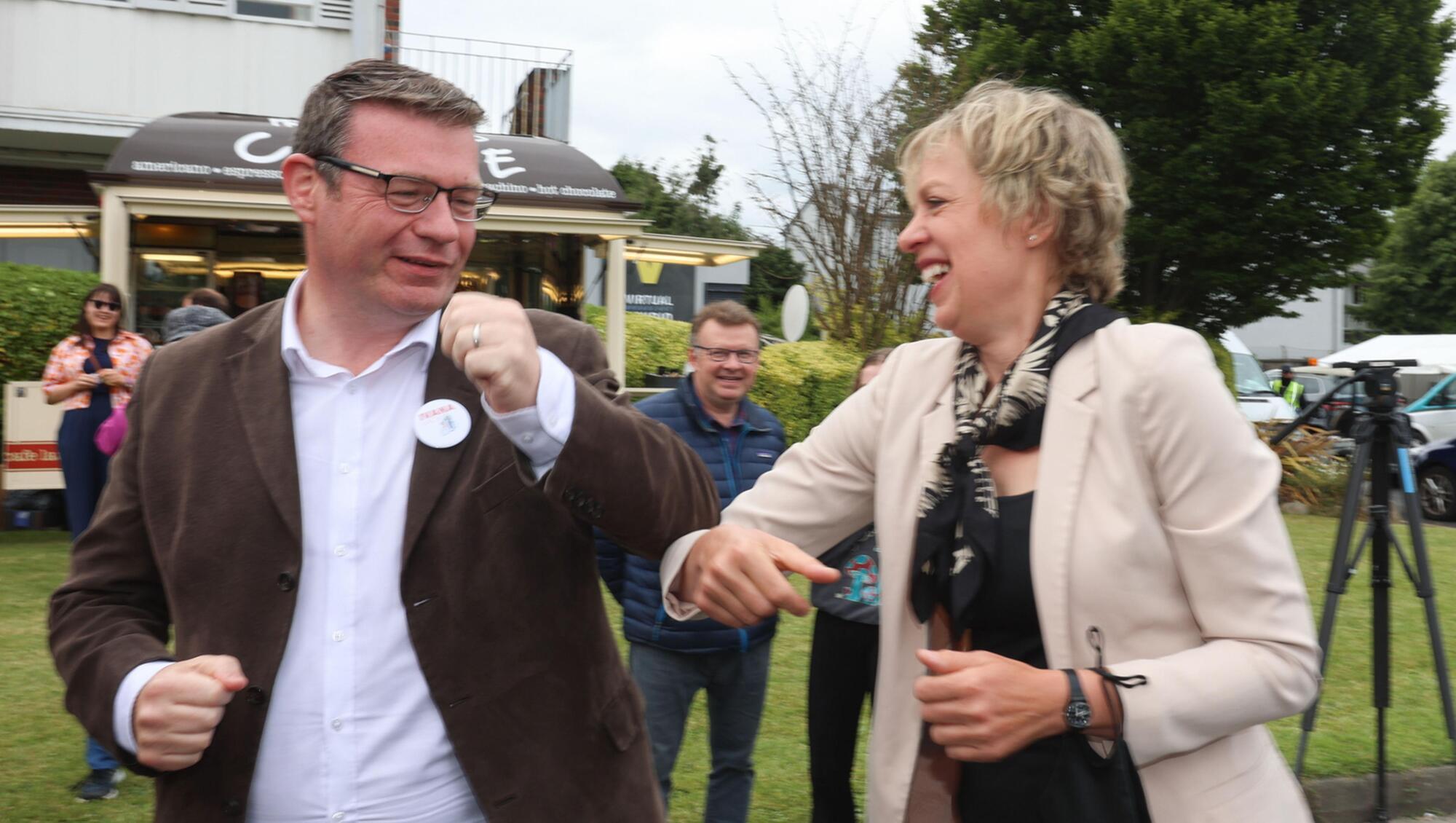
A month on from her election to replace Alan Kelly, it is still far too early to conclude whether this is or isn’t the party’s final chapter
The election of Ivana Bacik as the Labour Party’s fifth leader in a decade has been described by some as the last throw of the dice for the oldest political movement in this country.
A month on from her election to replace Alan Kelly, it is still far too early to conclude whether this is or isn’t the party’s final chapter. It is also too early to form a complete judgement as to what kind of leader Bacik is likely to be, and more importantly whether she is to be a success or not.
However, as this week’s Irish Times Ipsos/MRBI poll showed, there has been no ‘Bacik bounce’ for the party, which remained unchanged on just 3%. And, more importantly, her public utterances so far have been, to say the least, vague, unconvincing, and at times downright unbelievable.
On the day she was elected as leader, she gave a car-crash interview on RTÉ’s Drivetime, where she allowed host Sarah McInerney to
fillet her on basic points. While increasing numbers of politicians are refusing to go on air with McInerney, given her robust style, Bacik made it easy for her, and at no time was the host over the top.
Firstly, she decided to play coy around the entire circumstances of Kelly’s departure and her role in it. She sought to portray Kelly’s assassination as a benign decision taken independently by him, rather than be straight up and honest about what happened.
As if Kelly woke up one morning and said: “You know what, I’ve had enough of this — I’m off.” She went as far as to say that “people are entitled to resign in politics” while refusing to clarify if she was present in senator Marie Sherlock’s house when the coup was cooked up the weekend prior to Kelly’s downfall.
Bacik, the 53-year-old distinguished law professor, portrays this image of the diligent, best-in-class liberal who sought to dismiss inquiries into her role as “internal party matters” not fit for public consumption. Her evasion was unbecoming and showed that she has a lot to learn about “senior hurling”, as Seamus Brennan famously described national politics.
Labour pains
What was wrong with her coming out straight and making clear why Kelly was taken out so unexpectedly, why she supported the heave, and finally how and why she emerged from the pack to be the sole candidate to replace him? Had she done so, it would have emphasised the point that she has the requisite steel to make it as a leader. That she can be ruthless when she needs to be and that she drove the process to get the result she wanted.
Instead, we got the cuddly academic Ivana, who doesn’t like fighting but ended up looking sheepishly ashamed of what happened and evasive. Not a good start.
Bacik was at it again two days later on RTÉ’s The Week in Politics, where obfuscation and fudge were the hallmarks of her appearance. She came off looking weak, indecisive, and as if she was trying to hide her role in Kelly’s departure.
She appeared Gerry Adams-esque when she said Labour’s desire was for a mini-budget, only for her not to be able to recall how much money the party wanted.
In a more recent interview with the impressive Claire Brock on The Tonight Show on Virgin Media, Bacik was again less than forthright and clear as to what kind of leader she is to be and what kind of party Labour is to become under her.
The poor media outings have led the moniker ‘Bambi Bacik’ to be coined in reference to her portrayed innocence and naivety in her opening few weeks.
A crowded Left
What also has to be examined are the reasons for dumping Kelly in the first place.
As we know, there was some internal row about a staff appointment that caused angst, but the agreed narrative was that Kelly left because of poll ratings. Bacik has naively suggested that “Labour always bounces back” as it has done in the past.
Such mistakes also point to a rather shambolic organisation around her and, if she is to succeed, she needs to put that structure right — and quickly. However, since its near-obliteration in 2016 after its term in office with Fine Gael, the party has remained stagnant and is even slipping back further.
The 4.4% return and the win of just six Dáil seats in the 2020 general election shows the party is in real decline. The difficulty is that, unlike in previous decades, the space for the Labour Party to define itself on the Irish political landscape is an awful lot more crowded than it used to be.
Former Labour Party strongholds have slipped into the hands of Sinn Féin, the far left, the Social Democrats, and left-wing Independents. More ominously, Labour’s working-class vote has defected to Sinn Féin and the far left, while the Soc Dems are squeezing it on its middle-class, liberal flank.
This squeeze highlights the grave difficulty Bacik has in seeking to define what her Labour Party can be. She has spoken about the need to draw a line under the actions of Labour during that austerity government with Fine Gael, but it is now out of office longer than it was in that coalition, and its fortunes have not improved.
Election fortunes
Also, looking to the next general election, Labour faces the real risk of dropping back even further as, for a start, Kelly is highly unlikely to stand and there is little or no chance of the seat being held in his absence.
Brendan Howlin is also expected to retire at the end of this Dáil, and while George Lawlor is there to replace him, there is doubt about whether he can do enough to hold that seat.
Unlike Kelly, who was ousted before he even contested a proper election, Bacik will be in situ when the party contests the 2024 local and European elections. She has to show the party is able to at least hold the seats it currently has if it is to have a future.
It is not unreasonable to say that Labour’s fortunes will only improve after Sinn Féin enters government and gets its feet dirty from the business of being in power.
With Sinn Féin gone as the rottweilers in chief to the defenders of the system, space will open up for Labour and the Soc Dems to become that credible voice of opposition.
Another key question for Bacik to answer is whether she can convince the likes of Róisín Shortall and Catherine Murphy that a merger of their respective parties is inevitable and necessary if they are to survive.
Whereas in the past, other parties were subsumed under the Labour umbrella, it is now so weakened and tarnished that it is an open question about its survival into the future. It is already being suggested that we could see a ‘Labour and Social Democrat’ party emerge from all of this.
That is down the line. For now, Bacik needs to cut out the mistakes, get her house in order, and realise that the role of leader requires a vision beyond vague aspirations.
If she can do that, she and her party will survive. If not, Ireland’s oldest political party will become a thing of the past.

Subscribe to access all of the Irish Examiner.
Try unlimited access from only €1.50 a week
Already a subscriber? Sign in
CONNECT WITH US TODAY
Be the first to know the latest news and updates