Michael Moynihan: Designing a city that's safe for everyone, even our little ones
It would be nice if today’s toddlers grew up to see a city that accommodates their own two-year-olds
Michael Moynihan: Designing a city that's safe for everyone, even our little ones

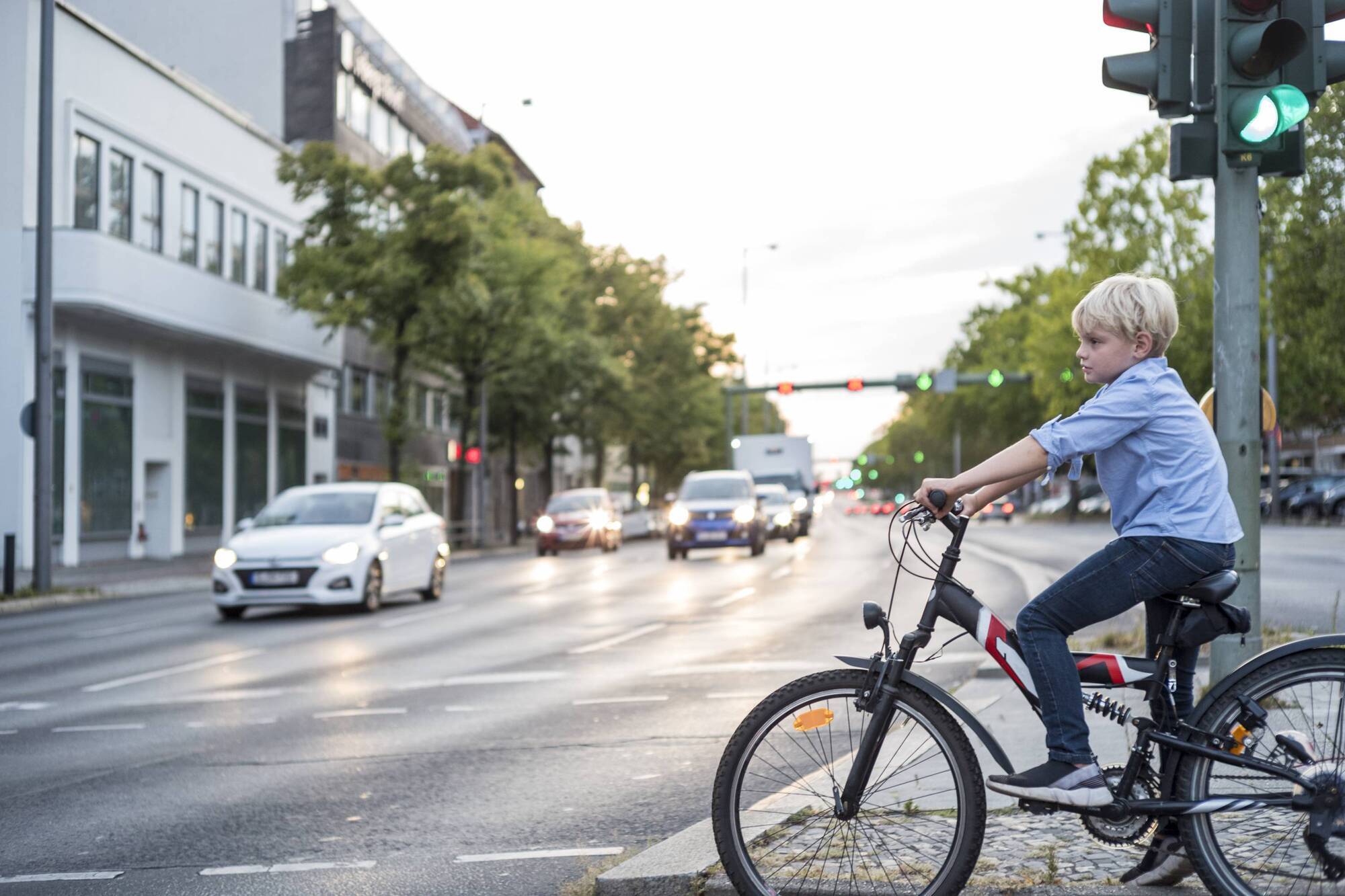
Michael Moynihan column: Boy cycling a bike alone on a busy road. It's not uncommon for children in other cultures, such as Japan, to be more independent at an earlier age when moving around the city. Picture: iStock

A COFFEE on Patrick Street in the afternoon. The delicate play of the light, the sharpening shadows.

With the wide footpaths the ebb and flow of pedestrians is easy, and all human life is there, as the saying goes. During the week just gone, that was my experience in Cork’s main thoroughfare, with the number of kids rambling the city a notable feature.

The schools are off for Easter and clearly when the smallies aren’t quite as small anymore, launching them straight into the city centre is more attractive than having them punish the wifi signal at home. Not when they’re too small, obviously. Any child who looked younger than 12 was accompanied by at least one adult, for instance.

This is quite the contrast with the Cork I grew up in, a point I appear to have made far too often in the privacy of my own house (“Dad, that was the seventies” — all of my research assistants, simultaneously). Crowds of children as young as six flooded the streets before and after school, milling and surging like little uniformed buffalo on the Great Plains, a sight we thought normal but which now lives, alas, only in our memories.

I was reminded of those great days when enjoying my latest discovery on Netflix — the series Old Enough or, to use its original Japanese title, Hajimete no Otsukai: My First Errand.

In the show, Japanese children as young as two are sent off alone to their local shop, for instance, to get groceries. The shop may be a kilometre away or more, and as the kids head off cameras track their progress.

They cross busy roads and take on the infernally high shelves of supermarkets, grapple with shopping baskets and puzzle out what to do with their change. In one early episode, a two-and-a-half-year-old boy completes his shopping, then mutters aloud that he’s forgotten the sweet curry and goes back to the supermarket to buy some (a fair copy of most of my own visits now at a far older age).

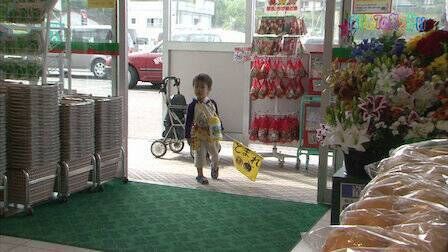
A scene from Netflix's Old Enough, where Japanese children go on errands by themselves for the first time as a camera crew follows.

Even allowing for the tradition of weird Japanese game shows, this one is exaggerated for the purposes of entertainment. In Japan, it isn’t at all common for two- or three-year-olds to totter off to the shops a mile away and return with the week’s groceries.

Kids in the show and their families are vetted rigorously, the routes they take are scouted for safety issues, and there are plenty of adults on hand in case any of the kids decide to wander absent-mindedly out onto the road.

Because of the way your columnist’s mind works, though, I couldn’t help but transpose the show to Cork and wonder how kids of that age would do walking around the various neighbourhoods I visit regularly.

From Blackpool to Ballincollig there don’t seem to be too many road crossings or footpaths that would be easily negotiated by kids of two or three; there are plenty of corners of the city that would be equally inhospitable for those aged 22 or 23, particularly if they’re not in a car.

The fact that kids of two or three years can even travel that far in Japan shouldn’t be overlooked, though, because it doesn’t happen by accident. The authorities in Japan have consciously created cityscapes in which children of that age can function.

In a fascinating piece for Slate magazine, writer Henry Grabar spoke to Hironori Kato, a professor of transportation planning at the University of Tokyo, who pointed out that while Old Enough is an exaggeration, roads and road networks in Japan are designed for children to walk safely.

Among the contributing factors were Japanese drivers being taught specifically to yield to pedestrians, city speed limits being kept very low, and city neighbourhoods being designed deliberately with small blocks that have lots of intersections. The latter design means children have to do a lot of street-crossing, but it also keeps cars going slow for the same reason.

Kato also pointed out that the streets themselves are different to those in other jurisdictions. Many small streets do not have raised footpaths to divide the driving and walking spaces but depend on pedestrians, cyclists, and drivers to share the road together.

Because parking at the kerb is relatively rare, this creates better visibility for drivers and pedestrians alike. In fact, people buying cars may have to show proof they have an off-street parking space in order to complete the purchase.

Those kinds of policies and initiatives benefit everybody, obviously enough. Drivers can see more of the road if there isn’t an unending line of parked cars, and pedestrians looking to cross the road don’t have to dice with death when stepping behind a panzer-like SUV. Good news for everyone.

There’s more, however. The Japanese make an effort to integrate kids into the city and give them a sense of ownership and belonging. Statistics suggest that Japanese children walk when making a lot of their weekday trips, particularly those aged between seven and 12 years old (in hard statistics it’s estimated that one trip in four taken in a megacity like Tokyo is by foot).

Local schools drive this theme home with the famous “walking school buses”, with long lines of children walking to school together, older kids helping to guide the younger ones on their way.

This has other benefits. Not only does it build independence in small children, it means they’re far more familiar with their home areas and neighbourhoods — streets and shops and parks that aren’t remote locations glimpsed through a window as they whizz past in a car on their way to school, but living places they become more and more familiar with as they progress through school.

(Factor in another element of Japanese culture — aisatsu, or the culture of greeting. Children are taught to say hello to people they pass, which strengthens the bond between them and those locals who pass their walking bus as it winds its way to school.)

Fair enough — aisatsu is a part of Japanese culture which might be difficult to replicate here but what of the other elements of that country’s determination to give small children a measure of ownership of the city?

These are measures that would be easy to replicate if the will existed to do so, whether it’s promoting the walking school bus as an option for primary schools around Cork or redesigning streets with a view to making them safer for pedestrians — something that could be factored into the new developments being planned around the city.

Months ago I wrote that designing a city for the convenience and safety of small children created, by definition, a city that was convenient and safe for everybody: it only took an offbeat Japanese TV show to underline that point.

The next time I make it into town for a coffee I don’t expect to see two-year-olds swinging their groceries over the shoulder as they meander along Patrick Street or the Grand Parade. But it’d be nice if today’s two-year-olds grew up to see a city that accommodates their own two-year-olds.

x

More in this section

Revoiced

Newsletter

Sign up to the best reads of the week from irishexaminer.com selected just for you.

Cookie Policy Privacy Policy Brand Safety FAQ Help Contact Us Terms and Conditions

© Examiner Echo Group Limited