Joyce Fegan: You don't 'shop around' your way out of poverty
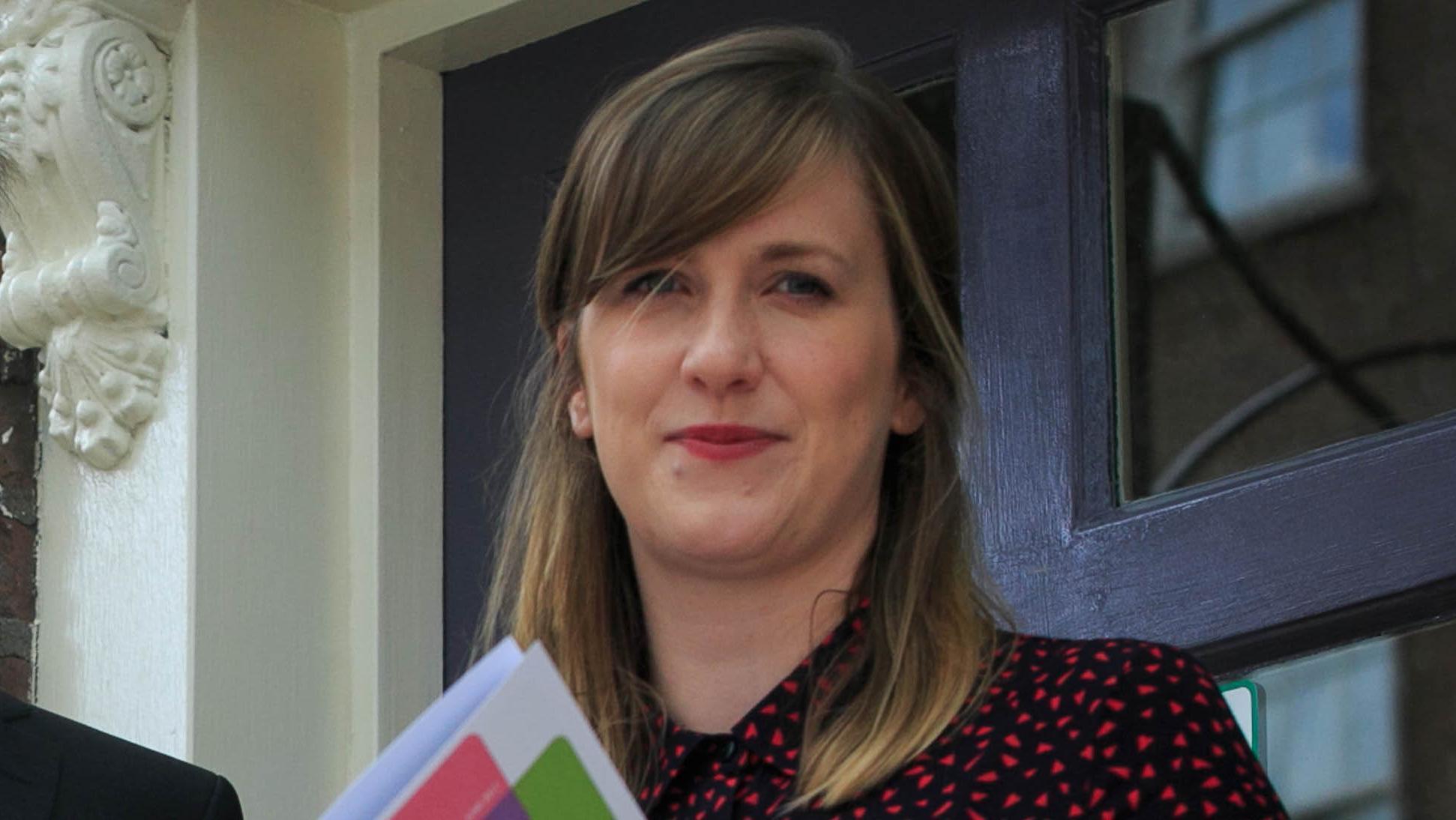
Tricia Keilthy, of St Vincent de Paul: Most people living in poverty ‘can point to a single moment that led to poverty — a relationship breakdown, a job loss, a family member becoming sick, a rent increase that tipped them over the edge’. Picture: Gareth Chaney Collins
In the 1980s, politicians told us to tighten our belts. In the 2020s, we are told to “shop around”. If a single person’s actions could solve poverty, or tackle the rising cost of living, they would be fixed long ago. But people don’t solve poverty, politicians and policies do.
By this week, you’ve probably now noticed that your weekly basket of groceries has gone up. For some, the jump has been from €60 to €80. Your electricity bill for winter has also possibly come in, and you’re busy reconfiguring your budget to meet the shock rise.
In the meantime, you might have read the headlines about the rising cost of living across Europe, and you maybe even heard the advice from one of our politicians to “shop around” for better deals in the grocery shops and for other essentials such as heating and electricity. The man in question has since apologised and one of his political colleagues defended him. His “heart is in the right place”.
But when it comes to poverty, we don’t need politicians’ hearts in the right place, we need their heads.
Public thinking on poverty has long been framed as a matter of “personal responsibility”. You know — tighten your belt, shop around, switch providers. Public thinking on financial security has long been framed as a matter of personal responsibility too. You know — study hard, work hard, save hard, and you can make it on your own. They are myths. They’re deeply held core values. They’re deep-rooted beliefs in our society. It’s the kind of faulty thinking that some politicians and many people also hold. And, as night follows day, it’s the kind of thinking that public policy grows from. But if an individual’s actions solved poverty, the vast majority of us would be laughing all the way to the bank.
Tricia Keilthy from St Vincent de Paul (SVP) works directly with people experiencing poverty. They’re the best kind of budgeters. They know how to make every penny stretch and what bus stop to get off, so as to avoid their fare going into the higher price range. So how come they’re in poverty then?
“If you work with people who are living in poverty, almost all of those people can point to a single moment in time that led to poverty — a relationship breakdown, a job loss, a family member becoming sick, a rent increase that tipped them over the edge. They’re all life issues, once you’re in that cycle it’s hard to break out of,” she told the Irish Examiner.
Say you live in a two-income household, you cover a mortgage, childcare, your health insurance, and your groceries between you. You run a tight and responsible ship. You’ve enough left over every month for a meal out or the odd take-away. What would happen to your budget if one of you got sick? Would you need a charity such as SVP to help to cover the electricity bill for a few months? Would you need to pause your mortgage repayments? Perhaps you’d turn to Mabs (Money Advice and Budgeting Service). Or, what would happen if your relationship became untenable and you needed to go your separate ways? Between you, would you be able to cover the cost of running two households with the sale of your current one? Perhaps one of you would move back in with elderly parents, kids in tow.
You’ve been really responsible up to now, you’re one of our society’s more comfortable citizens, you wear a tight belt, and you shop around, you switch electricity providers regularly, but an unforeseen and external problem tips even you over the edge. That is how poverty works.
Poverty is a vortex that is always swirling. Some of us dance around its edges daily, others live far from its precipice. But the same things will draw everyone closer: the break-up where one home gets split in two; the sick family member; the death of a spouse; the job loss, or the rent or mortgage interest rate increasing. If you’re free of any of those problems, you won’t be next to near the ever-existing vortex.
But if one hits, you may find yourself in the pocket of poverty, through no fault of your own, in there with the people who you perhaps used to judge. You may even need to temporarily rely on ‘benefits’, again another thing you perhaps used to judge. There is more faulty, discriminatory, stereotypical thinking to be found here too. And again, we’ve unfortunately heard it directly from the mouth of one of our most prominent politicians too.
However, benefits are part of the solution to poverty, not the problem itself. Have you ever taken sick leave? Have you or a partner ever received State maternity or paternity benefit? Are you in receipt of the State pension? Have you ever lived through a pandemic and needed to rely on the pandemic unemployment payment to survive?
When we talk about benefits, people unfortunately think and talk in terms of who is ‘deserving’ and ‘undeserving’. But we, and that includes the most comfortable and secure in this country, rely on a wide system of public services.
Perhaps you have a free travel card, maybe you’re a medical card holder. Do you send your children to school? Are you in receipt of the ECCE payment that goes towards your kids’ extortionate creche fees? Would you ring your local Garda station if you’d been burgled? Do you frequent the local library, relishing in picking out books with your child or grandchild, niece or nephew? We all rely on ‘benefits’. We don’t need to dismantle the social welfare system to solve poverty. We need to improve it to make sure everyone has a shot at a decent, dignified life.
Poverty, or security, isn’t a matter of individual responsibility, it’s a matter of shared responsibility. I’m not expecting you to buy me my groceries, but if I was in dire straits through no fault of my own, I’d hope I could call up SVP to help me with my food shop for my family, thanks to your kind Christmas donation. But, more importantly, I’d hope you’d ask the next politician who canvasses you where they stand on poverty.
Do they believe it’s an matter of personal responsibility or do they believe something like a public model of childcare would go a long, long way to raising the living standards of hundreds of thousands of people in this country?
The faulty stereotypical beliefs we hold may not be our fault, but they are our responsibility to correct.
CONNECT WITH US TODAY
Be the first to know the latest news and updates

More in this section