Joyce Fegan: The Joe Rogan experience is not about free speech
'How have we got to a place where fact-checking is akin to censoring? How have we got to a place where massive global publishers are free of all editorial responsibility?'
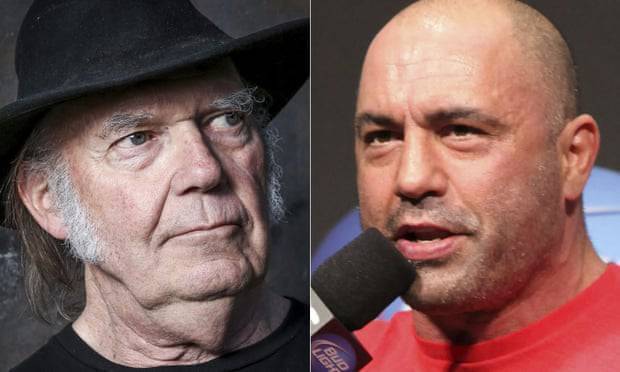
Neil Young (left) and Joe Rogan. Picture: AP

Neil Young (left) and Joe Rogan. Picture: AP

THIS week, a former cage-fighting TV pundit helped to break open our perennial debate on “free speech”.

In the age of the internet, and in a pandemic, this current debate had been bubbling away for some time. And now, thanks to Joe Rogan, it’s finally been skewered open.

Before this week, many people had never heard of Joe Rogan. For the uninitiated, he is a 54-year-old American comedian who used to commentate on the likes of Conor McGregor in the cages of the Ultimate Fighting Championship (UFC).

His career pivoted to podcasts in 2009. Again, to the uninitiated, a podcast is just a term for a pre-recorded radio show. It is self-published on the internet — no editor required, no standards to adhere to, no fact-checking necessary. Just press send. These podcasts are then instantly accessible via an app on your smartphone.

In 2020, Mr Rogan’s podcast was bought by a big audio app company called Spotify for $100m — think the world in lockdown, and everyone at home entertaining/informing themselves on the internet. The podcast is called The Joe Rogan Experience.

In 2022, it is now Spotify’s number one podcast, and he has 11m daily listeners. So far, so good. Except there’s a problem.

Mr Rogan also has a reliable track record in airing false claims about the coronavirus pandemic, vaccines, and unproven treatments. When he has a conspiracy theorist on, or someone making baseless claims about vaccines, it is done in the name of “free speech” and airing varying opinions.

Conor McGregor, accompanied by Drake, right, speaks to Joe Rogan after weighing in for UFC 229 at T-Mobile Arena in Las Vegas, Nevada, in 2018. Photo by Stephen McCarthy/Sportsfile

A guy gets kicked off Twitter for breaking the rules? He appears on Joe’s show the next day.

By January of this year, hundreds of scientists and medical professionals in America had enough of the misinformation being spouted to 11m sets of ears, and in the midst of a global pandemic. They wrote a letter to Spotify, the owner and publisher, but not editor, of Mr Rogan’s show, asking not for him to be cancelled but for a policy about moderating misinformation on their platform.

Right now, just 64% of the American population is fully vaccinated. And in some places, such as Alabama and Wyoming, fewer than 50% of the population is fully vaccinated. The low vaccine uptake is being directly linked, among other things, to the spread of medical misinformation online.

Then last week musicians such as Neil Young and Joni Mitchell decided to pull their music off Spotify. Last weekend, big-hitting podcast host, the American writer and sociologist Brené Brown, decided to pause her exclusive shows on Spotify too. She didn’t want to cancel Mr Rogan, she just wanted Spotify to publish a clear misinformation policy before continuing any further, just like the doctors who wrote the letter.

So this week, how did Spotify meet the mounting public pressure to combat the spread of misinformation their company publishes and profits from?

Spotify will direct listeners to “data-driven facts and up-to-date information” before the start of a show that addresses the pandemic.

You’d nearly feel sorry for the likes of Spotify, or other online publishers in this new information age of ours. The likes of Facebook and Instagram get all this free content from people like you and me — self-publishing podcasts, uploading photos, and uploading posts. They get the content for free, they get the audience for free, they monetise the resulting attention, and now they might have to regulate it? Poor things, having to balance the creative expression of their users against things like democracy, hate speech, and public health.

But with great reach comes great responsibility and regulation.

Just ask people like car manufacturers that had to introduce seatbelts, pharmaceutical companies whose drugs must be approved by an independent body (how inconvenient), or indeed tobacco or alcohol manufacturers which have to provide public health warnings on their packaging.

Even producers of baby formula, in the name of protecting breastfeeding, face robust regulation.

Why should information, sorry, misinformation, be any different?

Before this week, the debate around free speech these last few years has been an ideological war waged between the world’s elite — those who tweet off the latest iPhone from the comfort of their couch. Their perceived sense of offence was the biggest injustice faced.

But in the last two years, it has centred around vaccines and medical information. The impact of the so-called free speech debate is having real-life public health consequences, with many people believing in hoaxes, conspiracies, and pseudoscience.

Pandemic of misinformation

Any call to referee this pandemic of disinformation and the censorship card gets pulled, or the facade of free speech gets pulled up. This happened to Brené Brown this week, after she paused her Spotify podcast.

“I’m cancelling you for cancelling people” or “I hate censors so you shut up” is a sample of some of the novel reactions she has encountered for pausing her show until Spotify published its misinformation policy.

Her response to the backlash cuts right to the heart of the current free speech debate.

“Personally, I would never want to silence debate about vaccine safety and efficacy because the lack of critical discussion actually increases vaccine hesitancy,” Brown said two days ago.

“However, rigorous debate that benefits the public does not include the dissemination of misinformation.”

Calling out falsehoods, or asking that words and comments be open to scrutiny, isn’t exactly censorship.

In other words — if we are going to have hard conversations about serious issues, let’s open the court, let’s have it out, let’s get out from behind the online echo chambers.

That’s not censoring, that’s setting up the conditions — let’s call it regulating — so we can have robust debate with multiple perspectives.

Unless, that is, you’re afraid of robust debate in case your point doesn’t hold water. Or perhaps you’re afraid your bottom line might be impacted.

How is it that century-old newspapers were able to pivot online in these last two decades and not constantly end up mired in a debate about free speech? If they can do it, why can’t every other platform in the 21 century?

This very question skewers the legitimacy of our current “free speech” debate. If editors and reporters have managed to publish online, without being accused of censoring or excluding dissenting opinions, then why can’t everyone else?

Oh wait, Facebook, Instagram, and Spotify all got off the ground in a new world that was free of regulation, responsibility, and accountability.

This isn’t about Joe Rogan, or cancelling him. This is about the correct identification of “platforms” as “publishers” and making them accountable not for censoring information, but for moderating misinformation.

How have we got to a place where fact-checking is akin to censoring? How have we got to a place where massive global publishers are free of all editorial responsibility? A nice set-up if you can get it.

Enough of the gaslighting. Time to regulate.

More in this section

Revoiced

Newsletter

Had a busy week? Sign up for some of the best reads from the week gone by. Selected just for you.

Cookie Policy Privacy Policy Brand Safety FAQ Help Contact Us Terms and Conditions

© Examiner Echo Group Limited