Terry Prone: Why are female vaccine heroes under pressure to seem relatable?
Women should be able to write about their success with the straightforward pride a man would bring to the situation, writes Terry Prone.
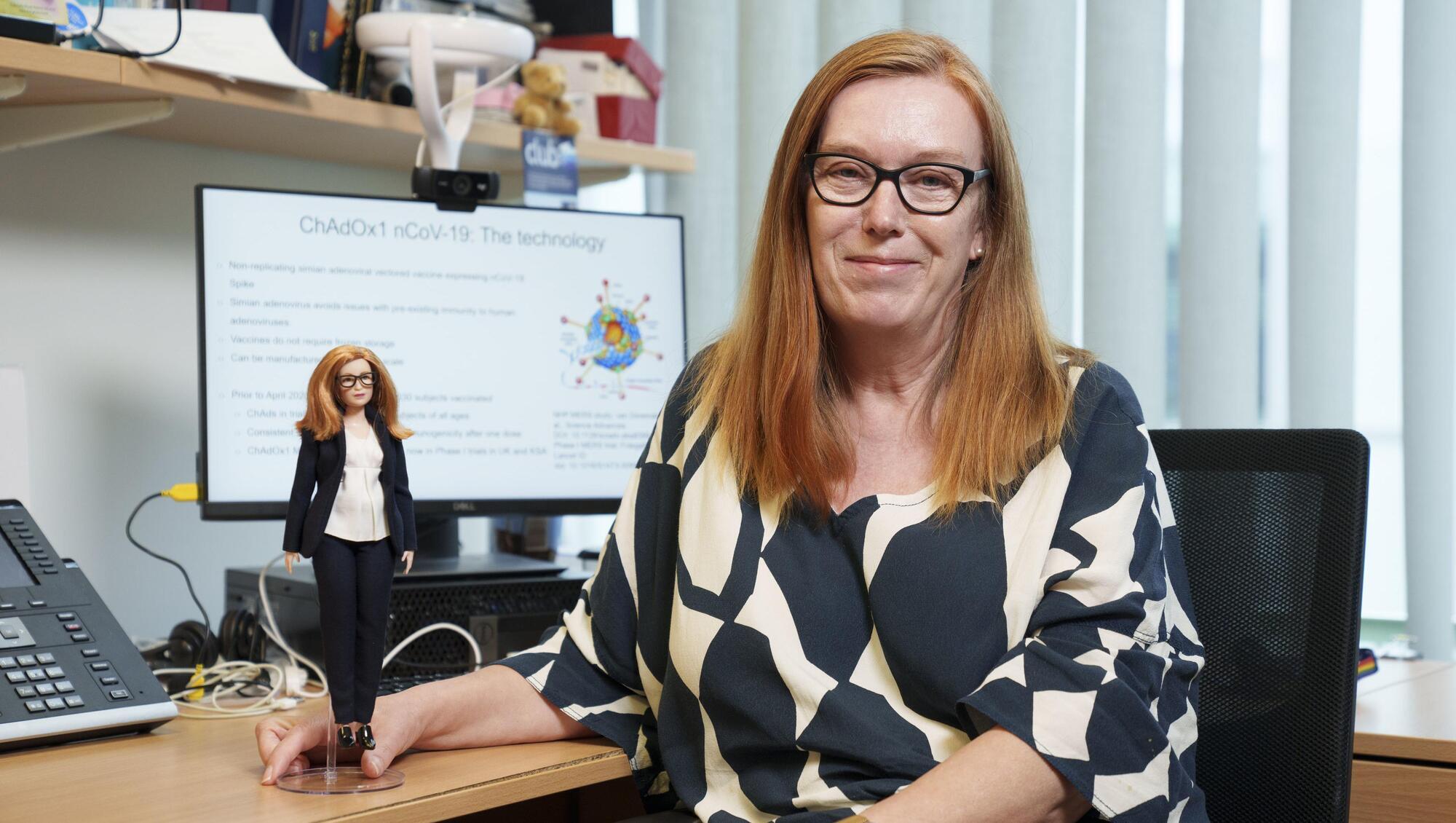
Professor Sarah Gilbert holding a Barbie doll of herself in honour of the Oxford vaccine co-creator. Picture: Andy Paradise/Mattel/PA Wire

Professor Sarah Gilbert holding a Barbie doll of herself in honour of the Oxford vaccine co-creator. Picture: Andy Paradise/Mattel/PA Wire

Most new parents set out to prove their own parents wrong on as many fronts as possible.

Breast-feeding will happen even if a granny’s lip curls at the very idea. Not a hand is ever to be raised to their child or children. Neither parent will ever swear or shout in the children’s hearing.

The children will be told, clearly and simply, what sex is about and, if the parents came from a family where Catholic Truth Society leaflets were present to explain sex, the opposite approach will be taken. (The Catholic Truth Society leaflets on sex would defeat a randy Einstein, so obscure and holy was their approach to human mating.)

The rules change, but the intent is the same: This generation will solve the problems created by their own parents.

In my time, I was so ferocious an exemplar of generational know-all-ism that I now hang my head in shame at some of the stuff I did, including refusing the whooping cough vaccine — not that I confined my certainties to medication.

When I was a new parent, I was part of a new wave of feminism that insisted little girls should not receive dolls to play with, but little boys should. The theory was that if you gave tractors to little girls, they would grow up filled with vehicular and other confidence and never be touched by the assumption that their role, when grown up, would involve reproducing or dusting. The little boys who got the dolls would be less aggressive and shouty and much more gentle when they reached adulthood.

No theory has ever stood up to practical testing on pre-schoolers, and the doll distribution theory was no exception to the rule. Little girls maddened their mothers (and, I suspect, secretly amused their grandmothers) by coming home from birthday parties with an acute sense of deprivation over the doll dearth in their own home, having had the opportunity at the celebration to compare and contrast.

I got to see my little boy’s reaction to being given a doll, which took the form of mystification. He examined it with the courtesy you’d give a breakfast of live budgie on buttered toast, then firmly and neatly discarded it. The doll never got another look. His truth involved wheels, engine noises, and gears. Much of it still does.

The only thing, back then, that grandparents and young mothers agreed on was that, even if the little women in their families received dolls, they sure as hell should not get Barbie dolls. Cue murmurs of sexualisation of young people and of COMPLETELY unrealistic anatomy.

The dolls, if rendered in human size, would be 6ft tall with 44D breasts, 12-inch waists, and weigh 25kg.

Older women thought them pointless because they were too pointy to cuddle. Younger women regarded them as a tool of the patriarchy, putting pressure on pre-schoolers to concentrate on being thin and beautiful. Of course, the little girls loved them and spent hours grooming the spiky, disproportionate little yokes and putting tiny mini skirts on them.

Now the word is that the company that produces Barbie is offering one based on one of the two women who developed the Oxford/AstraZeneca vaccine, Sarah Gilbert.

When she was approached by toy manufacturer Mattel about the idea, Prof Gilbert found it a bit strange. However, the more she thought about it, the more she liked it as a way to inculcate ambition for a medical career in little girls in their earliest years.

The fact that the doll, which has long red hair, wears a blue trouser suit, glasses, and black shoes, and simply looks like a professional woman at work, may also have helped convince the professor that it might make little girls more interested in science, technology, engineering, and maths when they go to school.

Professor Sarah Gilbert hoped the doll would inspire young girls. Picture: Andy Paradise/Mattel/PA Wire

No harm in trying, any more than it would harm any Irish toy manufacturer to come out with a Kellie Harrington doll.

The odd thing is that Prof Gilbert’s book, Vaxxers, written with her colleague Catherine Green and published by Hachette, might make the doll-owning kids, when they get a bit older, question the value of becoming vaccinologists. 

The book takes the reader through the development of what started out being called the Oxford vaccination, but became AstraZeneca when that pharmaceutical company became the manufacturer.

“One of the reasons that I love my work,” Prof Gilbert writes, “is that vaccines are such cost-effective and harm-reducing public health interventions. 

In other words, if you are going to put money into trying to improve the length and quality of someone’s life, your best bet is to give them a vaccine against a nasty disease.”

Irish people, opting for vaccination in overwhelming numbers, would seem to agree with her.

She is clear and reassuring about how the process to develop this latest jab was not rushed and, on the contrary, was the payoff of years of preparatory work. So far, so scientific.

However, perhaps someone reading the manuscript worried that it might all be a little technical for the average reader (which it is) and proposed, by way of a solution, that the writers set out to be “more relatable”. Or maybe they decided to go that route themselves.

“This is the story of how two scientists were in the right place at the right time to fight back,” the book says.

“We are not ‘big pharma’ or ‘them’. We are two ordinary people who, with a team of other hard-working, dedicated people, did something extraordinary. We don’t have cleaners, or drivers, or nannies, and like everyone else, we had other things going on in our lives. 

"There were days when we swore or cried with frustration and exhaustion. We lost sleep and gained weight. There were days when we met a prince, or a prime minister, and other days when it seemed that we had to both save the world and get the central heating fixed. 

Some days we drank champagne, others we struggled to find anything to eat for lunch.”

Whoa! Hold it right there. They don’t have cleaners, therefore they’re just like you and me. No threat. Nothing to be daunted by. 

However, Prof Gilbert is a leading scientist with tenure in one of the great universities in the world, which is unlikely to pay her buttons. She can, in short, afford to pay a cleaner, so why doesn’t she? It might prevent her swearing and crying from exhaustion, for one thing. And what the hell has their weight gain got to do with anything other than proving an ordinariness neither of them owns?

Seeking to be “relatable” is just another pressure on women who should be able to write about their success with the straightforward pride a man would bring to the situation.

Maybe we’ll get there by the time this generation of Barbie doll owners grows up — but maybe we shouldn’t hold our breath.

More in this section

Revoiced

Newsletter

Had a busy week? Sign up for some of the best reads from the week gone by. Selected just for you.

Cookie Policy Privacy Policy Brand Safety FAQ Help Contact Us Terms and Conditions

© Examiner Echo Group Limited