Fergus Finlay: Labour must give Bacik a platform to lead for real change to happen
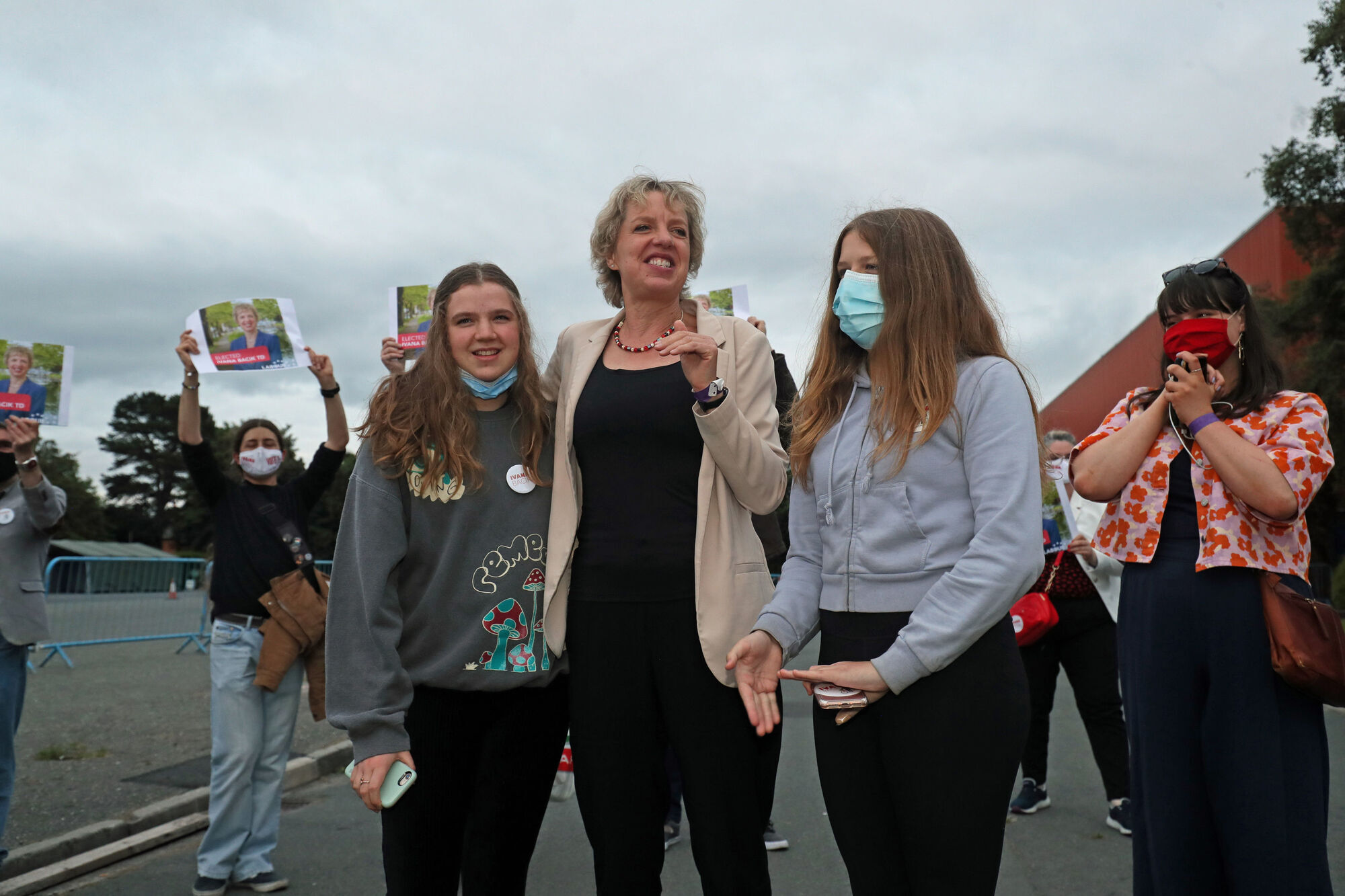
'There is a chance that Ivana Bacik’s election can shape the dynamic of the next few years here. But only if her party is brave,' writes Fergus Finlay
Fergus Finlay: Labour must give Bacik a platform to lead for real change to happen

Labour’s Ivana Bacik, flanked by her daughters Cyan and Louis, makes a speech to supporters after winning the Dublin Bay South by-election last Friday. Picture: PA

Is it possible that we may be on the cusp of a new phenomenon in Irish politics? If so, what should we call it? Bacikism, or maybe Ivanaism, spring to mind, though they’re kind of clunky labels. (If you can think of a better one, please let me know.)

I ask the question because I’m just an ordinary member of the Labour Party. I’ve been a member for 50 years or more, and I intend to die as a member (in another 40 years or so!).

I haven’t been busy campaigning and knocking on doors for a while now, so I can’t claim any credit for Ivana’s remarkable poll-topping adventure in Dublin Bay South. But it has been years, nevertheless, since I’ve had so many people congratulating me.

A friend of mine, who is still an effective campaign worker, was out taking down posters the day after the election and says he was overwhelmed by the number of people who stopped him to say how thrilled they were about it.

More than a few people have also said to me that it reminded them of that extraordinary moment 31 years ago (imagine that!) in 1990 when Mary Robinson was declared the winner of that year’s amazing presidential election.

There are parallels, to be sure. Two women, neither given a chance at the start of the campaign. A tiny band of what Robinson once referred to as “activists, amateurs, idealists, and romantic realists” against the largest parties in the State. And the big boys were handed a bloody nose then and now.

Robinson’s election brought about the almost immediate departures of Alan Dukes as leader of Fine Gael, and Charles J Haughey bit the dust not too long after. Ivana’s election seems bound to trigger similar repercussions in the not too distant future.

One other parallel. I can still remember the pain I had in my face back then, listening to commentator after commentator saying that Mary Robinson’s victory was largely personal, and no one should assume that it heralded any sort of broader political upheaval. And, of course, the idea of a comeback for the Labour Party, which had been hammered in a general election a few years previously, was generally dismissed out of hand.

There are of course a few differences too. Mary Robinson’s victory was a national one, Ivana’s much more local. And of course, Mary Robinson didn’t top the poll in 1990.

There is one fundamental point to be made though. A week ago, I wrote that Ireland has come round to Ivana’s way of thinking. That’s exactly what happened in 1990 as well. Mary Robinson couldn’t have been elected a few years earlier when Ireland was busy writing the 8th Amendment into our constitution and roundly defeating the first attempt to make divorce available in the country. In a book I wrote back then about the campaign, I said that along the way, Ireland had discovered a lot about itself.

That was what made Mary Robinson’s election possible. That was what ensured that Ivana topped the poll.

So, is it possible that Ivana’s election is the forerunner of another breakthrough by Labour? Here’s the thing. Breakthroughs don’t happen. They must be made to happen.

It’s tougher now because politics is different now. But it’s possible because Labour has just elected the best possible standard-bearer it could. Let me try to explain what I mean.

In the period immediately after Mary Robinson was elected, a few things happened. First, the leader of the Labour Party at the time, Dick Spring, looked and sounded like a leader who could win — after years of struggle. Second, there was the beginning of a hunger for reform in the country. It wouldn’t crystallise for a number of years, but it was tangible in the air.

But in the immediate aftermath of the Robinson election, politics in Ireland was defined by a series of business scandals. Scandals including Greencore, Carysfort, Telecom, beef, and others all led to pitched battles in Dáil Éireann, principally between Dick Spring and Charles Haughey.

It also created an overwhelming demand for a new type of politics that would be characterised by integrity and honesty. That led to the 1992 election in which both FG and FF lost heavily.

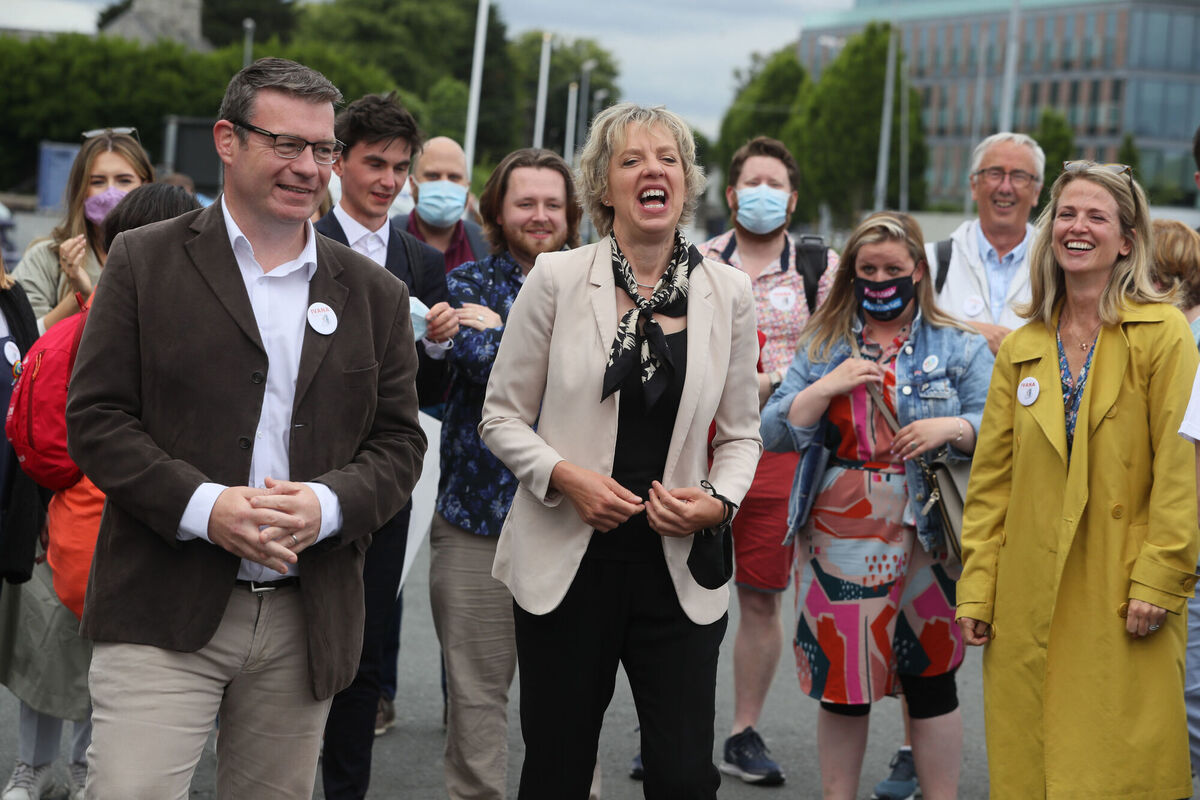
Labour Candidate Ivana Bacik (centre), with Labour leader Alan Kelly and supporters as she arrives at the count centre for the Dublin Bay South by-election at Simmonscourt, RDS in Ballsbridge, Dublin.	 Picture: Brian Lawless/PA Wire
Labour Candidate Ivana Bacik (centre), with Labour leader Alan Kelly and supporters as she arrives at the count centre for the Dublin Bay South by-election at Simmonscourt, RDS in Ballsbridge, Dublin. Picture: Brian Lawless/PA Wire

It’s different now. The 30 years that have passed have seen a sea change in how politics is conducted, reported, perceived, and operates. Representative politics has been largely replaced by
personality politics, and the old politics of class and economics is
almost dead. Politics now is defined by issues of identity and the search for equality on grounds of gender and sexual orientation, as well as by a couple of big transcendent issues — climate, and in Ireland, housing.

I grew up on issues like the rights of people at work, the whole spectrum of trade union issues, arguments around how to address the unemployment crisis. Issues like that, which were all about economic rights and management and the role of the state in wealth creation, don’t matter as much anymore.

Across Europe, social democracy has been damaged by that fact — and perhaps by its failure to recognise it. The irony is that the social democratic left has been in the vanguard of all the other changes seen as progressive and more relevant, but has got none of the credit. Issues such as divorce, removal of the Eighth Amendment, equal marriage, wouldn’t have happened in Ireland without the involvement of Labour leaders, but none of that mattered.

In a very considerable part, that was because Labour and social democracy generally saw these as side issues rather than core issues. If you believe in equality as a core value, then of course you believe in equality between genders, and of course, you automatically oppose discrimination against gay people. But that’s not the same as seeing their struggle as a core part of your struggle.

Now, however, the left in Ireland has a leading representative who truly gets that. That’s why there is a chance that Ivana Bacik’s election can shape the dynamic of the next few years here.

But only if her party is brave. Brave enough to give her a platform and a voice to lead more progressive campaigns. Brave enough to really focus on the two big issues that define our time — climate and housing. Brave enough to publish a programme centred on the things that matter most, and to redefine what social democracy means in the world we live in. A new and complete focus on human rights, civil rights, social rights.

It’s not an easy job, but a pressing and urgent one. In electing Ivana Bacik, the people of one constituency sent a message. It wasn’t a message about likeability and popularity. It was a message about values, consistency, and respect. That’s the message the left needs to hear and respond to. That’s how to win again.

There is a chance that Bacik’s election can shape the dynamic of the next few years here. But only if her party is brave.

x

More in this section

Revoiced

Newsletter

Sign up to the best reads of the week from irishexaminer.com selected just for you.

Cookie Policy Privacy Policy Brand Safety FAQ Help Contact Us Terms and Conditions

© Examiner Echo Group Limited