Michael Moynihan: We need to start a conversation about commodifying houses
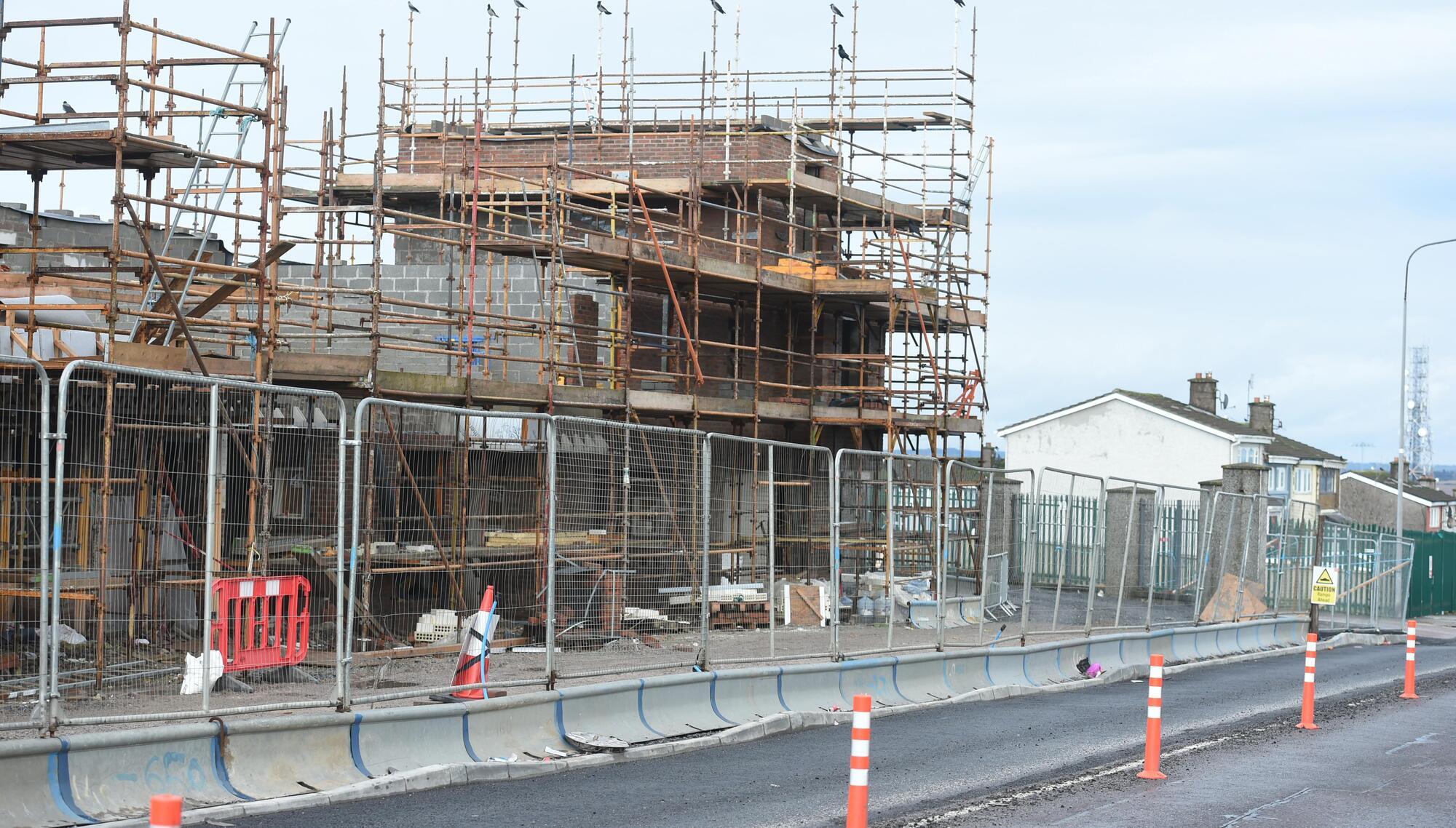
The house is continuously commodified and valued beyond apartments. Picture: Larry Cummins

Housing, accommodation, land, prices, apartments, zoning, downsizing, dereliction, developers, upsizing, building ... the trail of triggering concepts when it comes to life in modern Ireland is long, and was long before we ever heard of coronavirus, but property in all its many forms, has to be near the top of the list.
It lies at the centre of so many webs that anything property-adjacent gets people going, it seems.
I see it here myself. A few weeks ago I wrote about the Sextant site, and the furore which erupted when the developers who own that site decided to opt for offices rather than apartments when building there.
More recently, Brendan O’Sullivan of University College Cork spoke about the need for more development of the northside of the city.
Going back to last year, I spoke to Frank O’Connor and Jude Sherry about derelict houses in the city centre.
As case studies they’re good examples of how circumstances can appear to confound those seeking homes of their own at every turn — or more precisely, at every level.
I use the word ‘homes’ deliberately, given the conversation I had during the week with Emmet Scanlon, who is an architect but also writes about and studies the house in the context of Irish architectural culture and wider society.
Our conversation centred on an ad on TV. You know the one: An elderly lady visits her son’s new house, with its pale-cream walls, and then returns to her own home, which is clearly full of memories. Eventually she comes back to her son’s house, where he has recreated her sitting-room to make her feel at home: She turns and says 'thank you'.
It’s an ad for a bank.
“The bank is a business,” Emmett said.
“It has to sell products and make money, and we don’t expect a bank to have any other agenda, but what about when it steps into certain things which aren’t just products, which aren't just commodities, but things which have a more complex relationship with people and communities?
“That’s where the bank steps into a national conversation about what we value — and how we value house and how we value home.
“This is eroding our sense of what we value in terms of he places where we live, and excluding more and more people, because housing is unaffordable for people.”
In a social media post, Emmett pointed out some issues he had with the narrative presented on screen and its wider implications. Take the basic premise of the older lady moving in with her son’s family.
“It’s an issue that everyone will face or is facing, whether you’re 25 or 95, you can probably relate to it.
“In many cases, people make their own decisions as to where they live and how they live, and a parent coming to live with a son or daughter later in life is totally fine. There’s no judgement there.
“But I’m not sure if the lady in the ad is being exploited, or does this relate to the sense that we’re somehow being cheated by the elderly living in large houses — this notion of ‘empty nesters’, which is a terribly pejorative term.
“People are obviously entitled to stay in their houses as long as they want, and one would always hope that the best outcome is a person stays in their home with as much independence and agency for as long as they can.
The key, as Emmett pointed out on social media, is that attachment to a place changes that place, and turns it from a house into a home. But that doesn’t happen overnight.
As he says, the ad may suggest “that home is something you can leave quite literally and casually, that you can recreate it through decoration and installation in another house, but how you make home is related to all kinds of cultural and social factors, like the relationship with your neighbours, memories which are embedded in the rooms and the garden, all that stuff.
“I reacted to that and felt this ad was a very strong representation of what home isn’t, and what most people know it instinctively not to be.”
There’s also the matter of the two locations in the ad, the son’s new house — “White, kind of neutral, inoffensive, it lacks personality and history or individuality,” as Emmett put it — and the elderly lady’s house: “It’s presented as patterned, and fussy, with an old carpet of the kind we don’t use now, and somehow there’s a judgement there, it’s presented to look old — and when she goes to the new house there’s a sense that she’s making herself a new life.
“That taps into something wider, where houses are being presented as ways of us improving ourselves and participating in society, of becoming self-actualised. And I think the reaction to the ad shows how home is being conflated with property, and houses, and is being used as a means to sell houses. To drive a market agenda.
“In most cases that might be fine, but in the current context in Ireland it’s out of control, and people feel very upset because they don't see a way forward — and they see the conflation of house and home in this ad, and it’s putting some sense on what may be abstract things.”
And this is the key point. The ad is just a vehicle for shifting bank products, but it also articulates a series of issues in modern Irish life.
A cohort of older people and what happens within their wider families when they get older, for instance, not to mention the shadow cast by a runaway housing market and what that means for those struggling to find a way into that market.
“What I’m saying isn’t definitive,” said Emmett.
“But I think this is all part of a wider conversation we need to have about how we’re commodifying the house, and how, in order to sell houses — and not apartments, for instance — we’re conflating fundamental aspects of the emotional and psychological and cultural aspects of home, which is a very private thing, with the converse of it. That’s where my reaction came from.”
And the reaction of others, surely. Is it wrong to point out that this ad illuminates a line of thinking which leads to a situation such as we have with the Sextant? That this kind of commodification leads eventually to people leaving houses derelict for profit?
This conversation is only just beginning.
CONNECT WITH US TODAY



Be the first to know the latest news and updates