Fergus Finlay: Matt Hancock was a complete dope
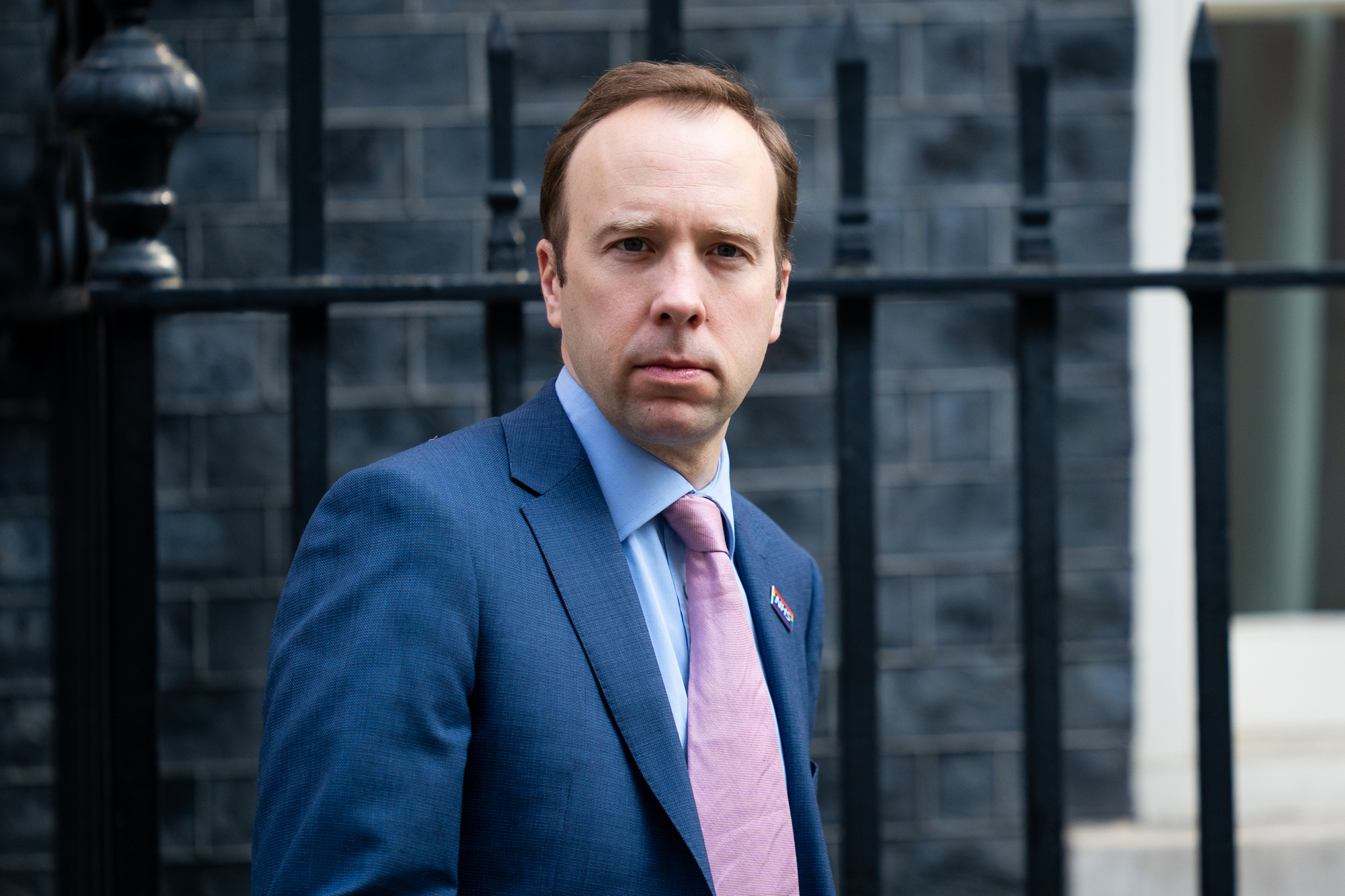
Matt Hancock resigned as UK Health Secretary after being caught on CCTV having a passionate embrace with a colleague.
It’s one of my favourite scenes from Father Ted. Because Mrs Doyle is dying to win Eoin McLove’s poetry competition, Ted writes a poem for her and sends it to the show. But it’s Mrs Doyle’s poem – the one that begins “Eoin McLove has a happy face” – that’s read out.
Dougal is nonplussed, and utters the immortal line “I’m hugely confused Ted”.

“The only explanation I can think of,” he adds, “is that Mrs Doyle’s poem was better than yours. But that couldn’t possibly be, could it Ted?”
Well, I’m hugely confused Ted. Matt Hancock was (I think) the longest-serving and therefore (I suppose) the most experienced member of Boris Johnson’s cabinet. Before Johnson, he had actually served in a variety of ministerial posts, under David Cameron and Theresa May. So presumably (I guess) he knew his way around.
He was also (it seems) a complete dope. I have no idea why video cameras were installed in his office. But only a dope wouldn’t have known they were there if the dope in question worked there. So only a dope would get into a passionate clinch with his political assistant in front of the camera.

Having been caught, he apologises to his prime minister and his wife (we haven’t been told in what order). The prime minister accepts the apology graciously.
The matter is closed, says Boris on Friday. Sure what’s a bit of hanky-panky in the office, even if it involves betraying your wife and children, between government pals?
Then the following day, Hancock announces he is resigning from office, and also lets it be known that he is leaving his wife to set up home with the political assistant.
He reportedly rushed to tell his wife that he was leaving her before news of the affair broke in the newspapers on Friday.
All the time Hancock has been in office, questions have swirled around him. About his competence in the management of the pandemic. About occasions when he ignored social distancing rules in the past. About his failure to publish the details of billions of pounds worth of public contracts related to coronavirus.
About the fact that a family firm, in which he was a shareholder, won one of those contracts and he never declared it. Even about the fact that his forgiving pal and prime minister, at the height of the pandemic, called him (forgive the verbatim quote) “totally f*****g hopeless”.

But here’s why I’m totally confused, Ted. Matt Hancock didn’t resign over any of those things. Not over the hypocrisy, the stupidity, the allegations of corruption, the incompetence. He resigned because he had been caught on camera over a breach of social distance guidelines.
Is it just me? There have been dozens of cases in the past where politicians and others have got off on a technicality. Is this the first time ever when a politician got done in by a technicality? (Answers on a postcard please.)
I’m guessing – especially as he now wants to set up home with her – that he and his assistant had been – how to put it delicately – intimate before.
As far as I know, even during the pandemic, you’re allowed to be intimate with the person you’re intimate with, if you get me. And I’d be reasonably certain that there were more than a few people in his political circle, if not in the media, who knew of this intimacy.
So actually – the fog is clearing now, Ted – he didn’t resign because of a breach of Covid guidelines. He resigned because he was caught on camera.
There is an old rule in politics. If you don’t want to get caught doing it, don’t do it. Sooner or later, the truth will always come out. In my time in active politics, when the pace was a bit slower, it could take a while for someone’s hypocrisy or dishonesty to catch up with them. Nowadays, uncomfortable truths can flash around the world in seconds.
Just as it’s telling that his resignation over social distancing was accepted by a man who boasted, when fatalities from Covid were going through the roof, of shaking the hand of everyone he met.
So Hancock lost his job, not for incompetence or hypocrisy (two characteristics he shares with his leader); not for philandering (another feature of his leader’s personality); not for low standards in public life (which also, oddly enough, applies to his leader). He lost it on a technicality. It’s only possible to conclude that the political establishment was waiting for him to make a mistake – any mistake – so they could do him in.
And the leader, as a result, is forced to take back into the Cabinet a former colleague, Sajid Javid, who owes nothing to him.
Javid previously held the two most senior Cabinet posts in British politics, but was effectively forced to resign at a time when Boris was being led by the nose by Dominic Cummings and Cummings decided he didn’t like Javid’s advisers.
So a pretty bizarre scenario is now in place. Boris has had to accept the resignation of a complete loyalist, for doing the sort of thing Boris himself has consistently done.
He’d had to replace the loyalist with someone he previously betrayed. Cummings, on the outside now, is still waging war against Boris and has consistently waged war against Hancock – and before him, against Javid.

Boris is like a big truck, poised on the top of a hill. And he is still, inexplicably, at the top. But the brakes on that truck are wonky, and have always been wonky. Stability and safety depends entirely on the chocks of wood wedged under the wheels of the truck.
But someone somewhere is stealthily chipping away at those critically necessary chocks of wood. It wouldn’t take much now – his acolyte gone, the man who stood up to him now in an impregnable position, the guy who knows where the bodies are buried still campaigning hard – for that big old truck to start careening downhill.
Boris is still the man. But he’s a man without authority, without credibility. He’s still popular for sure, but you’d have to guess that his popularity may be a mile wide, but could possibly be no more than an inch deep.
He inspires loyalty and derision in equal measure. He could survive – even thrive – indefinitely, or he could be gone in a fortnight. No wonder I’m confused, Ted.