Alison O'Connor: Irish media is a better place now Denis O'Brien has left
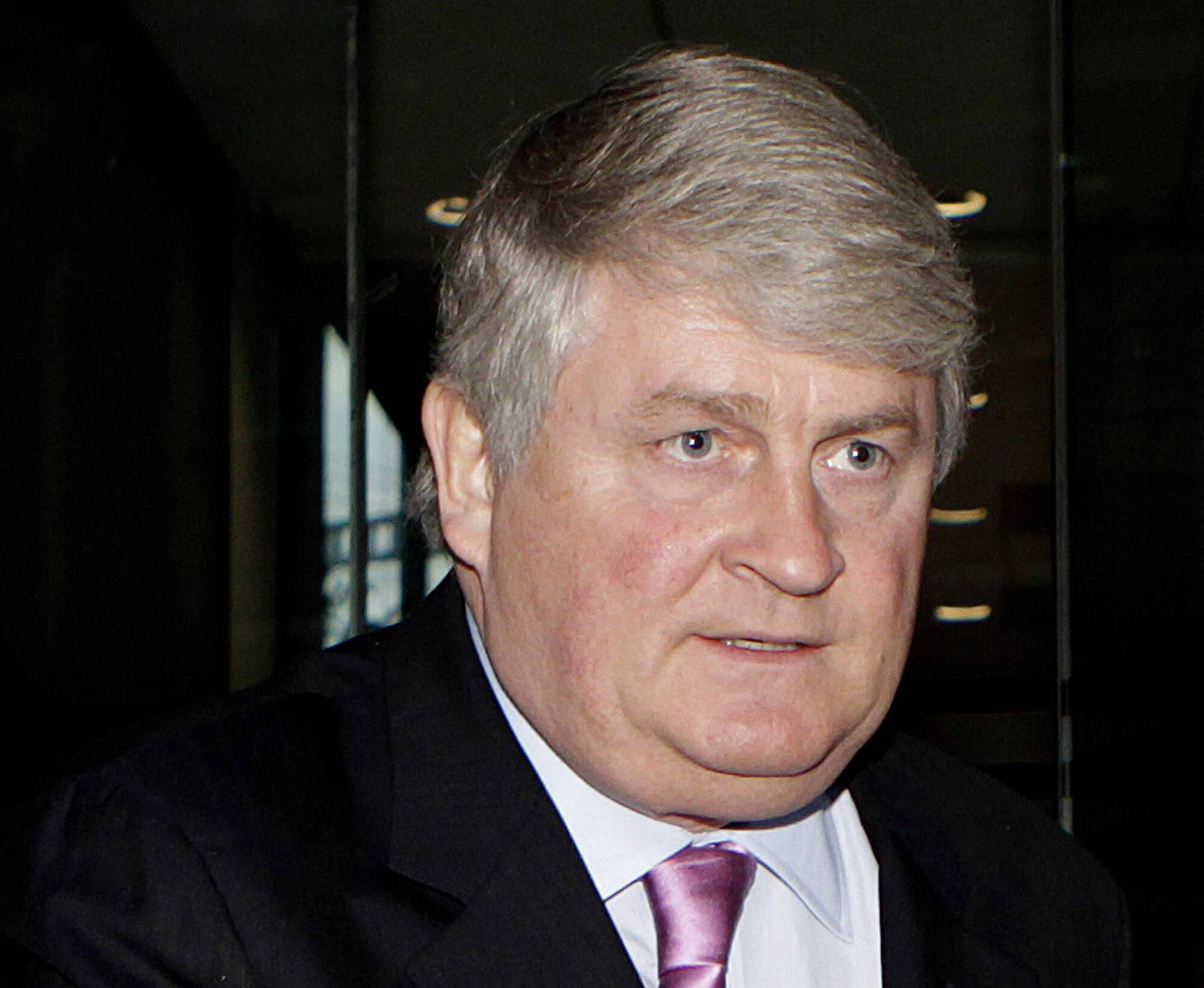
Denis O'Brien: 'If you’re in media, all the other media people savage you,' he told a Trinity society earlier this year. Picture: Niall Carson/PA
It was with a whimper rather than a bang that the man who has dominated the Irish media landscape for decades, and was feared by so many journalists, ended that involvement this week.
Denis O’Brien walks away from owning newspapers and radio stations with his pockets far lighter — by hundreds of millions of euro actually. On top of that, no matter what angle you look at it from, his reputation is most certainly unenhanced.Â
This week, in a final washing of his hands of his Irish media interests, he sold Communicorp, apart from its UK stations, to German media group Bauer Media Audio. In 2019 he sold Independent News & Media (INM) to Belgian company Mediahuis.Â
His media adventures had begun over three decades ago with the Dublin-based Classic Hits 98FM, one of the first independent radio stations to be granted a licence in the Irish market.
Earlier this year, when the sale of Communicorp — involving Newstalk, Today FM, Spin 1038, Spin South West, and 98FM — was first announced, O’Brien spoke at a webinar organised by a Trinity College Dublin society. He was asked about his own media coverage. “If you’re in media, all the other media people savage you,” he said. “It’s just the way of the world. It’s just nasty. Ireland is a great country, but we can’t help ourselves being nasty to people sometimes.”Â
Ah, Denis. What about how much of a menace you were yourself? A sense of nastiness is how many in Irish media might have felt if they entered the O'Brien orbit on what he considered to be the wrong side. What is it with certain successful businessmen and their egos on becoming a media owner with the apparent intention of “putting manners” on journalists.
It’s not that long ago that it felt seriously risky as a journalist to even mention O’Brien’s name out loud, such was the extent of the shadow he cast over the Irish media landscape. It felt like an enormous risk to take part in any broadcast discussion where you might say anything the least bit critical — and that was assuming such a discussion would take place in the first place. I know of colleagues who worked on O’Brien-related projects whose editors were decidedly unenthusiastic with the subject matter and legal departments put them through so many hoops it hardly felt worth it in the end.
In 2012, for example, the businessman wrote to one of the best-known journalists in the country, Vincent Browne. He told him: “I am putting you on notice that if you continue to libel me… I will be left with no other avenue but to sue you personally.” Browne replied that the threat was an abuse of money and power.
In 2015 I wrote a column saying what an annus horribilis it had been for the billionaire businessman and what he really needed was a big hug.Â
I predicted he would be the toast of the Four Courts that Christmas after bringing a mini-boom down there all on his own that year. It was around then that the level of his influence over Irish media, and his apparent passion for suing journalists, went from being more of a niche discussion among concerned hacks to a wider audience. At one time it was estimated that he was about to, or had threatened to, sue around 20 journalists and media organisations. It ratcheted up the pressure to legally threaten journalists personally rather than their employers.
O'Brien had been in the news for a court outing where he alleged conspiracy, to damage him personally and commercially, against a Dublin PR company.
In a second case, against the Dáil committee on procedures and privileges, O’Brien was claiming it had failed to uphold his constitutional rights to his good name by not reprimanding TDs for allegedly abusing Oireachtas privileges. Comments had been made in the Dáil chamber about the businessman’s banking arrangements with IBRC.
Lest we forget, O’Brien had a 29.9% majority shareholding in INM. His writ ran huge in there but you weren’t allowed say that, basically because, guess what, you feared being sued if you mentioned that he was actually the man with the power and influence. INM included the , , , , and a number of regional titles.
It wasn’t just journalists who cowered; politicians were notable for the lack of anything much to say on media mogul O’Brien. That lack of comment and questioning reflected poorly on our political classes but highlighted acutely the danger in one person gaining so much control over the newspaper and radio sector.
Catherine Murphy, then an independent TD and now co-leader of the Social Democrats, was not found wanting. Nor was former junior minister Lucinda Creighton, who, as leader of Renua, received a letter from O’Brien in which he accused her of making “self-serving” attacks on him in the Dáil.Â
She had asked for action to be taken on the findings of the Moriarty tribunal. She wrote back to tell him she would not be silenced by him.
In 2011, the tribunal had reported how Esat Digifone was granted a lucrative mobile phone licence. That report said it was “beyond doubt” that Michael Lowry, a Fine Gael communications minister in 1995 when Esat Digifone won the licence, had imparted “substantive information” to O’Brien. This was “of significant value and assistance to him in securing the licence”.
Among its other findings was that O’Brien made two secret payments totalling £500,000 to Lowry. O’Brien said at the time he had not paid Lowry “one red cent”. Now an independent TD, Lowry rejected the findings.
For his part, O’Brien threw up a hell of a lot of smoke at the time with a hysterical attack on the tribunal, telling various newspapers that there was no proper sense of justice in Ireland. If anything, he said then, it was “rough justice akin to what happened in the UK in the '70s and '80s”, adding that it was a “very dark period of justice".Â
“I mean, it’s Burma,” he said elsewhere, referring to the then-imprisoned Aung San Suu Kyi, who had been under house arrest on and off since 1989.
He said the tribunal made 60 “negative findings” against him out of 79 provisional findings it had sent to him previously. He said the provisional findings accused him of lying in his bid, giving false evidence, and misleading people. There were 29 findings outlining how the mobile-phone licence was improperly awarded to his Esat consortium. Rejecting these, O'Brien said he would fight the tribunal “street by street”.
It rang hollow then and does even more so today. There is no doubt O'Brien would vociferously disagree, but Irish media is a better place without his presence.