Alison O’Connor: 'An abundance of caution' over Covid decisions is understandable
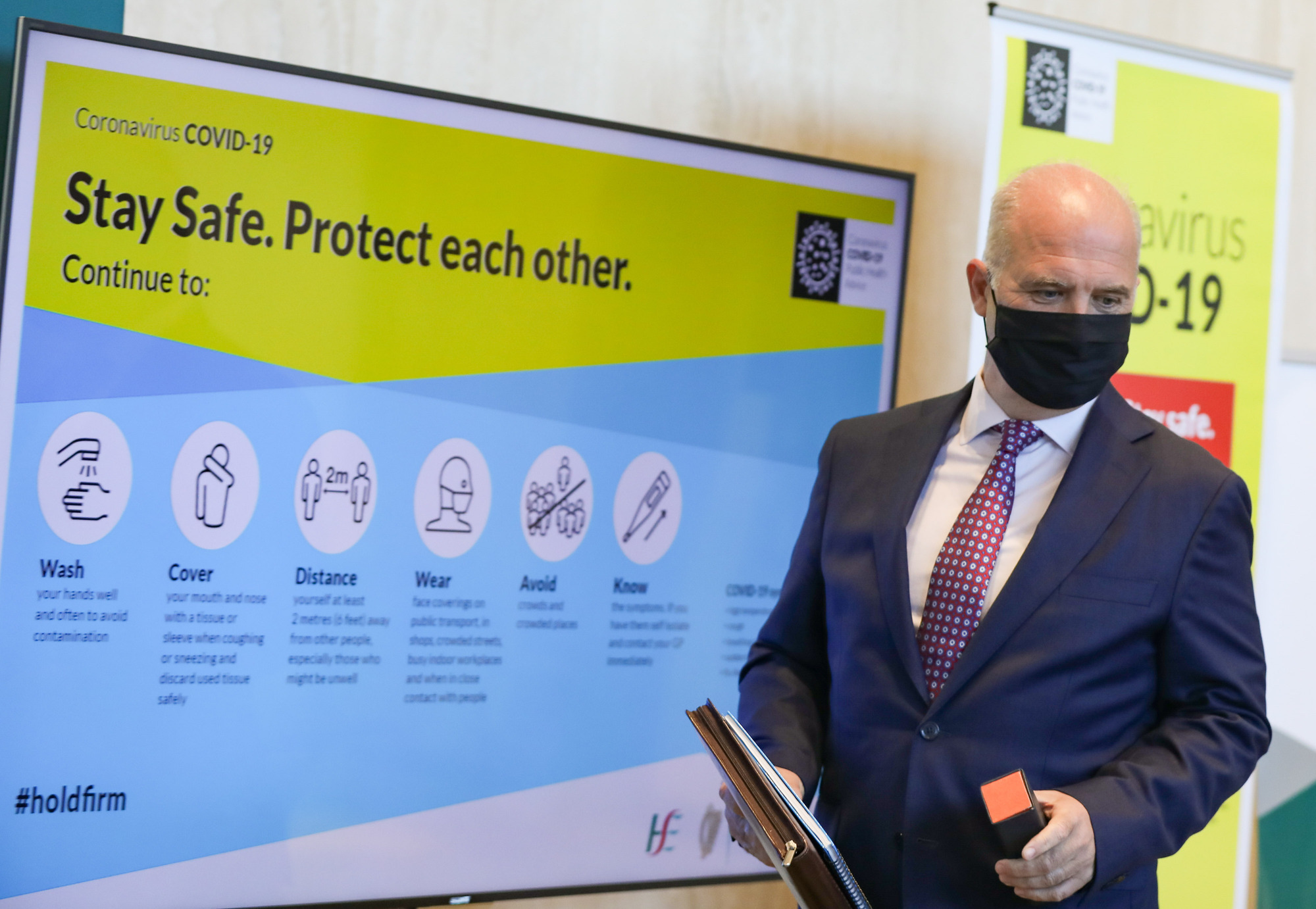
Dr Tony Holohan, Chief Medical Officer, said he had “a huge amount of regret” over the harm done to women in the CervicalCheck controversy.
There is an entire language and phraseology that will forever be associated with Covid. The latest of which — an abundance of caution — has entered the realms of insult.
It’s a phrase that first came to attention a number of weeks ago when used by Professor Karina Butler, the Chair of the National Immunisation Advisory Committee (NIAC) after a decision to temporarily halt the use of the AstraZeneca vaccine and it has been bandied about wholesale since.
“Bloody NIAC and it’s blood abundance of caution,” sums up the sentiment coming from Government quarters and many sections of the media. There is frustration at the rollout of the vaccines being slowed down owing to various complications and limitations, and the Committee being seen to take too long to make decisions.
This week it related to the single dose Johnson & Johnson vaccine and just who it could be given to, and whether it is ok to space out the time between giving the two Pfizer and Moderna jabs.
While our senior politicians might love nothing better than to press the go button on any and all vaccines for everyone, they know the science matters. But they feel the scientists could appreciate some of the politics and the public opinion pressures.
Previously NIAC was an anonymous medical committee that provided “evidence based” advice to the Department of Health on vaccines, immunisation and “related health matters to inform health policies in Ireland”. Suddenly its members find their names in lights.
Did you notice how, over the months, interviewers, whether they were questioning politicians or senior HSE people, would be told in response to a question: “Well that is a matter for NIAC, so I can’t really give you an answer there.” In some cases that was true, in others, it was a handy throwing over of responsibility by those who preferred not to answer a tricky question.
None of what has happened in relation to NIAC, of course, takes place in isolation. There is context and plenty of it. Of all the senior roles involved in managing Covid in Ireland, chief among those I’d least like is to be chair of NIAC, the role so capably and responsibly held by Professor Butler.
Remember back in January when we were wondering why there were delays in starting the rollout of the vaccination programme in nursing homes? Anyone familiar with the Irish health landscape wouldn’t have been too surprised to hear there were issues around consent and liability.
To look at what has been happening you also have to look to events of the past, including the not so recent past. This column recently addressed the damage that has been done to our screening programmes by the CervicalCheck controversy. In 2018, the scandal erupted when it emerged that hundreds of women had not been told the outcome of a review of their slides carried out by CervicalCheck.
Part of the fallout now is how it is becoming next to impossible to employ medics and scientists in the screening area in Ireland.
There are further legacy issues here relating to the interaction during that time between doctors, the HSE, the politicians and, crucially, the public. Over the years, as our health system deteriorated in so many ways, so too did all these relationships. By the time this screening controversy occurred, they were already seriously frayed. Clearly, everyone has pulled together since the arrival of the pandemic, in a manner that gives hope for the future, but there are some deeply rooted dynamics there.
The medico-legal environment in Ireland is well known to be a challenging one. Reform has long been promised. In 2019 the State Claims Agency (SCA) chief executive Ciaran Breen said clinical negligence represented a “very significant economic challenge” for the State. In one case that year the SCA paid out €32.5 million for a catastrophic injury claim. In their case NIAC members would be indemnified by the State. This would clearly provide comfort but the prospect of being caught up in legal actions, when you live in a country with a litigious population, must be a factor, even subliminally, when considering vaccine safety.
According to the chain of command that exists, NIAC makes its decisions and provides advice to the Chief Medical Officer and the Department of Health. The Department and the Minister for Health make policy decisions on vaccines that are implemented by the HSE. Thus far we haven’t seen the CMO Dr Tony Holohan or the deputy CMO Dr Ronan Glynn disagree with NIAC, or indeed express an opinion that they have been too conservative.
It is worth noting that Dr Holohan became a central figure in the CervicalCheck controversy. There was strong criticism over what he told health ministers and when. Patient advocates called on him and other senior health officials to resign. Dr Holohan strongly denied any wrongdoing and refused to stand down.

As recently as February at a Nphet briefing the issue was raised with him. The question followed the settlement of a High Court case over the alleged misinterpretation of slides. The case was taken by Lynsey Bennett, a 32-year-old mother of two who is seriously ill with cervical cancer.
At that time Dr Holohan said he had “a huge amount of regret” over the harm done to women in the CervicalCheck controversy. He did specify the harm involved as being the failure to disclose to the women the findings of retrospective clinical audits of their cases carried out by the screening programme.
The CervicalCheck controversy, of course, emerged following a court settlement in a case taken by Vicky Phelan over the reading of her smears.

It was a surprise this week to see that her solicitor, Cian O’Carroll, who specialises in medical negligence cases, has started a podcast with Vicky, a woman the nation has rightly taken to its heart. On Twitter she said that her solicitor had suggested they do the project together.
Mr O’Carroll says that he and Vicky had become friends since they first met in 2018, and the warmth in their relationship is evident. Listening to the first episode — recorded with Vicky alone in her apartment in Maryland where she is receiving cancer treatment — it certainly is interesting to hear her talk about how a medical trial is conducted and her experiences of the US health system. She’s over there on her own and it was lovely to hear of the 3,500 or so emails she has received from Irish people wanting to keep her company, sending her photos, prayers and music recommendations.
Pushing the podcast on Twitter, Mr O’Carroll, who describes himself as having “a reputation for taking on the tough cases and winning them”, says that in subsequent episodes they will discuss what went wrong in CervicalCheck, “how those fatal and life-changing events happened” and look at what Vicky has achieved since she became an advocate for change.
We will listen with interest but what we cannot ignore with this are the commercial legal realities on one side here. It’s this, and all the aforementioned, that makes an approach involving “an abundance of caution” all the more understandable.