Daniel McConnell: Is it time for the mother goose State to let its citizens fly the nest?
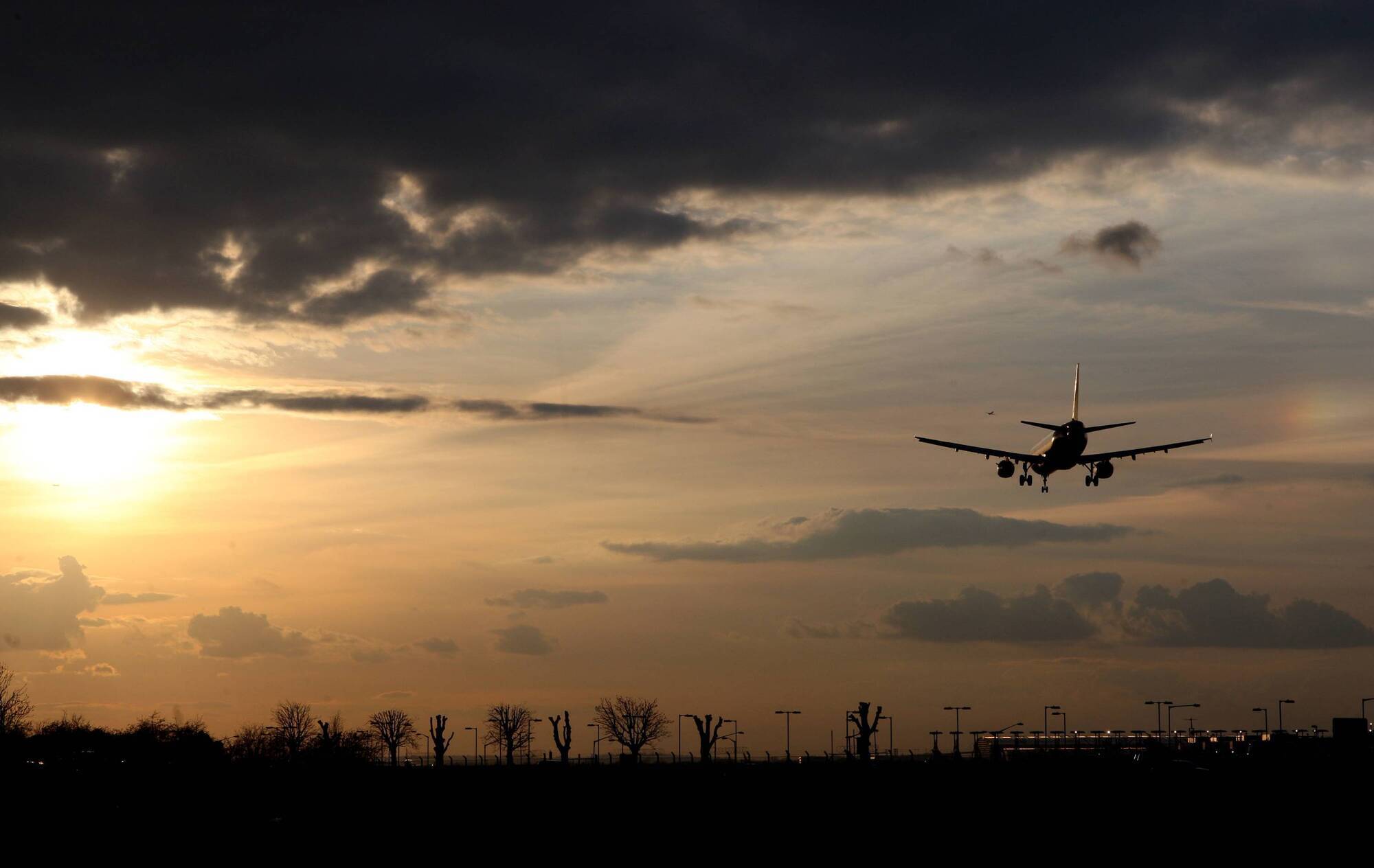
Under EU moves, the Government could be obliged to issue digital green certificates when they are requested by citizens for international travel. Picture: Steve Parsons/PA Wire
On Wednesday, the weekly Cabinet meeting convened in a downbeat mood after 48 hours of chaos and setback in relation to the country’s vaccine rollout programme.
The decision of the National Immunisation Advisory Committee to advise not to give the AstraZeneca vaccine to anyone other than the 60-69 age group combined with the news that the Johnson & Johnson vaccine was being paused was a double hammer blow.
The fact the bad news came just as the country took its first meaningful step out of level 5 lockdown restrictions was painfully ironic and sought to foster a sense that we would never be free of this nightmare.
Ministers have described the gloomy atmosphere in the Cabinet room, even though Taoiseach Micheál Martin sought to accentuate the positive.
“It was very glum. The Johnson & Johnson decision was a real kick in the gut and we gathered in a pretty dire state on Wednesday,” one minister has said.
Suddenly, Mr Martin said he had to step out to take a call from EU Commission president Ursula von der Leyen.
A short while later, he came back to say he had “some very good news” about the Pfizer vaccine but was not in a position to tell the Cabinet for fear it might leak out.
Tánaiste Leo Varadkar interjected by saying the news that Ireland would be getting an additional 545,000 vaccines was “already out there”.
Notwithstanding Mr Martin’s predilection for caution, the upshot was transformative to the disposition of ministers in the room.
The net effect of the extra Pfizer jabs was to nullify the impact of the Johnson & Johnson decision the day before and, in better news, ministers expect a favourable decision from the European Medicines Agency on the J&J vaccine next week.
Added to this is the ever-improving situation in terms of Covid-19 cases numbers, particularly among the elderly and the vulnerable categories, the numbers in hospital and those in ICU.
From the peak in mid-January when there were 2,020 people in hospital and 221 in ICU, on Thursday, there were just 181 in hospital with 51 in ICU.
Certainly, the scenes from the UK this week with revellers enjoying themselves in pubs outdoors has brought a degree of envy and jealously from a weary Irish public who has suffered under some of the most stringent restrictions on personal liberties for too long.
But in the midst of all this is the news that the EU is progressing with plans to introduce a digital green certificate or vaccine passport with a view to allowing international travel to recommence in earnest, perhaps by July.
As reported in recent days, Brussels wants vaccine passports to be operational across the EU by the end of June.
Pilot schemes will be launched at the beginning of that month, with the aim to have the whole system up and running by June 21, Didier Reynders, the European commissioner for justice, told MEPs on Tuesday.
The European Commission had wanted the so-called digital green certificates to be fully operational by the end of May, with some member states more dependent on tourism, such as Greece and Spain, pushing for an even earlier start.
But, for now, that target has been dropped.
"It’s urgent," Reynders told MEPs. "Of course, we want to be ready before the summer. For the end of June, we want to be ready with the regulation."Â
If approved by the European Parliament, the Irish Government would be obliged to issue digital green certificates when they are requested by citizens for international travel.
Civil liberty groups have cried foul that such plans are an infringement on our freedoms.
Irish Council for Civil Liberties head Liam Herrick has said there are many reasons why people cannot or do not want to receive vaccines, including because of a medical condition or lack of access to the vaccine.Â
“In Ireland, we have not gone down the route of mandatory vaccinations, but vaccine passports would effectively be mandatory vaccination by the back door," said Mr Herrick. "That has huge knock-on implications for our rights, creating a two-tier society."
Leading Government figures such as Mr Varadkar have suggested such certs could also be used to allow vaccinated people to access services at home earlier.
It has been somewhat curious for a country that is so reliant on aviation for trade and for a people who are so fond of travelling that there has been so little discussion at political level to protect it.
Qualms and difficulties aside, it appears the vaccine passport is the preferred method of allowing travel to recommence and on that basis must be given top priority.
The level of lockdown here is no longer proportionate either with the scale of the virus or the number of deaths because of it in our society.
We keep hearing about an abundance of caution but in reality that has meant an abdication of duty and responsibility from our political class.
From an EU perspective, after a disastrous year in relation to Covid-19, it desperately needs a major win.
Such has been the failure, Ms von der Leyen has been open to charges of running a pathetic kakistocracy, not worthy of public confidence.
From an Irish perspective, even though we remain overwhelmingly pro-European, the calamity in January over the Northern Irish Protocol combined with the glacial pace in the vaccine delivery has dented confidence in Brussels at a time of great change.
As Mr Varadkar said this week, the Troika experience here a decade ago “strained” relations with Europe and fresh concerns are on the horizon.
He also cited referendum defeats linked to concerns about the diminution of our sovereignty and military neutrality as other negatives on Ireland’s relationship with Europe.
He said it is also a relationship which is undergoing profound change.
“We are now a net contributor and that will inevitably change how we look at things," said Mr Varadkar. "Also, any shift towards protectionism or competence creep will concern us. And, of course, the impact of Brexit is profound and will forever change the web of relationships across these islands and Europe.”
The vaccine passport is a golden opportunity for the EU to reclaim some credibility and it would be a fitting recompense to the people of Europe who have been so woefully let down by its political masters.