Clodagh Finn: Pandemic upside — we have stopped patronising the over-80s
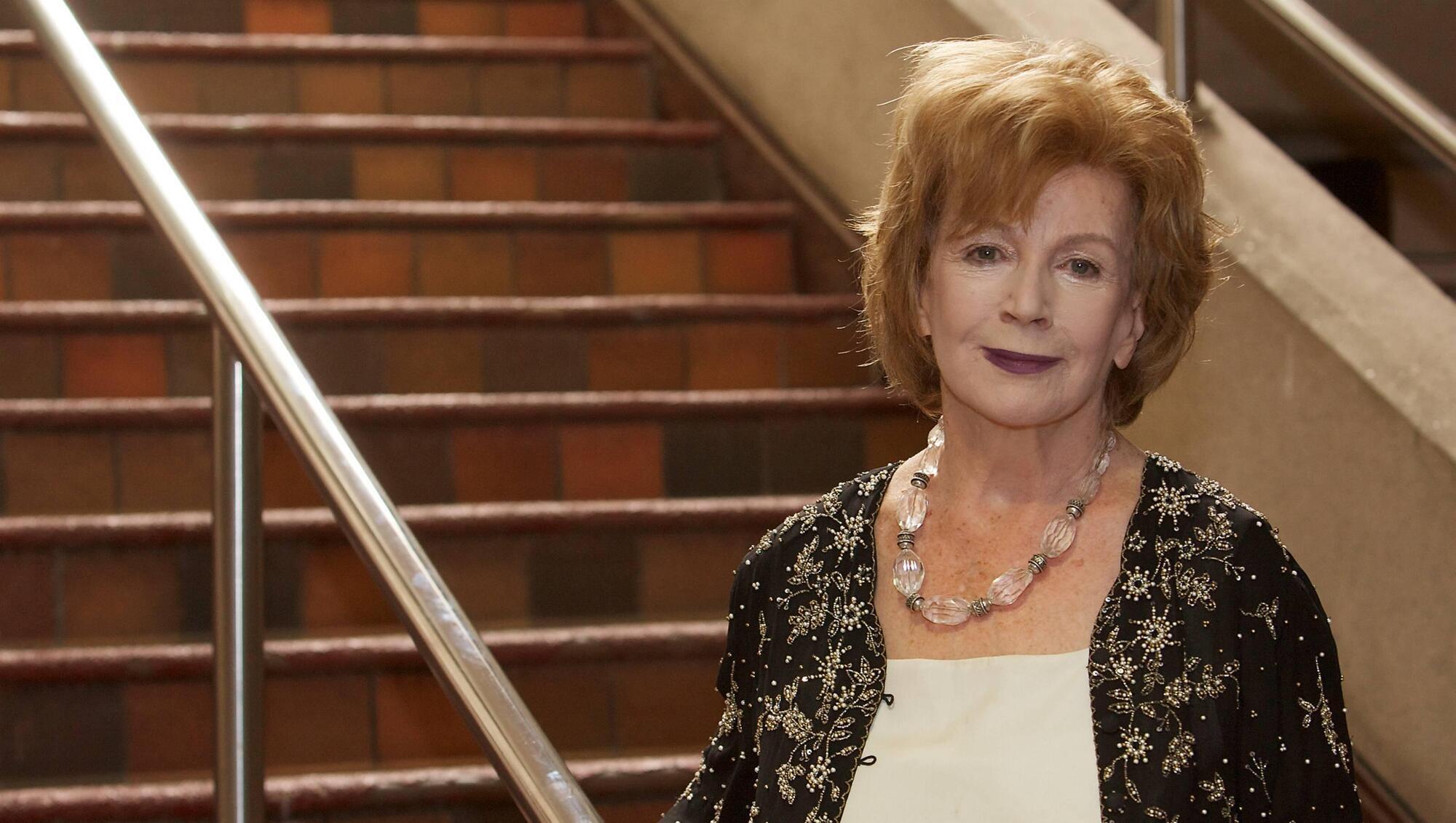
Edna O’Brien, often referred to as 'Ireland’s greatest living writer', has been in the spotlight for decades. It is unsurprising we still follow her career.

One of the unexpected positives of the Covid vaccine rollout, apart from the obvious health benefits, is that older people are suddenly much more visible. I don’t think I’ve ever seen so many people over 80 being interviewed on TV, which makes you realise how sadly absent their voices are in ‘normal’ times.
Right now, they are big news. On every news channel, in every country, cameras have been following an age group that doesn’t often get much coverage. The world media wants to tell the good-news story of the arrival of a vaccine, and what better way to do that than by talking to the first to receive it.
It Is a hopeful and uplifting story. We are, rightly, caring for a group that has have been severely affected over the last year. But this new focus on the over-80s is also showing us just how short-sighted we were in not featuring them to the same extent before the pandemic.
It’s not as if you stop having something to say once you hit 80, or indeed 90. Just think of David Attenborough, who will be 95 in May. Last month, he told the UN Security Council that the threats posed by climate change should unite us, as rising global temperatures, the despoiling of our oceans and changes in weather patterns know no boundaries.
The British naturalist is usually quoted with the word “renowned” before his title, and rightly so. More importantly, we listen to what he has to say.
In the same way, Edna O’Brien is often referred to as “Ireland’s greatest living writer”. As she celebrated her 90th birthday last December, she spoke about wanting to write one final novel. By any standards, she had an exceptional birthday week, delivering the annual TS Eliot lecture on Eliot and James Joyce for the Abbey Theatre and winning the South Bank Sky Arts award for literature for her novel, .
Attenborough and O’Brien have been in the spotlight for decades so it’s not surprising that we would follow them into older age. It has taken a pandemic, however, to seek out the opinions of ordinary older people who have shown extraordinary, though not always headline-grabbing, resilience at a time of global crisis.
We’ve heard matter-of-fact stories of the elderly people who are still driving, still shopping, and still communicating despite lockdown. Many of them took to Zoom without a second thought to keep in touch with grandchildren. And why wouldn’t they? What are a few computer buttons to a generation who lived through the Second World War, TB, and polio?
These are the people who reared us, financed us, and continued, pre-Covid, to help with childminding. Indeed, many continue to work, such as 92-year-old Maureen O’Sullivan, who popped out at lunchtime to get her vaccine before returning to her shop and post office in Tuosist in Co Kerry.
She has kept her shop open through lockdown because, as the only shop between Kenmare and Ardgroom, she wanted to ensure basic necessities were available to anyone who might need them.
One of the joys of recent months has been following the exchanges on Twitter between former BBC executive Helen O’Rahilly and her 92-year-old aunt. They are funny, heartfelt, and full of humanity, but, more importantly, they highlight how, in the words of her niece, a “classy, sassy, tricky 92-year-old lady is still trying desperately to be as independent as she can".
O’Rahilly says she has been in the business of caring only “a wet week”, having returned from London to Dublin to care for her aunt just before the first lockdown, but she says that time has been dotted with treasures. She has come to see parts of her aunt’s life that she didn’t know about, seen her energy and enjoyed her take on things.
She’s not alone. O’Rahilly’s book, , was a huge success and her regular tweets have a growing following. Here is The Aunt’s take on being vaccinated at Dublin City University last month:
Aunt: Do you know how that (the vaccine process @DCU Helix) could have been better?
Me: How?
Aunt: A fella with a guitar..a bit of an aul song..sure it was the 1st time I’ve seen such a crowd in a year!
Me:...
She was on to something as organists in the UK have been providing musical accompaniment to those attending a vaccination centre set up at Salisbury Cathedral. They are even taking requests.
More than the humour, though, O’Rahilly has shown how “fun and fabulous” her relationship with her aunt has been.
“Post-pandemic, we have to include older people and listen to them, but not in a patronising way. Not with a nice pat on the head. We have lost so many chances. Bring them with you.”
Post-pandemic, or even mid-pandemic, we might also ask ourselves why there are so few older people in the spotlight? Is there, for instance, an age at which we become — or are considered — less relevant? That couldn’t be a more pressing question because Ireland has one of the fastest ageing populations in Europe. By 2050, the number of over 65s will double from 22% to 47% of the adult population.
That is often framed as a ‘crisis’. In financial terms, it certainly poses a challenge and we are constantly reminded of the “pensions timebomb” that is ticking loudly and ominously in the background. Reform of the State pension and improved regulation of private-sector pensions will be big issues in the years ahead.
What interests me more, however, are the social and cultural implications. For a start, we need to get much more positive about ageing. And much less patronising. The young should take the greatest interest because they will be living longest of all. Irish babies born in 2021 are expected to live to the age of 105, Unicef data told us at the beginning of the year.
By today’s norms, that means they could live as many as 40 years after ‘retirement’. Possibly even longer, according to biologist Andrew Steele, whose new book looks at the fascinating study of biogerontology, a science that considers age as a medical condition to be treated and ultimately ‘cured’.
He says that advances in science and medicine will be able to delay diseases and, in the not-too-distant future, people will live even longer and healthier lives.
Despite those advances, our attitude to ageing has not yet caught up with reality. Instead of seeing it as a positive thing — which it patently is — we talk about an ageing population as a burden on society and on the public purse.
Maybe we need to retire the word ‘retirement’, given the ongoing and vital contribution that so many of our so-called retired citizens make to Irish society. They are net contributors. And, as we have seen recently, they have lots to say.
Let’s just hope, post-pandemic, the media interest in it continues.
CLIMATE & SUSTAINABILITY HUB
CONNECT WITH US TODAY



Be the first to know the latest news and updates