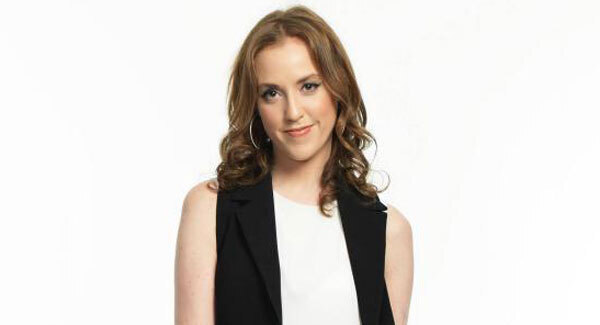
Louise O'Neill: 'I don’t know what I will do with my own diaries'
"Are you keeping records of the emails and texts you’re getting, the thoughts you’re having, the way your hearts and minds are reacting to this strange new way of living?"
Louise O'Neill: 'I don’t know what I will do with my own diaries'

I’ve found comfort in listening to Sugar Calling, a podcast in which Cheryl Strayd, the author of the memoir Wild, turns to her favourite writers for inspiration during these uncertain times. In the first episode, she spoke to George Saunders, the short story writer, and he read aloud an email he had sent to his graduate students. In the email he wrote, “this is when the world needs our eyes and ears and minds. This has never happened before here, at least not since 1918. We are – and especially you are - the generation that is going to have to help us make sense of this and recover afterwards…

Are you keeping records of the emails and texts you’re getting, the thoughts you’re having, the way your hearts and minds are reacting to this strange new way of living?

… Fifty years from now, people the age you are now won’t believe this ever happened, or will do the sort of eyeroll we all do when someone tells us about something crazy that happened in 1960. What will convince that future kid is what you are able to write about this, and what you are able to write about it will depend on how much sharp attention you’re paying now and what records you keep.”

A friend told me that her eight-year-old son has been keeping a diary since the schools were shut down because he wants a record to look back at in years to come. I looked at my own journal and was surprised by how mundane much of it was; it was full of the usual petty concerns and anxieties that I often spill onto the pages, a form of psychological blood-letting. I opened a new diary and on the title page I wrote two words – Pandemic Records. (If that isn’t the name of a music label, it should be.) I’ve been trying to do as Saunders said, and pay attention. What I’ve found interesting to note is that the situation still feels surreal, even two months later. For most of us, much of this is theoretical – unless we are working in a hospital or a care home, unless we or someone we love has contracted the virus, or unless someone in our immediate family has a chronic illness, much of what we are experiencing is intangible.

We can’t see this crisis – it’s not a warzone, we’re not hearing sirens and bombs and gunshots in the distance – and therefore it’s easy to forget it sometimes, until you go to your local pharmacy for paracetamol and are greeted with a sheet of Perspex glass blocking the entrance. In the supermarket you attempt a double dodge to avoid coming too close to the other person, the rising fury when they don’t do the same and brush up against you. Logically, you know the likelihood is that neither of you have the virus but you still feel rage that you are following the rules and they aren’t.

The sacrifices are many – we’re all missing our family and friends, not to mention the gym, our favourite restaurant, the local pub. (In my fantasies, I have quarantined with a chef, a hairdresser, and a massage therapist.) – and the thought that others might not be doing the same can leave us feeling frustrated and sometimes even incandescent with rage. Irrational anger is the reaction that has come up, time and time again, when I ask people how they’re doing, and they describe too an almost prurient interest in their neighbours’ business, the Valley of the Squinting Windows in full force as the guards are called for petty grievances. Friends tell me they’re worried about their children’s development, wondering if insisting they stay away from other kids – not to mention the treatment of small children like pariahs in public spaces – will have long lasting repercussions.

I hear a story about a grandmother who survived the Spanish Flu and was physically distant with her own family, something they’d always chalked down to a generational divide but now, they’re not so sure. My sister, a primary school teacher, has heard of parents waking up to their children in full uniform, ‘just in case’ the school might be open that day. She bumped into a student in the shop and when she said hello, he became upset as he had been afraid Teacher might have forgotten him. She sat down that night and wrote a postcard to every student in her Junior Infants class, saying how proud she was of them and how she missed them all. I can’t help but wonder what those children will recall of this time, thirty years from now, and if that card will play a prominent role in their memories. I don’t know what I will do with my own diaries, if I will use them to inform future work.

Maybe it’s enough if they simply help me to make sense of all this. Maybe I will re-read these pages in years to come as proof this wasn’t all just a fever dream. Yes, I will say. Yes, this is the truth of what happened that year.

More in this section

Revoiced

Newsletter

Sign up to the best reads of the week from irishexaminer.com selected just for you.

Cookie Policy Privacy Policy Brand Safety FAQ Help Contact Us Terms and Conditions

© Examiner Echo Group Limited