Just how many crises can this Government withstand?


JUST how many crises can this Government withstand?
Last Thursday, Taoiseach Enda Kenny stood beside the Polish prime minister for their joint press conference following their two-hour meeting. The vast press centre was filled with members of the Polish and Irish media, along with countless advisers and political flunkies.
While Enda was there to discuss Brexit, Brexit, Brexit, unfortunately for him, the latest Garda crisis overshadowed the entire affair.
Enda is incredibly tightly controlled, so the Irish media was permitted to ask two questions. I was tasked to ask one.
“Taoiseach, is it credible that the Garda Commissioner, the chief law officer in the land, is able to remain at her post while she is the subject of a judge-led commission of inquiry? Do you have full confidence in her and is your and the Government’s support for her not merely about extending your stay in office?” I asked him.
A riled Taoiseach gave a sharp response. “Your comment that this is about prolonging the lifetime of the Government is utterly irrelevant,” he snapped in reply.
But is it really that irrelevant?
I’m sorry Taoiseach, but I beg to differ.
Since it stumbled into office, the main hallmark of this weak minority Government has been its amazing ability to kick various cans of crisis down the road.
Be it third-level fees, abortion, water charges, bin charges, foster abuse sex scandals, Nama, or the bugging of journalists’ phones, the Government has chosen to defer acting on these crises by referring to commissions of inquiry or some committee or citizens’ assembly in order to contain the problem.
But sooner or later the road has to end, or at least become a cul-de-sac. The day of reckoning has to come.

Time and time again Enda and his ministers have chosen the route of a commission in order to contain or kill off a mounting political crisis. The benefits are clear: Announce an inquiry under the stewardship of some eminent judge, announce terms of reference, and from there let it fade off the political agenda and the show is allowed to proceed.
You see, once the process is established, ministers will cling to the line of not wanting to comment on the process, as to do so would be to interfere or prejudice it. The stock response goes: “It would be irresponsible for me to comment on that controversy, as would I be forgiven if anything I said cuts across or jeopardises an inquiry? The judge must be allowed time and space to do his/her work.”
Then, once the timeframe for the inquiry expires, comes the now almost obligatory request for an extension from the judge.
As it is in its self-interest, the Government is always only too happy to accede to the request.
All the while, the issue falls down the political agenda, the heat or toxicity fading with each passing week. Retired judges are a now a growth industry as they are in increasing demand.
And at the end of that process, when the report comes out, no one person gets held accountable. The latest Garda crisis to engulf the Government has stayed true to form.
Last Tuesday, Tánaiste Frances Fitzgerald sought and secured agreement from Cabinet to establish a commission of inquiry into allegations made by two Garda whistleblowers, Sgt Maurice McCabe and Supt David Taylor, about Garda Commissioner Nóirín O’Sullivan and her predecessor Martin Callinan.
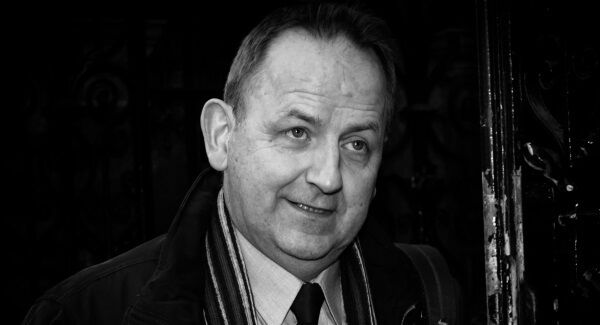
The chief allegation made by Taylor and McCabe is that senior Garda management, including O’Sullivan and Callinan, sought to destroy McCabe’s reputation.
Taylor, as a former press spokesman for the force, admitted his role in the campaign, but has claimed he was acting on orders from on-high.
O’Sullivan has consistently denied any knowledge of any campaign, but the controversy has refused to go away.
There have been widespread calls for her to step aside from her post, without prejudice, while the judge-led inquiry does its work over the next nine months.
Labour leader Brendan Howlin, Sinn Féin, and Fine Gael’s Michael D’Arcy have all said she cannot lead the force credibly while she is the subject of the inquiry.
“I cannot think of another walk of life where, if allegations of this nature had been made against a person in a position of power, they would not be placed on administrative leave until the outcome of the investigation is known. This would be true of a school principal or even a shop manager. That it is not true for the head of An Garda Síochána is troubling,” Howlin said.
But from Kenny, Fitzgerald, and the Government, all we have had are expressions of support for the beleaguered commissioner.
“In respect of the Garda commissioner, yes I have confidence in her, full confidence in her. There is no prima facie evidence; there is no indication of any wrongdoing of any kind against the Garda commissioner. For that reason, she is fully entitled to the support of Government,” the Taoiseach told me in Warsaw.
He continued: “These are all allegations; none of them have been proven. There is no evidence of wrongdoing. You cannot have a country if everyone against whom allegations have been made have to step aside.
“She has the full confidence of the Government, and that is why we are having a commission of inquiry with powers of compellability which will determine the truth of the allegations made, which Judge Iarfhlaith O’Neill was unable to determine,” he said.

Fianna Fáil, too, decided to lend support for the commissioner, because they know if they didn’t, it would mean the end of the “confidence and supply” deal with Fine Gael, and most certainly a general election.
So, O’Sullivan will remain in her post and the Government, weak and eunuch-like, will limp on.
It is a shameful abandonment of proper accountability and what’s worse is the willingness of our so-called political leaders to go along with it.
We have a terrible legacy around accountability in Ireland. People don’t get sacked. They retire on full pensions or get moved sideways on their large salaries or even worse, they get promoted to bigger jobs on another field.
But on the other side are the victims of the system who are allowed to dangle in the wind, because to deliver justice for them is not politically expedient.
I think of Grace, the mute intellectually disabled woman allowed to languish in a Waterford foster home for 14 years after concerns were first raised. Her inquiry is still pending, while those responsible have so far received no sanction.
I think of Maurice McCabe, who has been screwed by a system which has done its best more than once to destroy him. I think also of the taxpayer, who time and time again, has to pick up the tab for the colossal mistakes of people who all too often get rewarded rather than punished for their mistakes.
As the Fianna Fáil TD John McGuinness famously declared in his book, “the house always wins”.
Utterly irrelevant, Taoiseach?
I think not.
CONNECT WITH US TODAY



Be the first to know the latest news and updates