Birds of prey progress is ‘mixed’
IRELAND’S Environment — An Assessment 2016 has been published by the Environmental Protection Agency (EPA). 

Birds of prey progress is ‘mixed’

Chapter 4 of the report covers biodiversity and nature conservation; progress on reintroducing birds of prey to Ireland, it says, has been “mixed”.

Between 2007 and 2011, 158 Welsh red kite chicks were released in Wicklow and Dublin. According to the EPA, 31 of them have been found dead.

Twenty-three birds had been poisoned and one shot.

Despite these losses, there is guarded optimism regarding the species’ future here.

Breeding has been successful, although the report doesn’t give figures for the number of nests.

“Overall,” it says, the kite reintroduction “has been largely positive; breeding has been successful and translocation of Wicklow donor stock into Munster is being considered.”

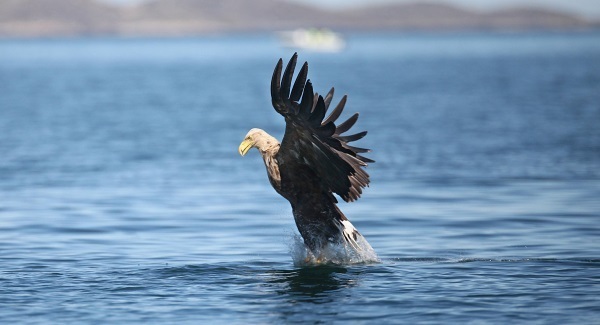
The outlook for two eagle species restorations is less rosy, but all is not lost. Beginning in 2007, Norwegian white-tailed eagle chicks were released in Kerry.

By 2011, 100 had been introduced.

Thirty of them are known to be dead, at least 12 having been poisoned.

However, eight pairs have nested, four of them going on to produce chicks.

After an absence of 100 years, eagles bred successfully at Lough Leane, Killarney.

More than 17,000 people viewed a nest at Mountshannon in 2013 and 2014.

The golden eagle restoration project got underway in 2001.

Of 61 young Scottish eagles released in Donegal, seven have been found dead.

At least three are known to have been poisoned.

A pair bred in 2014, the first golden eagles to do so in a century.

However, only three breeding pairs survive.

That the introduced sea-eagles should have fared better than their golden cousins seems odd.

Their coastal haunts in Norway are much more rugged and austere than the Irish equivalents.

Yet white-tailed eagles thrive there; at one location, last June, I counted eight eagles in the air at the same time.

The Scottish highland habitats, where golden eagles reign, are broadly similar to those of the west of Ireland.

The Royal Society for the Protection of Birds (RSPB) and the Scottish Raptor Study Group carried out a golden eagle census in Scotland last year.

Seven hundred known haunts of the country’s national bird were visited three times during the breeding season.

With 508 pairs recorded, an increase of 15% since 2003, the species has now attained “favourable conservation status” in Scotland. Yet, despite the similarities in habitat, our introduced birds seem unable to raise sufficient young to compensate for the numbers dying.

The EPA report says that “there are concerns regarding the appropriate management of upland habitats and availability of prey to sustain a viable population of golden eagles”.

The Donegal public has been enthusiastic about the return of the birds.

While poisoning, accidental or deliberate, is less of a problem there than in Kerry or Wicklow, it is still an issue.

Burning and excessive grazing have degraded the uplands; there is little for eagles to hunt in an impoverished landscape.

Myxomatosis has eliminated the rabbits which, a century ago, would have been an important food source.

Eagles have to compete with foxes for the limited prey available.

Much time, effort, and expense have gone into the golden eagle project; it would be a tragedy if we let it fail now.

There is surely a case for habitat management measures to be taken at selected upland sites.

Foxes and hooded crows need to be controlled, over-grazing eliminated, the inappropriate burning of vegetation prevented, and the planting of American conifers more sensitively planned.

Food provided at feeding stations for eagles might help the birds during the nesting season and “tide them over” until more favourable conditions are restored.

Ireland is not the only country with an eagle problem.

England’s only resident golden eagle has disappeared from its Lake District haunt.

Not having been seen for a year, it is feared dead.

More in this section

Revoiced

Newsletter

Sign up to the best reads of the week from irishexaminer.com selected just for you.

Cookie Policy Privacy Policy Brand Safety FAQ Help Contact Us Terms and Conditions

© Examiner Echo Group Limited