Talking a good game about ending inequity
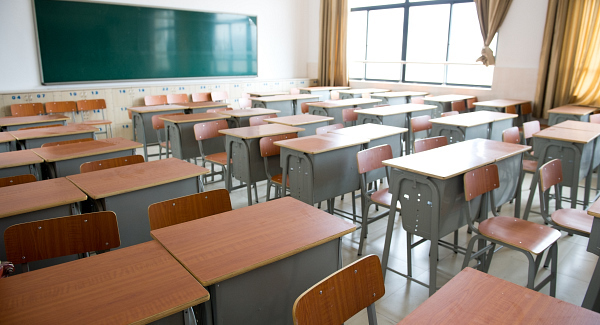
THERE are few more revealing insights into a community than the behaviour, negative or positive, seen in a national school classroom. 
Talking a good game about ending inequity

Children, in their innocence and naivety, sometimes through their cold calculation or detached violence, are a pretty good reflection of the world they come from. Sometimes they can beguile and charm, other times they can frighten classmates and be a cause of great concern for their teachers. They are nearly always a perfect expression of the environment they come from.

That concern is often exacerbated when the support services designed to help a troubled child are not readily available or available at all. Teachers and the whole school community — and especially the unsettled child’s family — can only look on in something approaching despair as a child that desperately needs help to secure the most basic education becomes marginalised and ultimately leaves school a confused, sometimes angry young person, ill-equipped to meet life’s many and unforgiving challenges.

The difficulties facing primary schools that do not have the psychological support service to help distressed children are the subject of a study by Dublin City University. The report uncovered the consequences of dysfunctional family life, our shameful housing crisis and the impact the collapse of a child’s parents’ relationship can have on a young person.

It deals with how children from homeless families struggle with the pressures of trying to learn in such an unsettled and inappropriate setting; it reports on an incident where a six year-old brought a knife to the classroom intending to injure a classmate and how disputes over access to a child between estranged parents can so unnerve an innocent child.

The report also discusses how one child tried, repeatedly, to set a school on fire and how some children, some barely more than toddlers, had to fight suicidal thoughts. Nearly 750 primary school principals took part in the survey and almost two-thirds of them reported that they did not have access to school-based counselling.

Essentially, the report is a litany of powerful arguments for making the provision of the kind of service that can support emotional and psychological stability in our schools as everyday as a maths or an Irish teacher. That more than 80% of the school principals who participated in the study reported some of their pupils face some of these issues strengthens that argument considerably, possibly to the point where a Government response is an obligation.

As ever it comes down to a choice around how resources are used and for whose benefit. We are sliding towards a difficult episode over public sector pay demands. If those demands are met, as they will probably be, then an even greater proportion of the public purse will go to public servants. Services that, in an ideal world at least, would help the kind of disadvantaged school children described in the DCU report will become even more remote. The only alternative, as ever, are higher taxes. Once again we must accept that though we talk a good game about ending disadvantage we are reluctant to bear the cost of making this an equal opportunities society.

x

More in this section

Revoiced

Newsletter

Sign up to the best reads of the week from irishexaminer.com selected just for you.

Cookie Policy Privacy Policy Brand Safety FAQ Help Contact Us Terms and Conditions

© Examiner Echo Group Limited