Rare red footed arrival takes booby prize
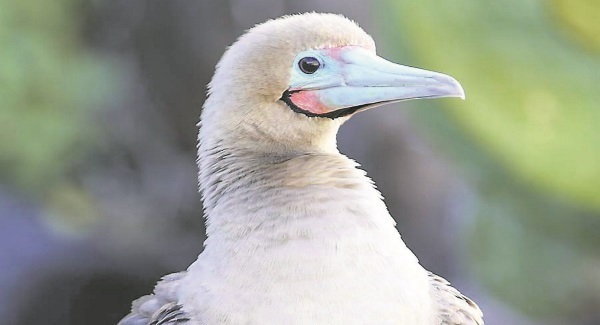
An odd-looking seabird was found, emaciated and shivering, on St. Leonard’s Beach in Sussex, three weeks ago, writes Richard Collins. 
Rare red footed arrival takes booby prize

It’s now in the care of the RSPCA. The patient resembles a juvenile gannet but its legs and feet are bright red, a clue to the bird’s identity. Red-footed boobies live in warm tropical waters. The occasional one is seen off Spain, but boobies seldom venture into the colder waters of the North Atlantic. This is the first record of one in Britain or Ireland.

Gannets and boobies belong to a family of pelicans known as the ‘sulids’. The name comes from the Irish ‘súil’; sulids have excellent sight. Ranging over vast expanses of ocean, they can spot a shoal of fish from afar. Plunge-diving on their prey from high in the air, binocular vision gives them unerring accuracy. The red-footed species catches flying fish on the wing. To escape an underwater predator, a hapless fish takes off into the air, only to be clobbered by a bird!

‘Gannet’ comes from the same Germanic root as ‘gape’; our largest Irish seabird swallows mackerel-sized fish whole. ‘Booby’ is the American name, ‘bobo’ being Spanish for ‘fool’, as in ‘booby-trap’. Seabirds have just three webbed toes but, like all pelicans, sulids are ‘toti-palmate’; they have webs between all four toes. The huge flat feet make walking difficult; gannets waddle about like clowns. The red-footed boobies’ gaudily-coloured feet, and those of its blue-footed cousin, add to their circus-performer image. Nobody knows why the feet are brightly coloured.

Sailors, on sea voyages long ago, would stop off at islands for water and fresh meat, the Galapagos being a prime source of tortoises and seabirds. Even today, the boobies nesting there, and indeed all the birds of those beautiful islands, are completely trusting. It’s a strange experience to go right up to a Galapagos hawk perched on a low bush and have it ignore you. You seem to have become invisible, a ghost. No wonder the sailors thought birds they could just grab and slaughter were stupid.

The Atlantic gannet nests on sea-stacks cliffs and rocky islands. It lays a single egg. The red-footed booby, however, nests in bushes. It also produces only one egg. The two other Galapagos booby species lay two. Then, a kind of madness takes over; the older chick of the masked booby kills its smaller sibling.

Golden eagles, incidentally, also exhibit this weird Cain and Able behaviour. Blue-footed booby chicks aren’t so violent but, if one strays half a metre from the nest, the parent rejects it and the youngster starves to death. Perhaps boobies are stupid after all.

The Hastings visitor has ornithologists scratching their heads. Red-footed boobies don’t migrate and seldom venture more than 150km from their nesting areas on foraging trips. So how did this bird end up so far from home? Seabirds occasionally land on ships but, unless they are unwell, soon take wing again. Did this booby hitch a ride on a ship sailing from the tropics? Hardly, although hand-outs from the crew might have helped it or the bird could have made fishing sorties from time to time.

It’s more likely that the booby was caught in the tail-end of a tropical storm and blown northwards. Seabirds generally rest on the sea during gales but hunger might have forced this one to take wing. Arriving in the cold waters of the North Atlantic, a native of tropical seas might have difficulty getting enough food. This could explain the bird’s poor physical condition. As I write, the booby is still alive but its survival prospects are slim. If it recovers, the patient is to be taken back to the tropics. The red-footed booby is not a threatened species and transporting it will be expensive. Is the cost of doing so justified? Are its rescuers also boobies?

x

More in this section

Revoiced

Newsletter

Had a busy week? Sign up for some of the best reads from the week gone by. Selected just for you.

Cookie Policy Privacy Policy Brand Safety FAQ Help Contact Us Terms and Conditions

© Examiner Echo Group Limited