Rio tickets controversy - Irish officials must not be scapegoated
Its report will then be forwarded to the judge selected to chair the State inquiry into the controversy. The reports could be important in re-establishing the OCI’s credibility.
The Government’s inquiry by a retired judge will be on a non-statutory basis, so the OCI’s full co-operation could be important in deciding whether the Government later needs to go further and establish a full statutory inquiry.
This could be imperative, as it would be much better to spend the money on sport, rather than paying exorbitant legal costs of a statutory inquiry. Sport plays a very important role in raising national morale.
The Brazilians have their own system of justice, aspects of which have been raising many eyebrows here, as the saga has been assuming the aspects of a farce.
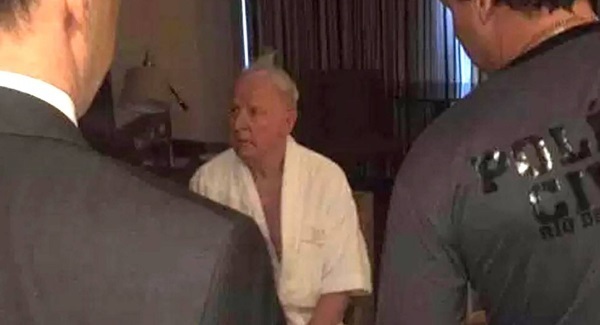
The media was obviously informed in advance, so television cameras were present in the middle of the night when Pat Hickey, the OCI president, was arrested for questioning. Five days later he still has not been charged but is being held in custody.
This could not happen in this country, because such behaviour would be considered highly prejudicial. Minister Simon Coveney is correct in his assessment that “there almost seems to be an assumption of guilt before anything is publicly proven”.
Over the weekend the passports of three further OCI officials were seized in Rio, and there were reports that the Brazilians also wished to seize the passports of three further Irish officials. Those included the passport of OCI’s John Delaney, who is president of the Football Association of Ireland. He has never even visited Rio.
There is a real danger that the controversy is being exploited politically in Brazil, where questions are already being asked about empty seats.
For instance, there were swathes of vacant seats in the stadium on the night that Brazil’s hero, Thiago Braz da Silva, won the gold medal in the pole vault, and also while Usain Bolt was accomplishing some of the most famous exploits in athletic history.
Many foreigners were frightened of going to Rio, due to concerns over political unrest, economic instability, and reports of the zika virus.
Officials in Rio recognised the ticket problem in advance and tried to allocate 47,000 tickets to students in local public schools, but this was blocked in June by a judge, who felt that such handouts might influence upcoming municipal elections.
There must be no question about Pat Hickey and the OCI being scapegoated to cover up local failings.