Dear Sir... Readers' Views (18/08/16)
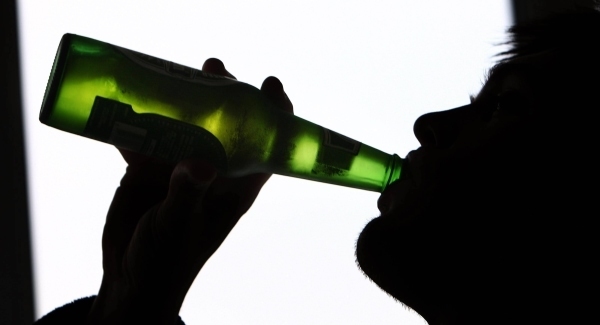
Tax hikes do quench our thirst for alcohol
In a piece on the proposed sugar tax (‘Mooted sugar tax may not be such a sweet idea’, Thursday, August 11), Paul Mills reports that “while constantly increasing the price of alcohol has made us one of the most expensive locations in Europe, it has done very little to reduce alcohol consumption”.
Firstly, tax increases on alcohol are not constant — far from it. During 19 of the last 27 budgets there was either no change in the excise duty on alcohol or a decrease in rates, meaning that alcohol taxation has declined in real terms in recent decades. Excise duty as a proportion of the price of a pint is lower now than it was in 2003, as tax increases have failed to keep pace with retail price increases in pubs.
Secondly, changes in excise duty and other factors which impact on the affordability of alcohol have a direct impact on levels of alcohol consumption, as has been reflected in Ireland. Though we still have a high level of alcohol consumption and high levels of alcohol harm, including three alcohol-related deaths per day, excise duty has played an important role in reducing our consumption levels from the record high experienced 15 years ago.
The first significant drop in our alcohol consumption came in 2003, when an increase on excise duty on spirits and the scrapping of the reduced rate for alcopops led to an immediate fall in alcohol consumption from its peak of over 14 litres of pure alcohol per capita to 13.4 litres.
Our alcohol consumption then remained relatively steady from 2004 to 2007, when there were no changes in excise duty, but fell significantly in 2008 and 2009 as the recession hit levels of disposable income in Ireland.
If there were any doubt that levels of excise duty are directly related to alcohol consumption, it should be noted that, despite the continuing impact of the recession, our consumption increased significantly in 2010 as an excise duty cut of 20% on all alcohol products made them more affordable. Our alcohol consumption then remained relatively steady until 2013 when an excise duty increase on all alcohol products resulted in an immediate fall by almost one litre per capita — once again reflecting the direct impact of tax on levels of consumption.
The only occasion when levels of consumption have not immediately responded to a change in excise duty was 2014, when alcohol consumption increased to our current levels of 11 litres of pure alcohol per capita, despite an increase in excise duty, as disposable income began to rise again and more and more of our alcohol continued to be bought in the off-trade, particularly supermarkets, where it is far cheaper and often not reflective of the tax due on alcohol products.
The real issue with alcohol pricing in Ireland now, from a public health perspective, is that the abolition of the Groceries Order has allowed supermarkets to sell alcohol below cost and then recover the Vat on the difference between the sale price and the cost price, and use discounted alcohol to entice customers to their stores.
The Health Research Board pointed out that “in effect, this means that the Government is subsidising large retailers that can afford to sell alcohol at below cost price” and strong, cheap alcohol products for sale in the off-trade remain priced at a level that neither reflects the huge burden of alcohol harm on society nor often even the tax applicable to these products.
Don’t let heritage fall by the wayside
Proinsias Ni Mhurchu in her letter “If you’re serious, stop this forest sale” (9/8/16) made an important point in saying that Coillte should be preserving native woodlands, not selling them off for profit. There are few enough of native woodlands left in Ireland. They are the cradle of the trees and wildlife that have evolved over thousands years to form an ecosystem uniquely suited to Ireland. No plantation, whether of a few species of native or foreign trees can support the range of wild plants and animals that native woodlands can. We, as a people, have the choice of shortsighted quick profits by destroying our heritage, or of preserving what nature has developed over thousands of years for our children.
I think that if this Government can do no good — then at least they should try to do no harm either.
Let’s have ‘mature’ debate on Civil War
Reading the front page article in the Irish Examiner recently in which chairman of the Advisory Board on commemorations, Maurice Manning called for a ‘mature’ debate on the upcoming commemorations of the Civil War period, Mr Manning spent most of his time attacking Sinn Féin for putting enormous effort into commemorating this year’s centenary events of 1916. How mature is that Maurice?
May I remind Maurice — who states that Sinn Féin have tried to claim ownership of the commemorative event of 1916 — that Sinn Féin has consistently commemorated 1916 every year up to 2016. Yes, that’s 100 years of commemorations in every area in the 32 counties of Ireland where it has a presence Maurice.
Unlike some of Maurice Manning’s colleagues, who have decided to hijack the event for their own political gain, Sinn Féin has never claimed ownership to this event but has never abandoned it either, when others had.
As regards the “alternative parade” he refers to, which only countered the State’s commemoration that in fact blocked off the general public in O’Connell Street to the GPO, this “alternative event” was aptly themed “Reclaim The Vision” and was inclusive of Trade Union groups, open to all political parties and more importantly open to all the public, not just the select few. No one got priority. But before Maurice starts talking of the upcoming Civil War commemorations, maybe he would like to read the Proclamation again which cherishes “all the children of the nation equally.” Something which successive governments have consistently failed to live up to. I look forward to a ‘mature’ debate about the Civil War period but which includes all the political parties and more importantly the opinions of all the people.
Word Rio just took on a new meaning
RIO…..Real Irish O’Donovans or RIO.....Rowing Irish O’Donovans
Blood sports sully our reputation
Fianna Fáil Deputy Timmy Dooley was on his high horse on the airwaves this week, pontificating about what he perceives is the minister for sport’s heel dragging on the Olympic ticket affair. He was concerned about Ireland’s image internationally, saying our reputation was being tarnished and sullied by the events, adding that it could damage our tourism product. However, Deputy Timmy Dooley, along with 113 other TDs in Dáil Eireann, put all their concerns about sullying and tarnishing Ireland’s reputation aside when they trooped through the Níl lobby on June 30 last to vote down Deputy Maureen O’Sullivan’s Private Member’s Bill to ban live hare coursing. The minister for sport, Shane Ross, to his great credit, was one of those 20 humane politicians who voted to outlaw this barbaric activity.
Sadly, the bill to ban hare coursing hardly made a blip media-wise, and so those 114 politicians, confident that nobody in the country would notice, voted for the snatching of thousands of timid hares from the wild to be used as live lures before greyhounds at coursing matches.
They ignored the evidence of hares being terrorised and mauled by the muzzled dogs, sustaining severe injuries and dying or having to be put down. They ignored the fact that coursing is banned in England, Scotland, Wales and Northern Ireland.
If ever there was an activity to sully and tarnish our country internationally, it has to be the fact that our Government sees fit to permit cruel blood sports such as live hare coursing and foxhunting.
Put that in your Brussel sprouts
News that the EU Insists that we pay water charges is a totalitarian cheek. Ireland has paid 42% of the total cost of the European banking crisis, at a cost of close to €9,000 per person, according to Eurostat. The average banking crisis debt across the EU is €192 per person, and the figure of €9,000 for each Irish person does not take into account the €18bn put in from the National Pension Reserve Fund. After Ireland, the German people at €491 per person have shouldered the next biggest cost of bailing out their big regional banks, which invested heavily in hedge funds. So we are entitled to a rebate. But will the puppets in Government tell that to the Eurocrats? No way Jose. Tell the EU put that in their Brussels sprouts. And if they don’t like it. We will do an Eirxist from the EU.
CONNECT WITH US TODAY



Be the first to know the latest news and updates








