Dear Sir... Readers' Views (08/08/16)
Your letters, your views...

Dear Sir... Readers' Views (08/08/16)

Caution over Nazi diaries

The discoveries of the Himmler diaries and the apparent acceptance of their provenance after rigorous scholarly examination will undoubtedly challenge the existing academic paradigm (World News, August 3).

However, one would hope that said scholarly examination was conducted under the aegis of modern scientific methods and was only then reinforced by human input.

The last thing that is needed is another debacle like the so-called Hitler diaries from the 80s which were accepted as authentic on the sole say so of the renowned historian Hugh Trevor Roper.

This not only ruined his previously stellar academic career, but also cast a shadow on the media which was so determined to print Hitler’s ramblings, that it ignored visible discrepancies in the diary.

It has long been believed in the scholarly community that Himmler kept a comprehensive personal diary, therefore, the ad hoc publication of it in Bild, a tabloid which trades in sensationalism, very much along the same lines as The Stern magazine that published the Hitler fake, should be viewed through a jaundice prism.

This is especially true when one sees that the first extracts focus on the micro, yet salacious aspects of the Holocaust such as detailing how dogs were trained to “rip people apart”.

Although undoubtedly correct if the diaries are genuine, these graphic and gruesome accounts are designed to titilate contemporary readers desensitised to suffering through an over exposure to horrendous happenings on a global scale.

The real value of the Hillmer diaries is to frame it in a macro context which explores the depraved psycopathy of Nazism.

To understand how a chicken farmer could casually order the torture and death of millions based on pseudo-scientific ramblings and an age-old antisemitism that bubbled just under the surface of early 20th-century political, social and cultural discourse. Bild is clearly not the forum for such analysis.

Dr Kevin McCarthy

Kinsale

Co Cork

Weight-loss advice

I realise that Dr Garry Lee is retired, but after reading his advice on the Letters page concerning losing weight, may I suggest that he write a book on nutrition.

I always find his advice extremely helpful and non- biased with no hidden agenda.

I’m sure lots of people would show support by buying his book.

Trish Lavelle

Model Farm Rd

Cork

Casement allies

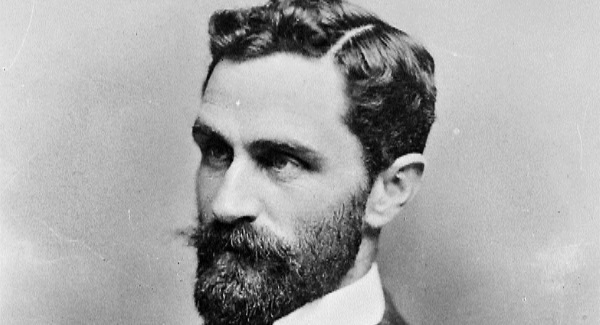
Ryle Dwyer tells us that Roger Casement saw the murders of Belgian civilians by German soldiers in 1914 as “a repayment” for the awful atrocities committed by Belgian colonists in the Congo (Irish Examiner, August 3).

Such dreadful reasoning, used to explain the killing of Belgian children and other other victims of a brutal military occupation, is made worse when one considers that Casement was willing to ally himself with an empire that had perpetrated similar atrocities in its colonies, including the Herero and Namaqua Genocide of 1904-1905 in German South-West Africa (now Namibia).

At the time of the Easter Rising, Germany was also pursuing a policy of racial segregation, land appropriation, and forced labour in its newly conquered territories in Central and Eastern Europe.

The German empire’s appalling crimes were readily apparent. Such an ally was unworthy of Casement’s erstwhile principles.

Dr Edward Burke

Burgatia

Rosscarbery

Co Cork

A complex man

Ryle Dwyer’s article on Roger Casement (Irish Examiner, August 3) made for nuanced, perceptive and thought-provoking writing.

Indeed Casement was, and still is for many, a complex character who goes against the grain of a simplified portraiture.

Casement honed his nationalism in the rubber plantations of the Congo and Peru.

Seeing abuse and exploitation at first hand, he befriended the great writer Joseph Conrad.

He was the “incorrigible Irishman” who travelled into his own “heart of darkness”.

Having seen through the illusions of empire, he came to think that the only affront to that empire would be an Irish Republic.

And the only path to that Irish Republic lay through an alliance with his enemy’s enemy, Germany.

Mr Dwyer refers to the petition for clemency that was signed by many writers, including George Bernard Shaw.

What is less well known is that Shaw wrote a dramatic monologue for Casement, a speech which he wanted him to deliver at his trial.

In the event, it was never heard in public, until it received its world premiere in the National Concert Hall, Dublin, as part ot the 1916 commerations last Easter.

At the end, there was one last hope.

His lawyers questioned whether there was a comma in the sentence relating to treason in the law.

If there wasn’t, it would imply that treason could only be committed by aiding the enemy on English soil.

Casement could have been acquitted.

There was.

And so it is often said that “he was hanged on a comma”.

John Clune

Drogheda

Co Louth

Patriot for all sides

Yesterday I travelled from Kinsale to Glasnevin cemetery to pay tribute to Roger Casement on the 100th anniversary of his execution by hanging at Pentonville Prison, England.

I am a committee member of Kinsale Historical Society.

I linked up with the Cabra Historical Society where we marched from berkley road church with a colour party and the citizen army uniformed re-enactment force of women and men where wreaths were laid and a fine oration by Eoin Ó Broin TD and also music by a fine piper.

Casement’s name resonates, not because of his unusual journey from British consul to 1916 revolutionary, but also his pioneering work as a humanitarian crusader.

His impact stretches beyond our shores to the Congo and South America, where he campaigned on behalf of enslaved native people and gave a voice for the voiceless.

His family from a unionist tradition makes it even more interesting and people travelled from north and south to Glasnevin to honour this fine patriot.

Ar dheis DĂ© go raibh a anam.

Noel Harrington

Scilly

Kinsale

Co Cork

Dismay at coup response

The Irish Federation of University Teachers (IFUT) is dismayed at the actions of the Turkish government in the aftermath of the recent failed military coup attempt.

IFUT condemn that coup attempt as an affront to democracy and we are very pleased that it was defeated.

However, the disproportionate and repressive response by the Turkish government is, itself, creating perhaps an even greater threat to Turkish democracy and must be condemned.

IFUT is particularly concerned at the treatment of education employees in Turkey: Approximately 22,000 education employees have been dismissed; More than 1,000 schools have been closed; 1,500 University Deans have been forced to resign; The Turkish Council of Higher Education has prohibited all academics from travelling abroad until further notice; Academic freedom has been effectively abolished.

We have written to the ambassador of the Republic of Turkey in Ireland to express these concerns and we urge others of like mind to do so also.

We also send our greetings of solidarity and support to our sister education union in Turkey, EGITEM-SEN.

Mike Jennings

General Secretary

11 Merrion Square

Dublin 2

Maynooth stance

Archbishop Martin seems to be taking a much firmer stance against possible gay activity amongst priests than he did against proven child abuse among priests.

And gay activity between adults is at least voluntary.

Richard Barton

Tinahely

Co Wicklow

Abortion response

I won’t get into point (a) of Ann Fetton’s very weird letter,(Irish Examiner, August 2), Point (b) and point (c) tells us that, when abortion takes place, “there is no child, there is no baby”!

An Irish GP went public last week about going to England for an abortion, and about the trauma she and her husband suffered bringing the baby’s body home for cremation in a cardboard box.

She told about coming through customs and saying to the official “there is a baby in the box”.

They went straight to a funeral home with the “baby in the box” when they got home.

If they had had the good fortune to meet Ann Fetton, she would have told them not to bother, that the baby existed only in their imagination.

I am truly sorry for the couple concerned; they were told their unborn child would not live long after birth, so they went to England and the young mother had an abortion.

I can’t understand why they didn’t let its little heart stay beating, and hold it for awhile after birth, until it died— their martyrdom would have been short indeed.

Then of course they wouldn’t have the story to tell about the cardboard box, which they made part of their campaign to repeal the Eighth Amendment.

But the whole point is, Ann Fetton, that they loved their child and didn’t deny its existence.

The other points in this letter bring back the hoary old chestnut about Savita, and a few other names are thrown in for good measure.

Will someone please tell Ann Fetton, once and for all, that the lovely, much mourned lady called Savita didn’t die because she was refused an abortion.

It was plain, old-fashioned inefficiency, wasn’t it?

Sheila Griffin

Blennerville

Tralee

More in this section

Revoiced

Newsletter

Sign up to the best reads of the week from irishexaminer.com selected just for you.

Cookie Policy Privacy Policy Brand Safety FAQ Help Contact Us Terms and Conditions

© Examiner Echo Group Limited









