Do animals which pose a threat to people and livestock have to be exterminated?
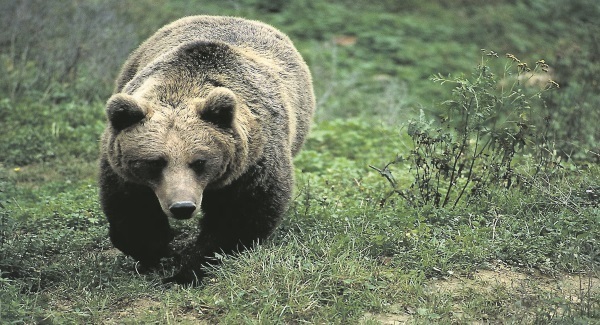
The Irish wolf fared better but it too went to the wall; the last one was hunted down and killed on Mount Leinster in 1786. Much the same happened to large carnivores throughout Europe but now, in more enlightened times, they are re-colonising former haunts. Wolves are breeding even in Denmark.
‘Apex’ predators are important; they provide beneficial ‘top-down control’ of ecosystems. Without wolves to limit their numbers, deer are eating themselves out of house and home in Scotland. Vulnerable plants and animals can’t survive the onslaught and bio-diversity is suffering.
Removing wolves from Yellowstone a century ago profoundly altered that eco-system. Not only do apex predators play essential roles in the environment; they are spiritually important. In a recent paper Ine Dorresteijn, of Lüneburg University in Germany, wrote that carnivores provide “emotional recreational and cultural benefits to society”.
Do animals which pose a threat to people and livestock, have to be exterminated? Is co-existence with them possible? Dorresteijn thinks it is. She studied the relationships of people and bears in a farming region of Romania. Her findings appear in the journal Landscape Ecology.
Southern Transylvania has wolves, bears and lynx. The bear population, about 6,000 strong, is particularly large. Most of the bears are in the Carpathian Mountains and adjoining forest blocks. Traditional farming methods survive, largely unchanged, in the region. Bears can attack livestock, raid orchards and destroy beehives but, nevertheless, they have lived close to people for centuries.
What problems do they present to the locals, Dorresteijn asked, and what are the impacts humans have on them? She and her team adopted a multi-disciplinary approach, looking at these questions from the bears’ and the people’s, points of view.
Bears are notoriously difficult to track down. They have, however, a penchant for ant larvae, a valuable source of protein in spring and summer. The researchers walked 554km of ‘transects’, in a 7,441km2 study area, searching for anthills and checking them for signs of interference. Each transect was 800m long and 6m wide. Bears leave a characteristic crater on the top of a nest they raid. On only three transects were no anthills found. The proportion of anthills destroyed gave a rough indication of bear activity. To determine if bears were attracted to human settlements, the areas around 30 ‘focal’ villages were surveyed for signs of their presence.
Examining the human side of the relationship, the team interviewed 86 shepherds and 359 villagers, including community representatives. They were asked about their experiences with bears and their attitudes to them. Detailed questionnaires sought information from hunters and shepherds concerning attacks on livestock, damage caused to property and compensation claimed by victims.
Bear activity was recorded in 52% of the 630 transects. Activity was highest close to the Carpathians and in rugged terrain near large forests. Human settlements, it seems, don’t act as magnets for bears.
The attitudes of locals are surprising. Although there are occasionally conflicts, bears and people coexist relatively peacefully. All of the interviewees, with one exception, stated that bears rarely, or never, attacked people.
Traditional methods of farming minimise the damage to livestock by bears. ‘Having good dogs was most important to avoid sheep predation’, shepherds are quoted as saying. About 50% of herders ‘had neutral or positive feelings towards bears’ and ‘did not support immediate killing of bears after attacks’.