Taoiseach will try balance geography and gender with talent and loyalty when picking ministers of state

These are in addition to the three named by the Taoiseach in the Dáil last Friday. In the coming weeks the Fianna Fáil and Sinn Féin leaders will reshuffle their front benches. While the Government is legally responsible for appointing ministers of state, in effect, they are picked by the Taoiseach. He has a smaller pool to pick from than before the election; while Micheál Martin and Gerry Adams have enlarged parliamentary parties. Labour will move onto a new leader and attempt to push ahead, on the basis of its seven remaining TDs and five senators.
The politics of picking is intense. It gives shape and expression to vision and direction. Putting the right talent, if you have talent to choose from, determines progress and success up to a point. So of course do events, thence the perennial hunt for lucky generals, or at least ones who can spot pot holes in the dark. What party leaders look for in their ministers and spokespeople are politicians who will deliver on the issues; lift the party brand; reflect well on the leader; and critically, never ever threaten his hegemony. It is essential to have ambition, up to a point. Paranoia is an essential quality in politics.
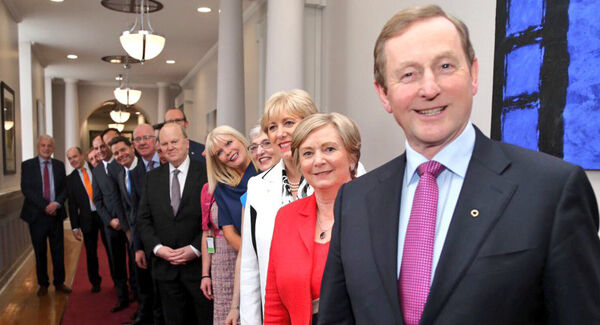
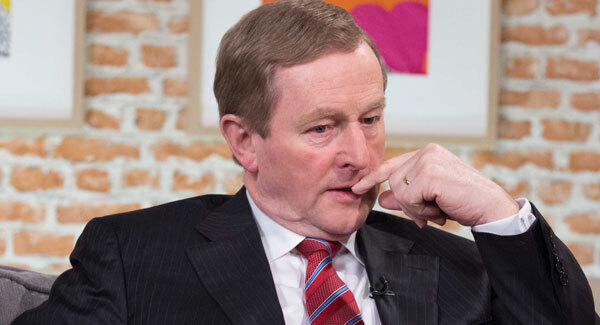
In appointing his cabinet Enda Kenny demonstrated that if weakened, he is still in control. Critically, he is still in possession of the highest political office in the land, where if events can land like thunderbolts, they can allow an incumbent control the field of play. His essential play in cabinet making was to push two up to put two down, if only in relative terms. The promotion of Frances Fitzgerald as Tánaiste and Paschal Donohoe to Public Expenditure and Reform did nothing per se to diminish either Simon Coveney or Leo Varadkar. It did, however, conspicuously broaden the ranks of those who might aspire to succeed him. This relative recalibration potentially makes Kenny stronger, or at least a little more long-lasting, as leader.
In appointing his ministers of state, the Taoiseach will endeavour to balance geography and gender with talent and loyalty. The Fine Gael parliamentary party of 50 TDs has 12 seats, including the Taoiseach’s own, in government. Assuming it will have as many, or nearly as many ministers of state, almost half of Fine Gael’s TDs will be ministers. Office may spur the ambition of some for ever-higher reward. It also raises the bar significantly for any considering a heave against an incumbent leader. With one half of his party TDs in ministerial office, and a few others in committee chairs, a great many will have a vested interest in the status quo. By increasing the number of potential next-leaders, choices become trickier. In apparent weakness, Kenny has cannily reinforced his hold on the Taoiseach’s office — at least in the short term.
Micheál Martin is set to effectively select his first front bench, five years after becoming leader. In a sense he did select one after the 2011 election, but only by assigning portfolios to the TDs then available to him. There was one for everyone in the audience. Nobody believed they were in any sense a shadow cabinet and several hardly operated as spokespersons for anything. Now all is changed. With 43 TDs, a veto over Government initiatives and a platform to influence policy, every spokesperson selected is a potential player.
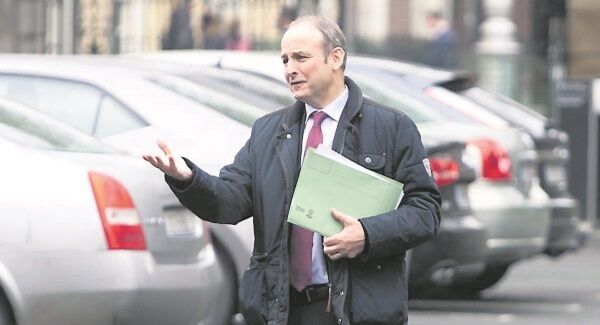
Critically, in a permanently more fluid political situation, Fianna Fáil is potentially a partner, perhaps the largest partner, in a future government. So now, the front bench isn’t drudgery, it is the squad from which ministers may potentially be picked from. The game has changed completely: it’s game-on.
Martin has the advantage of knowing the Taoiseach’s pick before he makes his own, as well as having more to choose from now. Much has been made of his party’s seat gains in the last election. But puff aside, they did exceed expectations, including his own. He has Fine Gael to thank for that and if the party is back in Dublin with six TDs, its base among urban and younger voters is thin. To maintain momentum he needs his new people to talk to voters who have not been listening to Fianna Fáil.
Sinn Féin has several opportunities in front of it. It will seek to cannibalise those independents who supported the government. Their feet will be held to the fire from the get-go. They will also portray Fianna Fáil as not being in opposition at all, and instead the collaborationist auxiliaries of Fine Gael in government. It will maintain a sharp oppositionist, radical edge as it seeks to protect its flank from Anti-Austerity Alliance and People Before Profit. Seat gains in Derry and West Belfast in last week’s Assembly show that long entrenchment in working class areas, brings questions about delivery, as well as hegemony. With more women and younger TDs to choose from, Gerry Adams will attempt to craft a team that protects its left flank; woos middle Ireland; and will be cohesive whenever he departs the field. Eventually, that may be the biggest challenge of all.
Politics is full of people who are more self-assured or at least more ambitious than average. The acute danger in picking any team is in those left out. If nearly half of your colleagues have been made ministers, what does that say about you? Perhaps, if you are a first-term TD there are self-satisfying excuses, but if you have served your time and survived the nuclear winter of the election campaign your leader visited on you? There are very few so bitter as the left-behind.
In Fianna Fáil, there was a handful of TDs who were conspicuously more able than their colleagues in the last Dáil. You didn’t have to try too hard to stand out. Now they are joined by many more who clearly have ability worth showcasing. There is no guarantee that those most prominent going into the last election will self-select as the party’s major personalities or potential ministers in the future.
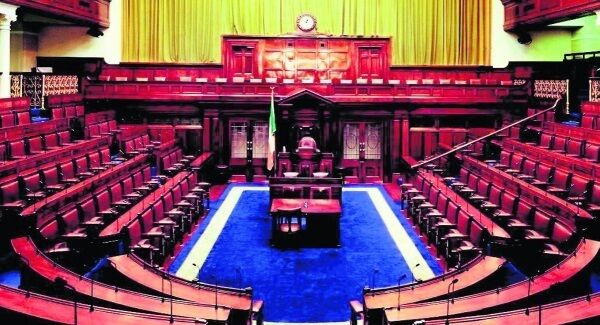
Time is a critical instrument in politics and in life. You have to be in the right place, at the right time.
Turnover at the top reflects the fact that most who get into the Dáil never hold office at all, and may not hold their seat for very long either. Even when apparently stable, political life is never still, beneath the surface. Ambition, disappointment, chasms around policy and personality — must all be managed constantly. The Taoiseach’s or party leader’s office is both a pinnacle of achievement and the place from whence you are taken to your execution. In the end it is nearly always the Praetorian Guard, not a peasant’s revolt, which is best placed to reward the benignity of the leader who picked them to be close to him, with an ultimate, appalling thanks which cannot be answered.

CONNECT WITH US TODAY



Be the first to know the latest news and updates