Is post-election uncertainty a certain end for abortion change?
IF all else appears to be in a state of confusion, following the general election, it is clear that any impetus for a referendum to change the Constitution on abortion has been somewhat deflated.
Fianna Fail seem set to form part either of a government in coalition with Fine Gael, or to be pivotal to a minority Fine Gael government that is dependent on them for support. Fianna Fail collectively come out in a rash when faced with the prospect of anything that would liberalise or clarify our abortion laws. Enda Kenny is not far behind. The Labour Party will no longer be there to give a liberal prod in the right direction.
During the election campaign, Fianna Fail leader, Micheal Martin, was asked a number of times about his stance on abortion and he would answer consistently that he was “essentially pro-life” and not in favour of a referendum on the Eighth amendment, which gives effect to the abortion ban. Hugely in keeping with his manner of leadership, he has proposed that the issue be hived-off to a “judge-led commission” to decide on the best way forward, provided, no doubt, that the judge in question does not propose a referendum.
Last year, he said it would pose “considerable difficulty” if a potential coalition partner wanted the repealing of the Eighth Amendment included in a programme for government.
He is hardly likely to view his party’s unexpected electoral success as a message that he should change the Fianna Fail stance on abortion.

Elsewhere, we look at the raft of TDs who are known for their liberal views, and who played prominent roles in the same-sex marriage referendum, but who got the chop from the electorate, among them Alan Shatter, Jerry Buttimer, Aodhain O’Riordain, Alex White, Ciara Conway, John Lyons and James Reilly, the former Fine Gael deputy leader.
The common wisdom is that it was an interview given by Dr Reilly, towards the end of last year, when he called for a referendum, which backed Enda Kenny into the corner of proposing a Citizen’s Convention to deal with abortion. The Taoiseach was convinced by senior ministers, primarily Paschal Donohoe, that something had to be done, and that the convention proposal also defused abortion somewhat as a potential election issue.
But just a few months prior to that, the Taoiseach had said of the Eighth Amendment: “I do not favour abortion on demand and I have no intention of abolishing the Eighth Amendment, without considering what it might be that might replace it.”
In other words, it would be no surprise to discover that, in any potential negotiation for government, Mr Kenny might not lose too much sleep if there was no Citizen’s Convention.
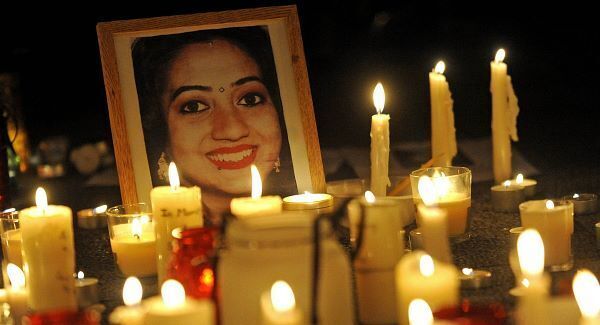
So far so depressing for those who were hoping to see significant change, and who felt that momentum had been building since the tragic death of Savita Halappanavar.
But it is worth looking beneath the more obvious post-election facts, not least that Enda Kenny may not be leader of Fine Gael for too much longer.
But of even more relevance is the manner in which the debate has moved on in Irish society; those in favour of change are far less shy of speaking out about it.
Prior to the general election, a number of candidates signed up to the National Women’s Council of Ireland’s ‘Breakthrough Manifesto for Women’. A part of that was a pledge to “support reproductive rights and repeal the Eighth Amendment by delivering a referendum to remove the Eighth Amendment from our Constitution, and bring Ireland in line with international human rights standards”.

The Abortion Rights Campaign, and coalition of pro-choice groups in Ireland, also gathered signatures to call for a referendum to repeal the Eighth Amendment. They invited people “to sign the petition and join the movement to repeal the Eighth Amendment and pave the way for a more equal, safe, and healthy Ireland”.
Amnesty International have tallied the number of newly elected TDs who signed either one or both pledges, or whose party position backs change, and so there are 64 TDs in the new Dail, or just over 40%, in favour of repealing the Eighth amendment.
Clearly, the overwhelming majority of these are outside Fianna Fail and Fine Gael. Many of the candidates from those two parties would have explained that they were instructed not to sign up to the policy platforms of other organisations.
In other words, the result does not factor in the people in both parties who may also be supportive.
It is party policy for Sinn Fein, the Social Democrats, and PbP/AAA to support change. But there could obviously be instances, if it came to it, of individual deputies deciding to vote against, such as happened with Sinn Fein’s Peadar Toibin, who lost the party whip when he opposed the Protection of Life During Pregnancy Bill.

So while, on initial examination, it appears as if the case for a referendum received a serious knock-back with the result of the election, there is no ignoring the fact that a significant section of the new Dail is in favour of it going ahead.
There is comfort in the results of opinion polls, not least the recent Red C poll, carried out for Amnesty International.
It found that, overall, 87% of Irish people are in favour of expanding abortion in Ireland beyond the current legislation.
The debate, within that figure, relates to the circumstances in which the law should extend to such as fatal-foetal abnormalities, or rape, or incest, or a woman simply making the choice to have an abortion. According to the same poll, just under one in six Irish people agree that expanding access to abortion should be one of the priorities for the next government, while almost three-quarters of people agreeing that politicians need to show leadership, and deal proactively with widening access to abortion.
So while the main parties are busy not talking to each other right now about how they might make sense of the result of the general election, we can only hope that, if and when they do, one of the issues that gets scheduled for discussion is abortion. Both Fine Gael and Fianna Fail have committed to taking particular action. My personal preference would be for a the citizens’ assembly, but, in proposing a judge-led commission, Fianna Fail is also acknowledging that ‘something’ needs to be done.