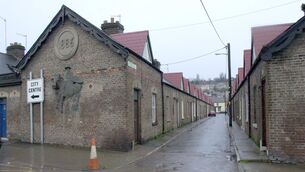
It looks like Eircode here to stay
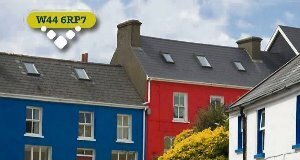
I hope Eircode doesn’t mean the placenames fall out of use, writes Colm O’Regan

It looks like Eircode here to stay

IT’S creeping in gradually. Its take-up is by no means universal or possibly even widespread but it is gradually increasing. I see it written, perhaps a little tentatively for now, after the name, perhaps the house number, the townland, the postal district, the nearby town: The Post Code.

And over time its use has gradually grown. I know it. For once I am basing observations not on a ‘feeling’ or ‘talking through my hoop’ but on actual data. I have a small online shop so I see lots of addresses. Don’t worry, I would never be so crass as to use this column as a vehicle for promoting my online shop. COUGH IRISH MAMMIES DOT IE COUGH. Sorry there must be a tickle in my throat.

Of course our introduction of postcodes has not been without controversy. There are times when it appears to flirt dangerously with the classic Irish definition of a project as being a hames. Time will tell where Eircode lies on the Irish Hames Scale — where 0 is “we got away with it” and 10 is “Omni-Hames” or “eVoting machines”.

But with the ambulance services adopting it and delivery companies gradually rebuilding their systems to accommodate it, it looks like Eircode here to stay. It mightn’t be the best system we could have had but as a mother would say to a child who was supposed to be home the day before, “shur you’re here now, you might as well sit down.”

When I see it on the addresses, its appearance is a little stark next to the often mellifluous beauty of the townland name. Its form a harsh pattern-less combination of capital letters and numbers.

I hope it doesn’t mean the placenames fall out of use. I hope we don’t use the postcode as a shortcut on our address. Hopefully, the system is sufficiently shite enough to make that too risky.

Because there is no placename with the potential to be as delightfully mad as the Irish rural place names. Urban areas don’t always have the same charm. Yes, some city streets still retain traces of history. They are named after mediaval professions like widow-scourging or sports like bull-cuddling. But in general urban and suburban places are anodyne. There mews, avenues, heights, closes called Mount This, Hazel That or Willow Something. There are roads named after dead patriots or in the more salubrious parts of Dublin areas still named after British monarchs. (because deep down the locals aren’t sure things really were ever the same after the quality left)

But nothing like the countryside townland — places like Sheshoon, Crowsgap Coolkenno Coolasmuttane, Poulawadra, Dripsey, Bree, Acragar, Ballyburdenmore, Burnfoot.

The kind of places that if you type them in a text, they give the AutoCorrect feature on your iPhone so much of a conniption, it Auto-rings an ambulance because it thinks you’re having a stroke.

Placenames with landscape buried in the meaning of it — The Ford of the Back of the Hill of the Pig of a Man Called Barry. (Ahacoolknocknamucbarra in West Cork). Or ancient lore –usually involving the Devil playing dice with a lost traveller (the Gap of the Devils Traveller Dice in Wicklow)

Even though those two places don’t exist, for a moment you probably thought they did. The placenames also contain in them vestiges of the Irish language that might be forgotten. Part of their battiness is that many of them were the result of the English just writing down what the placename sounded like. You can almost imagine an exasperated surveyor, his hair matted with sweat against his temple, being attacked by midges as he struggles to understand what his guide is telling him the place is called and just saying “f**k it” and writing down ‘Tempo.’

The rural placenames of Ireland are the embodiment of the phrase — a place for everything and everything in its place.

More in this section

Revoiced

Newsletter

Sign up to the best reads of the week from irishexaminer.com selected just for you.

Cookie Policy Privacy Policy Brand Safety FAQ Help Contact Us Terms and Conditions

© Examiner Echo Group Limited