Watch out for hares during breeding season
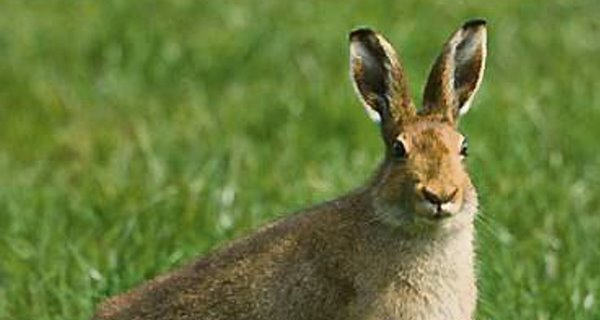
The term, ‘mad as a march hare’, has its origins in a breeding ritual whereby males gather and sometimes fight each other, boxing with their fore paws and kicking with the hind ones. The breeding season can run from January to August, but is at its most intense in spring.
Over the years, there’s been a lot of well-publicised controversy about hare coursing and greyhounds must be muzzled. There’s also a very old rural tradition of open coursing, with people heading off with a few greyhounds hoping to ‘rise’ a hare. In days long ago, we remember such adventures on Sunday afternoons and, invariably, the hare would easily outsmart the dogs, disappearing to safe cover in the bogs.
When you consider a hare can reach a top speed of around 70kph per hour and can turn at 180 degrees in full flight to escape predators, the dogs had no chance and were often made look foolish.
The hare population has declined in Ireland over the past century, mainly due to land reclamation which resulted in the loss of moorland habitat, according to conservation biologists like Neil Reid in Queen’s University, Belfast, who has been studying the hare for years. A timid, shy creature, the hare avoids people contact and scampers off at speed when surprised. However, hares have found a happy home beside the runways at the airport in Belfast, of all places.
For years now the Irish hare — one of the few species unique to Ireland — has been happy to make its home along the runways, despite the noise of planes landing and taking off. Dr Reid says they don’t seem to mind the traffic and they probably have fewer foxes, their main predators, with which to contend. Another thing is the grass is allowed grow higher than in other places, keeping birds away, and this probably suits the hare. The density of the hare around the airport is about 10 times higher than in the countryside.
Females can produce three litters annually, with each litter containing an average of four leverets. Having suckled their mother, the young are fully weaned after three weeks and ready to set up their own territories.
Conserve Ireland says the mortality rate is very high and, in some areas, up to 80% of new-borns die in their first year, while 50% of adults die each year. However, with loads of luck, a hare can have a nine-year lifespan.
In England, mountain hares turn white in winter, but white hares in Ireland are as rare as proverbial white blackbirds, though there have been some reported sightings.
CONNECT WITH US TODAY



Be the first to know the latest news and updates