Snakes alive! Huge worms seen in Scotland
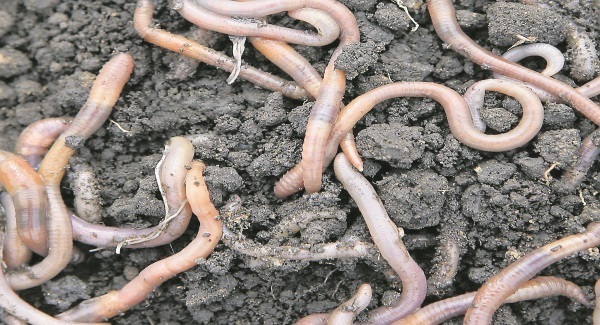
The paper went on to assure readers that there was “little to fear from the giant creatures, as earthworms tend to avoid people”. What a relief! Where would we be if the worms decided to stand their ground? Even broadsheets got in on the act; ‘it sounds like the stuff of nightmares’ declared The Telegraph.
Nor are such attitudes new. “Then worms shall try your long preserved virginity” was Andrew Marvel’s chat-up line to “his coy mistress” four centuries ago. The reluctant girlfriend had something to fear, but not from the worms; eating corpses isn’t their thing. That’s the prerogative of maggots, the larvae of blow-flies. Worm hatred is even enshrined in our language; ‘vermin’ from ‘vermis’, Latin for ‘worm’, dates back to Old French.
How could creatures, which aerate and purify the soils providing 95% of our food be regarded as ‘vermin’? In 1881 Darwin, the first great champion of the humble earthworm, famously declared: “It may be doubted whether there are many other animals which have played so important a part in the history of the world.” Nor were the scientists “opening a can of worms” when they discovered the 40cm long “giants” in Scotland.
The wild and windswept island of Rum (Rúm in Gaelic) is in the Inner Hebrides. It was renamed Rhum because George Bullough, who once owned it, didn’t want to be known as ‘the Laird of Rum’. Now a National Nature Reserve, the place supports red deer and reintroduced white-tailed eagles. It is, however, an unlikely place for earthworms to prosper; the ground there is acidic and poor in nutrients. Around 1900, however, fertile soil was imported from the mainland when his lordship built Kinlough Castle.
Sixteen earthworm species now live on Rum. Kevin Butt and a team from the University of Central Lancashire have been studying their ecology, tagging worms to monitor their movements, determine their fidelity to burrow sites and survival from year to year. Night vision cameras record worm behaviour at the surface.
The abandoned settlement of Papadil, where crofting families lived prior to the ‘clearances’ of the 19th century, is one of a handful of island locations with “naturally developed brown earth soil”. During trans-location experiments there, Butt and his team found extra-large ‘dew-worms’ in ‘lazy-bed’ ridges and furrows. Despite their new found celebrity, the creatures are of the ‘common or garden’ variety, known to the cognoscenti as Lumbricus terrestris.
Earthworms create tunnels in the soil, forcing air through them as they move. Dragging animal and vegetable detritus from the surface into their burrows and eating it, they generate nutrients which fertilise the soil. The casts, ejected from the guts of worms, may contain up to 40% more humus than the top layers of soil.
Dew-worms create bundles of organic material, known as middens, above their burrows. Worm numbers can be estimated by counting the middens.
Most animals stop growing when they reach a certain size. Earthworms don’t. Some of those found at Papadil weighed up to 12.7gm, three times the weight of typical mainland ones. Laboratory specimens, given abundant food, can reach 20gm.
The researchers believe the earthworms prosper at this remote ‘oasis’ as there are so few predators there. Foxes, moles and badgers, which consume worms in huge quantities, are not found on Rum. Worms can live for up to 10 years but, under normal conditions, they run the gauntlet of these predators night after night. As a result few earthworms die of old age.
‘There are still unanswered questions and we plan to continue our research to find out as much as possible about these creatures’ Dr Butt told the BBC.
- An oasis of fertility on a barren island: earthworms at Papadil, Isle of Rum. KR Butt et al. The Glasgow Naturalist, Volume 26.
CONNECT WITH US TODAY



Be the first to know the latest news and updates