Orcas begin to target dolphins
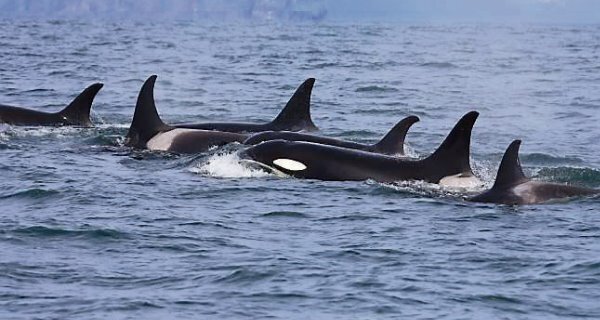
KILLER WHALES, or ‘orcas’, visit our shores from time to time but only one pod seems to be resident in Irish waters. 

Orcas begin to target dolphins

With just seven surviving members, the pod may be heading for extinction. Food shortages are hardly to blame for this: orcas eat everything from fish and squid to seal pups. Nor is coping with rising ocean temperatures likely to be the problem; recent research in Patagonia has shown how extraordinarily resourceful these highly intelligent mammals are.

Mariano Coscarella and colleagues from the National University of Patagonia, writing in the journal Aquatic Mammals, describe a newly developed co-operative hunting technique used by killer whales off Argentina’s Peninsula Valdes.

Orcas have been studied there since the mid 1970s. There are about 30 individuals in the local group. Television viewers may remember extraordinary footage of these whales deliberately stranding themselves on beaches while hunting sealion and elephant-seal pups. Now, they have invented another sophisticated strategy. This one is for catching dolphins.

Two years ago, killer whales were seen playing with a dolphin’s carcass, tossing it about like a football. This raised suspicions that the orcas had killed the dolphin. However, how did they do so; dolphins are agile swimmers very difficult to catch? Then an adult female, christened Maga by the locals, was seen swimming with her calf some distance from the other whales.

As a school of dusky dolphins approached, Maga began splashing and jumping out of the water; a dolphin had become separated from the school and was trying to get past her. The escape route blocked, the dolphin was forced to change direction and swim towards the group of whales. Two members of the pod positioned themselves in front of the approaching dolphin. Suddenly, Maga attacked the victim from beneath, tossing it 5m into the air, its entrails hanging from a bleeding wound in the belly. Grasping the injured dolphin in her mouth, she offered it to her calf. The youngster began tossing the carcass in the air just as its mother had done; Maga seemed to be teaching the calf the hunting technique. Finally, the mother seized the carcass in her mouth and dived.

A female named Jazmin, like Maga an adept exponent of the stranding technique, was the principal performer in another dolphin-catching session.

She and two other females moved away from their pod and began swimming and jumping close to a common dolphin. Co-ordinating their movements, they herded and manoeuvred the intended victim so that Jazmin could attack it from below, rendering it unconscious with a single blow to the head. She did not, however, join the rest of the pod eating it.

“This kind of herding-catching co-ordinated behaviour has, to our knowledge, not been observed in other social predators that usually catch in packs such as canids and lions” the authors of the study claim. The behaviour requires planning and a “division of labour” between members of the pod. It is similar to one used by chimpanzees targeting red colobus monkeys in Uganda’s Kibale National Park.

The chimpanzees pick a victim and herd it into a prepared ambush. Each member of the troop knows the role it must play and that success depends on teamwork and co-ordination. These primates, our nearest living relatives, have very large brains compared to their body size. So have orcas.

It’s seems odd that a species capable of inventing such sophisticated hunting techniques should be declining in food-rich Irish waters. No calves have been seen in our local pod leading Simon Berrow of the Irish Whale and Dolphin Group to suggest that pollution may be affecting the orcas’ ability to breed.

As long-lived animals at the top of the marine food chain, “they pick up pollution in the sea and accumulate more and more every year” he is quoted as saying. Orca ingenuity, alas, can’t solve that problem.

  • Mariano Coscarella et al. ‘Technique used by Killer Whales when Hunting for Dolphins in Patagonia’, Argentina. Aquatic Mammals. 2015
x

More in this section

Revoiced

Newsletter

Sign up to the best reads of the week from irishexaminer.com selected just for you.

Cookie Policy Privacy Policy Brand Safety FAQ Help Contact Us Terms and Conditions

© Examiner Echo Group Limited








