Seed-scattering Jesuit left an enduring legacy on island
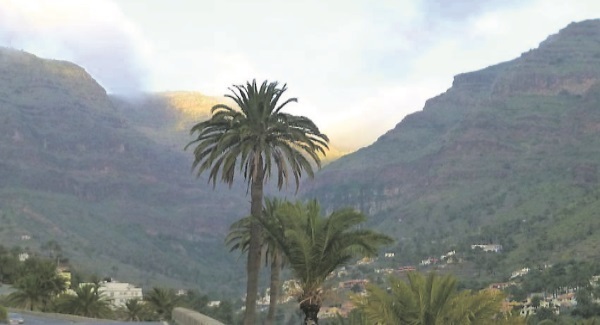
They are emblems of the islands, to which Phoenix canariensis is endemic. They are indeed mighty trees, weighing tens of tons, and can grow to 40m tall. Trees are catalogued and protected. In land zoning or planning permission cases, the tree comes first.
In Beverly Hills, California, trees 20m tall are bought and sold for €18,000, and the cost of moving them can be €18,000 extra. Cranes and earthmovers are required, and the hole in the owner-vendor’s yard may resemble a half-size Olympic swimming pool.
All pipes and cables usually have to be replaced, and the house foundations restored if they’ve been damaged by the roots or the digging.
However, the owner-vendor, often a low-income householder down in the valley below the rich-man’s hills, is grateful to see his tree go. It brings his family unimagined wealth and, for decades, it has dwarfed their modest home, and played hell with the utility connections.
The palms are, of course, beautiful. Their wide, arching crowns of light-shimmering leaves open to the blue skies under which they thrive, and bright yellow stems of dates drooping between them. In Beverly Hills and California boulevard environments, the crowns are pruned to a pineapple shape. This has earned them the silly American name ‘Pineapple palms’. This is, I believe, an effrontery to their dignity.
Their fat, stately trunks are vertical and marked with symmetrical diamond patterns and they are the tree of choice for showpiece locations where municipalities have the funds to buy them and the climate to sustain them.
They need decades to reach their average 20m height, so few nurseries grow them. In California, palm-spotters make a profession of searching for mature specimens, and doing deals. Some of the transplanted trees may have originally been sown by Spanish missionaries in the 1800s. Passing through the Canaries en route to America (as did Columbus) they may well have pocketed a few dried date piths as they went. It is thought they can live 200 or even 300 years. The man whose modest home in the San Joaquin valley was visited by a Jesuit scattering the seeds of Palmera canaria is now a lucky man.
On precipitous slopes on this island, Tenerife, Gran Canaria and La Palma, one sees solitary trees growing far beyond the reach of man or animal. Only birds could have seeded them. They have gained footholds where they must endure minus degree temperatures on winter nights under clear, icy skies. How they lodged and gained a grip in such places is a great wonder. They are different than the palms that grow in groves on the plateaus and the plains.
La Gomera is the last island in the archipelago where palmeras are still climbed for the collection of ‘guarapo’, the basis of palm honey, which is made from the sap of the tree. The upstanding leaves on the crown are sliced off and grooves are carefully cut into a ‘bald spot’ revealed at the crown centre. This cutting is delicate: cutting too deep will kill the tree.
Overnight, every night for up to seven months, sap wells up into the ‘wounds’ created, to heal them, and is channeled down into a container. The ‘guarapadero’, the collector, shins up the tree at dawn, and collects the sap before the sun has warmed it to fermentation. The fatter the tree, the greater the yield. When the healing completes itself, a new core forms, with new leaves. In 4 or 5 years, it will grow half a metre and produce again. A mark is left around the trunk each time. In Gomera, palms with five or six such ‘bands’ are often seen.
Traditionally, the guarapadero’s wife cooks the syrup on a wood fire. It gradually thickens, reduces and gets darker. It takes half a day to obtain two litres of “miel de palma” from 10 litres of guarapo. The ‘honey’ very sweet, with a distinctive taste, excellent on porridge, on crème caramel or any dessert.
I once sat on the top of a scalped, guarapo-producing palmera at dawn. Drowsy or drunken bees surrounded one. The climb had been hair-raising and sitting 18m above the ground on leaf stems was not entirely relaxing when a breeze stirred and the giant swayed.
This, despite the fact that my host had bolstered my courage with stiff drafts of ‘para’, a Gomero poteen which is a distillation of the sap.

CONNECT WITH US TODAY



Be the first to know the latest news and updates