New research unfolds long-living secrets of the mouse lemur
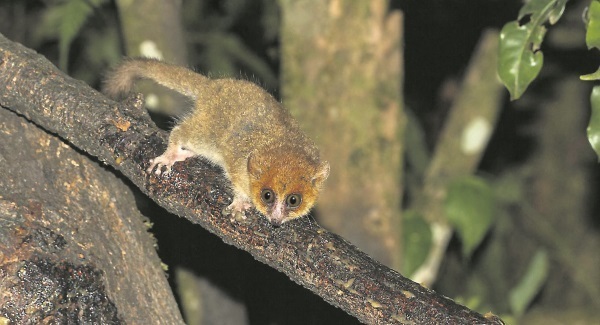

There are 22 species. Humans are primates so these little creatures are distant cousins of ours. Some weigh as little as 50 grams, but there’s something us aging Europeans might learn from them.
People in the West are living longer. Life expectancy doubled from 40 to 80 years in the last century and it’s rising by two to three years each decade. In 1997, Frenchwoman Jeanne Louise Calment set a new longevity record of 122 years. A European’s chances of reaching the age of 65 are now 90%. Half of girls born in 2015 will celebrate their 100th birthday. Scientists are confident that somebody alive today will reach the age of 135. Keeping people active and healthy into old age is now a priority, not just for geriatricians but for economists and politicians. Mouse lemurs live up to six times as long as other creatures their size. Unlocking the secret of lemur longevity could help us face the challenges of aging.
Lemurs are found only on the island of Madagascar. Sarah Zohdy has been studying them at Helsinki University. Between 2003 and 2010, she trapped and marked 189 of the little nocturnal creatures in Madagascar’s Ranomafana National Park. Each one was given a health check, marked and returned to the wild. 23 individuals were captured three or more times, enabling their physical development to be monitored.
A mouse lemur’s age can be determined from the wear and tear of its teeth. Zohdy took 420 dental impressions from 189 of her lemurs; 270 age estimates were made.
Mouse lemurs, she found, can live for 18 years, much longer than other mammals their size. 18 months is the most an Irish house mouse can expect to live and very few even see their first birthday. Despite their jungle environment, with its periodic food shortages endemic diseases and hungry predators constantly on the prowl, 16% of Zohdy’s lemurs reached the age of four. Even eight year-old ones showed no signs of senescence; they were still in peak condition at that stage.
This was not the case, however, among lemurs kept in captivity; some of them reached their 12th birthday but, to Zohdy’s surprise, individuals began to develop human-like symptoms of aging, such as cataracts and greying hair, from the age of five. They suffered from a form of neuro-degeneration, similar to that found in people with dementia. That wild lemurs remain healthy, while those fed found and cosseted in captivity don’t, is an extraordinary finding. The captive lifestyle, it seems, leads to premature aging in lemurs. Are there lessons here for humans?
The so-called ‘sleeping beauty effect’ may account for some of the longevity; mouse lemurs hibernate for six months of the year. Wear and tear on the body is greatly reduced during the long sleep so, when comparing lemurs with non-hibernating mammals, we should, perhaps, divide longevity estimates for the lemurs by two. This doesn’t, however, account for the all of the age discrepancies.
Most female mammals, humans included, live longer than their male equivalents; Irish women have a life expectancy of 83, whereas it’s 78 for a man. Zohdy found, however, that mouse lemur males live just as long as their sisters. Elevated levels of the ‘male hormone’, testosterone, in female lemurs might account for this. Examining hormone levels in lemur droppings, Zohdy found that males and females had similar testosterone levels. ‘This is one of the first studies to show equivalent testosterone levels accompanying equivalent lifespans’ she claims. In mouse lemur society, females are dominant over males which might explain why their testosterone levels are so high.
Future research on captive mouse lemurs, Sohdy thinks, may help reveal the environmental factors which lead to senescence in us. Can mouse lemurs help us unlock the secrets of eternal life?

CONNECT WITH US TODAY



Be the first to know the latest news and updates