Birds of a feather dry together
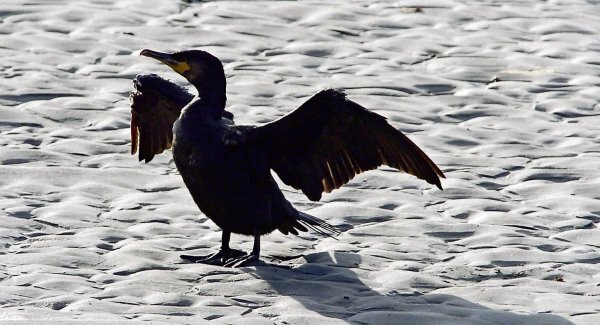
I woke in my bunk the other morning and pulled aside the curtain to see what the weather was like. I was confronted by the sight of a cormorant a few metres away, perched on the floating jetty with its wings spread out and its neck stretched upwards.
At one time, there were arguments about why cormorants adopt this odd pose. Some people claimed that it helped them digest a crop full of fish. We now know that it’s for a much more obvious reason — they are just drying their feathers.
Cormorants feed by diving under water and chasing fish. This isn’t an easy way of making a living, because most species of fish can swim extremely fast when they’re being pursued by a bird. So cormorants have had to adapt, modifying their bodies to give them more speed under water.
One of the modifications has been to abandon the waterproofing oils that most diving birds use to keep their feathers dry. Without the oil, there is less friction under water and therefore a small increase in speed. The downside is that after a few dives they become waterlogged and cold. They have to get out into the breeze and spread their wings to dry themselves as quickly as possible so that they can go back fishing again.
The cormorant is amber listed in Ireland, meaning it’s of conservation concern. At first sight, this seems a bit odd because most people’s perception would be they seem to be increasing in numbers. The reality seems to be that their numbers are decreasing but their range is increasing. More are abandoning the coast and moving inland and in fresh water locations they are much more likely to be spotted by people, giving the impression that there are more of them than there used to be.
The reason for the switch from salt water to fresh is almost certainly the indirect result of human activity. Over the past 50 years, the amount of fish in our coastal waters has decreased dramatically because of commercial fishing pressure. Over the same time span the amount of fish in our lakes, rivers, and canals has probably increased for several reasons.
Water quality is gradually improving, fish are being protected and stocked for angling and new species have become established. A comprehensive study carried out a couple of years ago for Inland Fisheries Ireland showed that roach are a very important prey species for inland cormorants and roach have only become widespread here since about 1980.
The same study dispelled some of the myths coming from anglers about how much fish cormorants eat. It’s 250g and 500g a day.

CONNECT WITH US TODAY



Be the first to know the latest news and updates