The ‘free’ care of parents and of family most enriches children
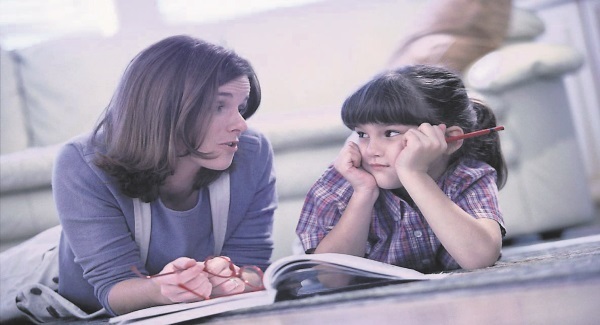
Such is the poor pay of US presidents that granny had to mind Malia and Sasha while mammy and daddy were busy being First Man and Lady! Being short of cash is, after all, the only reason anyone would choose granny over a well-regulated after-school facility or homework club.
Wouldnât you agree? I thought you would. Especially if youâve been reading all those endless headlines about the âscandalâ of children âforcedâ into the care of their extended families due to the high cost of childcare, which is âlike a second mortgageâ.
We havenât heard enough about the granniesâ experience. That requires research, according to a welcome report by Maynooth academics: The Influence of Childcare Arrangements on Child Well-Being from Infancy to Middle Childhood is published this week by Tusla. Up to three-quarters of care by extended family is not paid.
But we need have little concern about the children in these family-care arrangements. The report shows that they are mostly doing extremely well. âClearlyâ, say the authors, ârelations and grandparents are providing a vital service for Irish families and, in general, children are faring well in their care.â
The part of the report that has grabbed the headlines is the finding that children cared for by parents or relations have better language skills, by the time they are three years of age, than those in centre-based care. Thatâs not surprising. A UK report, in 1999, showed that children in creches got one-to-one care for an average of eight minutes a day.
But there are swings and roundabouts. Children in centre-based care have better fine motor skills in early childhood. They perform better on the jigsaw and the pincer tests, for instance, but the authors caution that âsuch effects are limited and do not apply uniformly to all areas of fine motor-skills development.â One of my favourite findings is that children in impoverished households have better gross motor skills than better-off children, by the time theyâre three. I guess theyâre not driven back and forth to play-dates, but might actually kick the odd football or climb a tree.
Children who experience a lot of conflict with their parents do better at maths, apparently, though that didnât work for me. And isnât it fascinating that the children of lone parents are better at reading?
Not surprisingly, the gains for children cared for by a parent or by another family member seem to be emotional. The authors cite the work of the National Institute of Child Health and Human Development (NICHD), in the US, which showed that the children who spent the most time in ânon-maternal careâ had more behavioural problems in childcare and kindergarten than those who did fewer hours: âThese effectsâ, says the report, âpersisted into adolescence, with more hours of non-relative care predicting greater risk-taking and impulsivity at age 15, though these problems did not reach clinical levels.â Older children cared for after school by parents had a better self-image than those cared for in centre-based after-schools. They didnât worry so much about their looks or popularity and, in general, reported more âfreedom from anxiety.â Isnât âfreedom from anxietyâ pretty much the first thing youâd want for your school-going child? Isnât anxiety what youâd want eliminated from your childâs life, as far as possible?
So why is the Government working hard to boot as many children as possible out of the care of their families? Why is Finance Minister Michael Noonan eyeing up women in the home as fodder for whatever rough beast is going to follow the Tiger? And why is TĂĄnaiste and Minister for Social Protection, Joan Burton, suggesting that it is good for seven-year-olds if their lone parents leave them and go out to work?
Well, yes, there is the issue of poverty. Working mothers are better-off, particularly if there isnât another earner in the home. This is where the report for T/usla seems to depart from the spirit of its findings, by encouraging mothers into the workforce âto enable families to break out of cycles of povertyâ through Government investment in childcare.
So what about âfreedom from anxietyâ, then? Is exposure to anxiety a good way to help a child out of âcycles of povertyâ? Or could we not make better use of this important research? Could we not break the link between poverty and being the carer of children or grandchildren?
Much serious research has argued for a direct payment to the parent of young children, which could be passed on to a grandparent or another relation, or indeed to a childcare service. Harriet Harman suggested such a payment in the UK in 2001. Our own Commission on the Family (1998) suggested a parentâs payment as, indeed, did the Labour Partyâs Eithne Fitzgerald in a wonderful 2002 manifesto, âCherishing our Children.â What about using the tax system to create a society in which one income â or two half-incomes â was adequate for a family, instead of mindlessly encouraging the two-income household? What about going even further and breaking the link between productivity, or the lack of it, and income, by giving each and every citizen a guaranteed basic income, to replace demeaning social-welfare payments?
Wouldnât that be a fairer way of acknowledging the work of a lone parent than offering her money if she parts from her seven-year-old for 19 hours a week? Particularly as there is not enough paid employment and Minister Noonan talks about âexpanding capacityâ to employ home-based women?
This is social and environmental madness. It puts untold pressure on mothers, whether they are working outside the home or not. And that is the single worst thing we can do to children. Because the Maynooth report makes clear that the mental health of the primary care-giver is among the biggest predictors of a childâs health and well-being.
The tools a mother has to cope with parenthood are vital in the struggle to build a better society. Where there is high mother/child conflict there is a nine-fold increase in the childâs chances of being poorly adjusted, emotionally and socially, according to the Maynooth research. These children will likely be less adequate parents and so you have another poverty cycle, but one of emotional poverty.
So what would you do to promote the psychological welfare of mothers? Attempt to tax them into the workforce, no matter the age or the state of their children? Cut their benefits when their youngest child is seven, if theyâre parenting alone? Ram home what you think of the work of parenting, by cutting the pensions of grannies who spent âtoo longâ working in the home?
We are beginning to have excellent research into the kind of society that allows children to grow strong. I just wonder if we are ever going to use it.