Election-buying politics of Ahern and McCreevy left nothing behind
Actually, I should send myself a postcard, to remind myself for ever of how beautiful a country we live in, and how little, even after all these years, I know it.
As a very bad, but still keen golfer, I discovered the magnificence of the links in Lahinch for the first time the other day. I’ve perhaps been on courses as good, but I’ve never played a better one. How did I get to this age without knowing how astonishingly good it is?
And that’s only the start of it. I’m writing this in a tiny village called Fanore. A combined shop and post office and one pub, it’s on the coast road in Co Clare, and I’m looking out over Galway Bay. I can see Galway, and beyond it the hills of Connemara, away to my right. To my left the Aran Islands are lying in a tranquil and endlessly blue sea. It’s stunningly beautiful, and I’ve never been here before.
Yesterday, for the first time in my life, I stood on the Burren. What a revelation! It’s quite breathtaking, like a lunar landscape with beautiful purple flowers visible every now and then. I still haven’t figured out how the Burren was formed, but I’ve never seen anything quite like it anywhere. Two of my grandchildren, Katie, who’s 4, and Ross, who’s 7, have put me to shame by trekking all over it.
And they’ve gone down into the depths of the Doolin cave to discover a giant shining stalactite. At least they won’t have to admit, when they’re older, that they know nothing about this amazing part of the country.
We talk about it all the time, don’t we, about how beautiful our country is, and how it’s the best country in the world. But actually we’re people of the parish. We know our own place best, or the places we like to call our own, but we’re always a bit reluctant to step outside the familiar. All the years our kids were growing up, we went to West Cork for our holidays, and there’s places down there where I can remember every blade of grass.
And over the years my work has taken me to many parts of Ireland, but never really to explore. When you have a meeting to go to, or some mission that’s preoccupying you, you don’t stop and look. So I still can’t say, even in my advanced and decrepit years, that I know my own country as well as I should.
Sitting here, looking out over a little bit of Ireland I’ve never seen before, I almost feel I have amends to make. I’ll do a bucket list when I go home, I think — a list of the places we have to see and get to know in our own country before it’s time for the nursing home and the slippers. There are hills to climb, valleys to explore, towns and villages to stop and have a drink in. Maybe — who knows — there may even be a better golf course or two.
But what strikes you most as you travel around is the character of the people. Landscapes like the one I’m sitting in now are beautiful in a July sun with a gentle breeze. But it takes real guts to survive and raise a family when gales howl in off the Atlantic, and when the coast is torn by winter storms. There must be many a month when people who have to struggle for a living in bleak conditions wish they were anywhere else.
You can see the resilience of the people start to pay off as the economy shows signs of recovery. But it can’t have been easy to keep the show on the road in towns like Lisdoonvarna and Ballyvaughan over the last few years as our economy lay in ruins around us.
I actually felt lucky to be down here (where broadband is still hard to come by) as the politicians of the past, the architects of our disaster, were giving their evidence to the banking enquiry. Lucky, because I wasn’t able to watch it live, and could only catch the snippets recorded in the papers or on the television news. I’m not sure my blood pressure would have been able to sustain the whole thing.
Well, maybe not so much Brian Cowen. I’ve always believed he was an unlucky politician in some ways — had he got the top job a couple of years earlier, he might have got to grips with the crisis better. He did spend too much time celebrating his elevation as taoiseach as grim warning signs were accumulating around him, and was clearly overwhelmed when the crisis erupted. But he was badly served by the instincts of his predecessor to cling on long beyond his sell-by date.
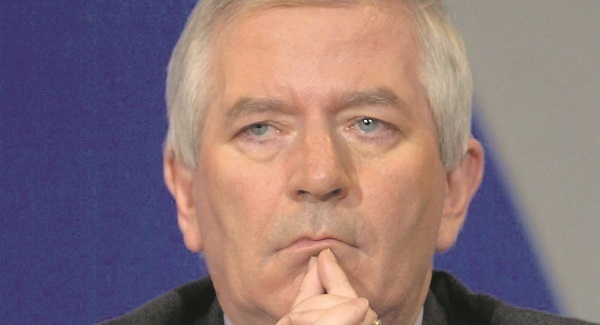
Charlie McCreevy was a different kettle of fish. It’s forgotten now that McCreevy spent time in the Fianna Fáil wilderness because of his opposition to Charlie Haughey — an opposition based on his expressed conviction that Haughey was willing to do anything to buy power. When I saw him smirking at the banking enquiry that “politicians, after all, like to get re-elected”, I wondered what had happened to the earlier McCreevy.
When the full history of this period is written, it will be clear, I believe, that the seeds of disaster were sown in the plan constructed by Bertie Ahern and Charlie McCreevy to buy three general elections. Systematically and painstakingly they set out to ensure that the fruits of a growing economy, fruits they had inherited from a previous government, were put to work for one purpose and one purpose only — the buying of votes.
Do you remember the SSIAs — a saving scheme where the State heavily subsidised people with disposable income to enable them to build a short-term nest egg? They were announced just before one election, and matured just in time for the next one. Hardly a penny saved in that period, and augmented by taxpayers with nothing to save, was left to tide anyone over when the crisis hit. We were, if you recall, encouraged to party with that money.
And then there was the huge increase in child benefit, backdated for months and paid out within days of another general election. And budget after budget where anything that involved putting one brick on top of another brick was hugely incentivised — car parks, student accommodation, sports injury clinics, seaside towns (even where there was no seaside).
During all those years, any cautious advice was swept aside, dismissed as the views of “left-wing pinkos”. Anyone who argued that the money would be better spent on combatting disadvantage was characterised as a “creeping Jesus”.
“When I have it, I spend it,” McCreevy said. And he spent it on creating a false, unsustainable house of cards.
What McCreevy gave us wasn’t leadership. We may have been deluded into voting for it, but we deserved better. The politics he and Ahern master-minded left nothing behind. I’m only sorry he doesn’t seem to have the grace to see it.