March of the ducklings is a real education
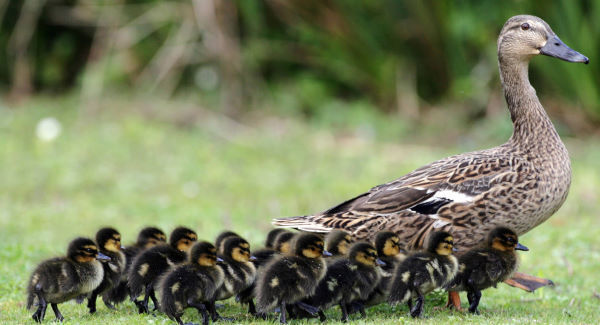
Ducks don’t do sentimentality, nor do they do book-learning; there is a hard rationale to their taking the UCC route from the Lough to the Lee. It is the shortest way and, once they reach the green acres of the campus, they are safe from traffic, although marauding cats might snaffle a few of the little quackers before they reach the banks of the river of legend and swim off to enjoy duck-life in the wide world.
We all know about the reprehensible and relentless gang-banging of ducks by drakes during the mating season. But ‘reprehensible’ is a judgmental term, and let us not be sentimental or anthropomorphic. Ducks are not people; they have different standards of conduct which has enabled them to survive in a quite different set of circumstances.
For all that, our ooohing-and-awwing over the fluffy little things is an understandable reaction. Ducklings are ‘pretty’, ducklings are ‘cute’. Like all young creatures, they are endearingly soft, big-eyed and lovable. We equate them to children of our own species. It was called ‘personification’, when I was at school.
The distance from the Lough to the Lee, via the university is, as the crow flies, about 0.6 km, but as the duck walks, about 1km. A circuitous route is necessitated by the existence of high walls and similar impediments that bar their way.
However, as for the roads they must cross — well, once again, when we witness them on the march (or the long-distance waddle) we cannot but see human parallels and admire their ‘bravery’.
Led by matronly mother, the little tribe fords the Glasheen Road, Magazine Road and College Road. They cross these busy arteries with aplomb, looking neither right nor left, simply marching onward. They do this every year, if not quite to the day, at least to the week; and not only one mother duck leads her progeny to the river, but many.
So, at rush hour, motorists in traffic jams lean out of car windows and, seeing a stream of baby ducks step off the pavement in front of their car, frantically wave down traffic in the oncoming lane to warn them that “adorable, fluffy little creatures” are about to step out into their lane.
It is extraordinary that, annually, there are few if any, casualties. The march of the ducks may be known and catered for by regular commuters but surely there are motorists who know nothing of their ‘duty of care’ and must hit their brakes with a squeal of panic upon encountering the surreal, Walt Disney-like sight of Mrs Duck leading the kids across the Glasheen Road at rush hour.
It is a tribute to the drivers of Cork that squashed ducklings are a rare event; and it is a tribute to Nature that the mother ducks unerringly find the least hazardous route via the college grounds.
Why they decide to leave the still waters of the Lough for the sometimes tempestuous waters of the Lee is mysterious. Perhaps they like the whiff of the tide; perhaps they are avoiding over-crowding. But otters, large pike and even killer whales have been known to swim in the dark, downstream waters of the Lee.
Ducklings are downy and loveable. I wonder if a baby cockchafer would touch our hearts in the same way.
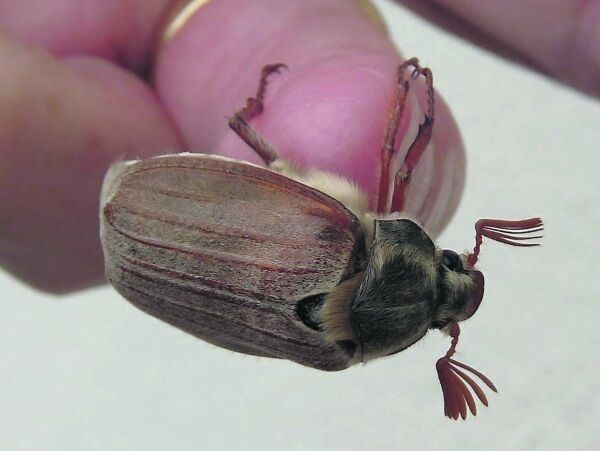
As ‘infants’, cockchafers are fat, white grubs, sometimes unearthed in the garden. They squirm and, for that reason alone, would definitely not endear themselves to even the most anthropomorphically-inclined or sentimental human. Besides, the grubs, feeding on plant roots, are no friends to gardener or farmer.
For all that, cockchafers are fascinatingly weird-looking creatures. Attracted by lights, they enter homes at night and bumble about, banging into things and setting up a loud, angry, buzzing like miniature chain-saws. Perhaps they are angry at constantly banging their brains (is that an oxymoron?) against hard objects, and just want to return to the night outside.
One that visited my home recently decided to rest from its travails on my finger. Fluffy and big-eyed, it was, but I wasn’t tempted to stroke it. I photographed it, and then opened the window and sent it on its way.
CONNECT WITH US TODAY



Be the first to know the latest news and updates










