Wildlife in West Cork: blink and you miss it
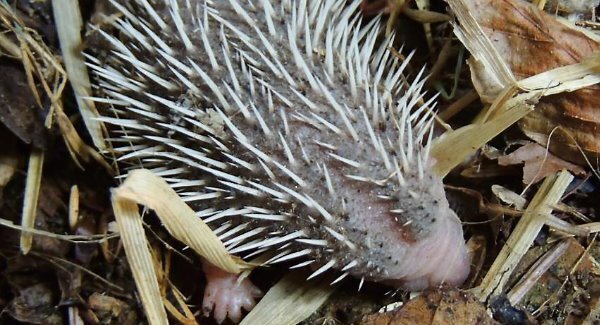
Firstly, there was the hedgehog family. While hedgehogs aren’t rare, the ‘exotic’ element is in the eye of the beholder. I would count the sight of six baby hedgehogs, pink and with tiny spines on their backs, as exotic, the more so as the mother remained calm, did not cover them with her body, and received the interest of humans with apparent equanimity.
When a farmer found this hodgepodge of hedgehogs nestled in a straw-lined hollow in an outhouse in his yard in Kilbrittain, Co Cork, he kindly telephoned me, knowing I’d be intrigued. I wasn’t at home that day and the next, so he left messages. Meanwhile, he and his son, Oliver O’Brien, put some straw bales around the nest to protect it. The mother (the sow) seemed totally unalarmed by the attentions given to her and her offspring.
Mr O’Brien’s messages were left on my phone at the start of the week. I listened to them when I arrived home at midnight on the Saturday. Replying to the calls next morning, I learned that just two days before, the mother had moved her tribe — by then perhaps two weeks old, and capable of following her — out of the security provided and into their natural habitat, the wild.
She had led them into a nearby ditch, well provided with cover; their tracks could be traced in the grasses bent down by their passage. The O’Briens had made them feel at home, but hay-shed life was clearly not for hedgehogs, except as maternity units or hibernation quarters.
While the kindness of strangers had, presumably, been appreciated, the time had come to snuffle forth, and bed down in the bushes. That they were not only tolerated in the shed but welcomed, evidences, once more, of the goodwill of country people towards nature, be it hedgehogs, swallows or owls in the loft. The second ‘item’ I missed was the humpback whale which, for some days from June 18, cruised back and forth within stone-skipping distance of the shore outside Clonakilty Bay’s Dunmore House Hotel, gulping down sand eels by the tens of kilo at a time.
A whale hunting so close inshore is a sight rarely seen! Killer whales seize seals and penguins off Arctic and Antarctic beaches and icepacks, but not here. Spectators ‘ooh-ed-and-awed’ from their viewpoint on the road nearby. I was fortunate to be able to get a long-distance view of the action — if only from one Atlantic island, La Gomera in the Canaries, to another, Inchydoney Island, West Cork — via social media.
Liz Dunphy reported the story in The Irish Examiner, with a video clip supplied by Corkman Jason Coniry, who followed it on his paddleboard. Sean Casey captured excellent images. So close was the massive creature to humankind, and so relaxed was it that, for a bit of fun, it balanced Mr Coniry’s paddleboard gently on its dorsal fin as it swam beneath him.
While small numbers of humpbacks migrate in winter through West Cork waters, it was unusual that the animal, some eight metres long should be feeding in water just three metres deep and only 20m from shore. Perhaps it saw an opportunity. As a juvenile, it could enter a fish-soup sea which adults, twice its size or more, could not.
The Holly Jo, Colin Barnes’s Cork Whale Watch boat, went to the scene to photograph the animal’s tail lobes — this, to provide distinctive identification data for the Irish Whale and Dolphin Group — but the animal never raised its tail above the water, probably because it was too shallow to allow it to dive. However, a unique dorsal fin pattern confirmed that it was a ‘new’ whale on the patch, and was catalogued as #HBIRL36.
As I passed through London on the way home, I strolled on Hampstead Heath and was surprised to see large margins of meadow left to nature, these fringing the rolling parklands of shorter ‘amenity’ grass where sunbathers and picnickers lolled. I counted many varieties of ‘old’ meadow grasses along with many wildflowers, butterflies and insects. Nuthatches, jays and carrion crows — sturdy, black-beaked crows slightly smaller than ravens — were the fauna.
I was somewhat shocked to see many roadside verges in West Cork scalped to the very roots. Yes, bushes and even the occasional foxglove were left standing, but I do think the cutting was unnecessarily severe.
CONNECT WITH US TODAY



Be the first to know the latest news and updates