Vote on presidential age limit: Offensive, laughable, patronising
Even before a conclusion is reached about what did or did not happen when IBRC sold the loss-making company to Denis O’Brien’s empire, the episode raises another, unrelated hare.
The Siteserv sale, and the privatisation — though the company’s spin doctors insist on describing it otherwise — of at least 10% of bus routes are at the root of entirely avoidable conflicts.

This just adds to the deepening suspicions around Taoiseach Enda Kenny’s off-the-cuff but persistent refusal to hold a referendum on copper-fastening Irish Water in public ownership.
Why not? Whose interests are served by this apparent one-man veto? Is this a cabinet decision? A Dáil decision or an uno duce, una voce diktat?
DISCOVER MORE CONTENT LIKE THIS
Mr Kenny need not be a socialist — like Bertie Ahern — to see that such a national letter of comfort would go a long way to turning what is the greatest cock-up in public administration this country has seen into a palatable necessity, maybe even a resoundingly successful one.
The attractions of such a vote are so obvious that refusing to hold it provokes deep suspicions about men with deep pockets waiting in the shadows to pounce at the right moment.
Mr Kenny’s opposition to a vote is manna from heaven for water charge protesters too and, if nothing else, is tragically clumsy politics.
It is not, though, as if Mr Kenny’s Government is coy about referendums.
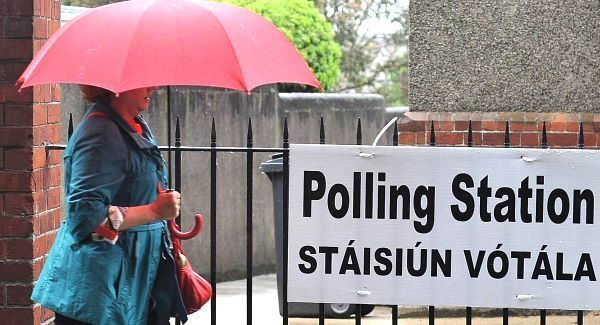
Next month we will vote in one of the most irrelevant, meaningless, and patronising amendments ever offered to an electorate. We will be asked to lower the age at which a person may contest the presidency from 35 to 21.
It might be an overreaction to offer the counter-proposal — that no one be allowed stand for the Oireachtas until they reach 35 — but only just.
The idea that someone, no matter how talented, educated, connected, or all-seeing, might be experienced enough to be president at 21 is as far-fetched as, well, the idea of reforming the Seanad.
How much more meaningful if we were asked to vote on Irish Water, repealing blasphemy laws, or even removing the obligation for a new president to swear a religious oath on entering office?
Maybe even one on lifting the curtain around debating nuclear power? Upward-only rent reviews — as promised?
School patronage, anyone? Laws to better control bankers, lawyers, or any of the other too-big-to-fail professions? Better laws to protect the environment?
In ancient Rome, when an army suffered a faraway defeat or an emperor wanted to pretend he was something he was not, a festival of bread and circuses was organised.
The people were seduced and the crisis of the day relegated to any other business. The lower-the-age amendment falls into that category.
It gives an illusion of democratic participation but, in reality, it just cheapens our political process and feeds cynicism.
It is worse than that — it is a wasted opportunity to secure Irish Water in public ownership and turn what is a problem into a national project of rejuvenation. It would be laughable if it was not so very sad or so very revealing.