Wrong there Michael Lowry, it’s a pretty awful way to be judging women
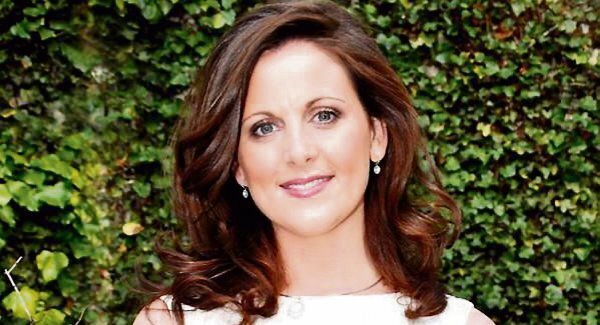

I’m thinking of getting a new picture byline and this time I’m going all the way when it comes to the strategic use of photoshop. This is a service to you the reader. Why, while you are eagerly parsing my every word, should you have to look at my ageing visage, with any further wrinkles or imperfections which may have developed in the past 12 months?
If my columnist expense budget stretches to it I might even go for Botox on the forehead, and a little work around the lips.
Don’t get me wrong. I’m very confident in my abilities as a journalist, and there’s nothing to say I won’t get even better as the decades go on, but there’s only so much I can do about the march of time and how my failing physique may affect my ability to work.
After all every board, every newspaper, and every parliament needs its quota of pulchritudedness. If you’re not going to have a lot of “girls” on the books, then the ones you do have may as well be easy on the eye, eh?
I know, I know I’m only being unnecessarily sour after reading the detail of the note from Tipperary TD Michael Lowry to Taoiseach Enda Kenny where he sought the re-appointment of his former PR adviser Valerie O’Reilly to the National Transport Authority. Why can’t I simply dismiss it as harmless, and something to be expected from men of that generation?
I’m not suggesting the Taoiseach would write or say such a thing about a female in a professional setting, but I reckon he mightn’t be too offended by seeing it on the page, and really there was little surprise to hear Michael Lowry was the author. The deputy was also clearly using the opportunity to not so subtly remind the Taoiseach of the intimacy of their own relationship, with his matey banter.
I do take Mr Lowry’s retaliatory point on “fellow journalists” where he pointed out the acres of coverage given to the appearance of women like the IMF’s Christine Lagarde. Yes Michael, this is what we women have to deal with on a daily basis.
I suppose we should be taking perverse crumbs of comfort from the fact that a woman (Lagarde) entering her seventh decade has her appearance spoken of so universally approvingly.
The first thing I did after hearing of the Lowry Dáil note story was to Google an image of Ms O’Reilly to see what she looked like. I hate that this was my first instinct, but there you are, and my reaction on seeing her was: indeed she is a fine looking woman. Then I felt like a hypocrite.
We are conditioned to judge women on their appearance, even those of us who rail against it. But that situation is made all the easier for the fact that women are in such short supply when it comes to positions of power and influence. They are not there in critical numbers when it comes to making our laws or present in our media as people of power with strong, valid opinions.
If for instance there were an equal number of men and women in the Dáil chamber, or on a company board, the few that are there would not stand out so much like sore thumbs and be so automatically judged on their looks.
If they were in equal representation in parliaments, board rooms and tv studios then men would think twice about making such remarks and in fact, they would become redundant. We can only hope the new gender quota legislation, which comes into force for the general election, will result in more women being elected to the Dáil.
But this will be a slow enough process. The other area which must be tackled is the abysmally low profile of women in current affairs in Irish media. It was very disappointing to read through the new revised Code of Programme Standards from the Broadcasting Authority of Ireland, published this week, and realise they contained nothing on fair gender representation, particularly on current affairs panels. It’s not even an aspiration!
Bob Collins, the former BAI chairperson, wrote that the code seeks to offer a framework that is set firmly within the statutory context that recognises the important service that broadcasting provides to the public that does not attempt to circumscribe the reasonable editorial freedom of any broadcaster. But it recognises also the “entitlement of the audience to have its deeply held convictions respected, its complexity and diversity recognised and reflected and those who are vulnerable protected” .
There are seven guiding principles underpinning the code. These are Respect for Community Standards, Importance of Context, Protection from Harm, Protection of Children, Respect for Persons and Groups in Society, Protection of the Public Interest, Respect for Privacy.
I would argue that any of these principles could be used to highlight the importance of representing one half of the entire population of the country – the female half - not least the two principles which cover respect for persons and groups, and of the public interest.
It is my belief that the lack of gender diversity on display fails to recognise my entitlement to have my “deeply held convictions respected”. It shows a distinct lack of respect and fails to serve the public interest, to not have an equal number of women speaking on national issues and having their voices recognised as authoritative.
The next time you watch or listen to a current affairs programme tune into how often you see or hear a woman being presented as the “expert” voice telling you what you should believe or think about a particular issue.
If you’ve already been paying attention you’ll realise that the number is pitifully, nay offensively, low. I studied this topic a few years ago, as an academic exercise, and quickly realised that the female voice gets utterly overwhelmed by the male one, unless, of course, the subject matter is a ‘softer” one, such as a social issue or education, or indeed domestic violence. I didn’t miss the irony, for instance, of Radio One’s flagship current affairs programme Morning Ireland, having a male expert on recently to discuss The Sun’s apparent dropping of it’s daily dose of bare female nipples on Page 3.
It’s a little unfair to single out Morning Ireland because there are so many offenders but you’ll strain your ears to hear the authoritative female voice there, as you will on Newstalk’s Breakfast, although on that station you do have the added pleasure of Ivan Yates’ casual misogyny.
According to the BAI the issue of the selection of contributors is a matter for broadcasters. Indeed the idea of maintaining the independence of editorial control over programme content, they say, is something the BAI must have regard to when preparing or revising such codes. They point out that separately the authority supports a number of initiatives on the issue of gender represenation.
The initiatives they support obviously have merit, but in truth we are simply throwing buns at elephants until we introduce a quota system for current affairs coverage.
Until then we’ll keep freshening up the lipstick and wondering did we simply miss the bus on the liposuction.
We are conditioned to judge women on their appearance... Why can’t I dismiss it as harmless

CONNECT WITH US TODAY



Be the first to know the latest news and updates