Water sports spreading invasive species across Ireland
Some years ago, pollution from agricultural, industrial and local authority sources, and often causing massive fish kills, was seen as the biggest threat to rivers and lakes.
But now we are hearing more about invaders such as the zebra mussel and Asian clam, which have colonised waterways.
These are tiny, thumbnail-size shellfish, but they can do serious damage. The zebra mussel is in the Shannon, and in its lakes and tributaries, while the Asian clam is in Lough Ree and rivers in the southwest.
Last September, Inland Fisheries Ireland banned angling on a stretch of the Shannon, in Lanesborough, Co. Longford, downstream of the ESB power plant at the top of Lough Ree, to curtail the clam.
Concerns are frequently voiced in other parts of the country, not least in Killarney, which has world-famous lakes to protect, and Michael Gleeson, a councillor from the tourist town, raised the issue at a Kerry County Council meeting.
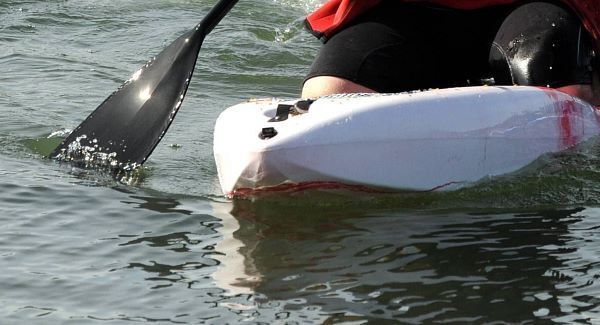
He called for measures to ensure that clothing and equipment used by kayakers and surfers should be decontaminated against these invasive species.
Mr Gleeson, who is interested in environmental issues, said the invaders deprived native species of their regular feeding by removing different plankton from the water.
They also feed at the bottom of rivers and lakes and attach themselves to the floor, thus interfering with the breeding of such creatures as the stonefly. They can cling to the shells of pearl mussels and suffocate them.
Mr Gleeson further called for decontamination units for boats and suggested that waders and wellingtons should be washed in a special hot-water solution. “I’m asking anglers and water-sports enthusiasts to exercise extreme caution, and am also asking public bodies to erect clearly visible warning signage.’’
Asian clam bears many similarities to the zebra mussel, but it is even more dangerous, according to the River Slaney Trust, in Co Wexford, which describes it as “the world’s most notorious freshwater invasive species’’.
First found in Ireland, at St Mullin’s, in the River Barrow, in 2010, it completely carpets the river bed and chokes out almost all other life. Its population grows rapidly and prolifically.
The Slaney Trust says 67,000 individual clams can be packed tightly into a space the size of a snooker table, and, worryingly, the clam can render salmon-spawning grounds useless. The clam can also damage beaches and swimming pools.

CONNECT WITH US TODAY



Be the first to know the latest news and updates