Large carnivores thrive in Europe
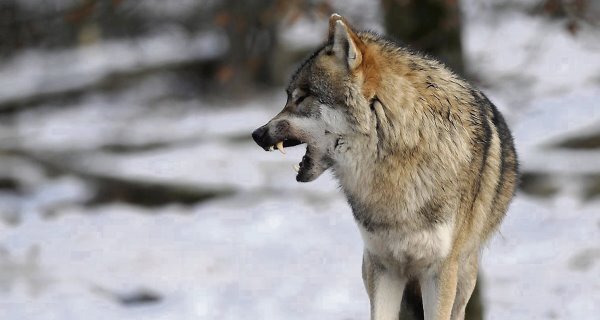

Two of them, the lynx and the wolverine, aren’t so well known. The wolf and the bear, however, are iconic. Most people think that the big hunters are thin on the ground but, according to a paper in the journal Science, they’re not. Drawing on the work of 76 specialists from 26 countries, the authors claim that Europe’s ‘big four’ are doing rather well and their numbers are increasing.
We now have many more large carnivores than a century ago. Nor are they confined to out-of-the-way places, as is often thought; a third of Europe’s landmass supports at least one species. Human-animal relationships differ from those in North America; European big beasts, it seems, live happily with us and we with them.
The history of conservation in Europe is not a happy one; predators were persecuted everywhere. The wolf, once the world’s most widely distributed dog, suffered more than most, becoming extinct in western countries. The last Irish one was killed by a farmer who had lost sheep on Mount Leinster in 1786. A local bigwig shot the last British wolf near Killiecrankie in 1680.
Persecution continued up to the 1970s in southern Europe. By then, predator numbers were at an all-time low. But attitudes towards nature and wild creatures were changing; habitat was being protected, reserves established and legislation enacted. Our Wildlife Act, for example, was passed in 1976. As a result, Europe’s forests are more extensive and in better shape now than they were a century ago. Although wildlife populations, in general, continue to decline, the larger species buck the trend. Bison, deer, boar and wild goats have prospered and so have the creatures which prey on them.
The brown bear, Europe’s largest carnivore, lives in Scandinavia, Italy, Iberia, Central Europe and the Balkans. There are 17,000 bears in 10 distinct populations spread over 22 countries. Numbers are increasing in most areas. The species was in Ireland up to 3,000 years ago. Why it became extinct isn’t known. It’s unlikely that our Bronze Age forebears exterminated it.
The much maligned grey wolf is Europe’s second commonest big predator, with about 12,000 individuals in 28 countries. This contrasts favourably with the situation in the United States, where only 5,500 wolves survive, outside Alaska. Yet the US has twice the land area of Europe and only half as many people. Not all European wolf populations are prospering, however; a Spanish one is close to extinction.
The lynx, the secretive cat with webbed paws as snowshoes, is also holding its own. There are about 9,000 of them in European forests. This occasional predator of livestock and game-birds, is trapped illegally and numbers in some of its eleven populations are falling.
The wolverine, a relative of the otter and the pine marten, lives in northern Norway Sweden and Finland, the only countries supporting all of Europe’s ‘big four’. Large male volverines can weigh up 18kg, three times that of an otter. There are around 1,250 animals in two separate populations, both of which are increasing.
In the US, predatory animals are banished to fenced-off parks and reserves to keep them away from people. In crowded Europe, we haven’t the space to cordon off really large areas of wilderness, so the approach has to be more flexible. We allow people and animals to share the same environment. This has its downside; wolves and lynx attack livestock, bears raid beehives and wolverines harass reindeer herds. Guard dogs, electric fences, and rounding up farm animals at night, help reduce these problems while compensation schemes provide redress for livestock lost.
Europe’s approach to large predator conservation is a major success story. Animals and people have learned to tolerate, and coexist with, each other. European integration, it seems, is the way of the future.
- Recovery of Large Carnivores in Europe’s Modern Human-dominated Landscapes. Guillaume Chapron et al. Science 19. December 2014.

CONNECT WITH US TODAY



Be the first to know the latest news and updates