Our education system is failing the test for pre-schoolers
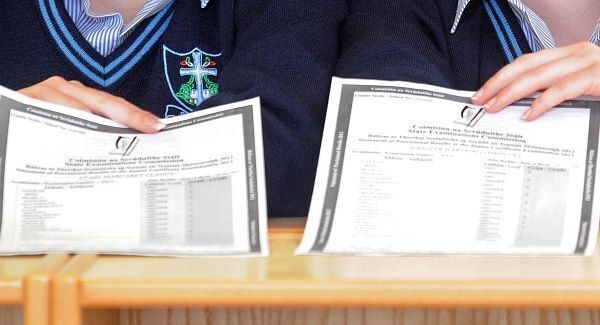

We didn’t see the kids in tears because they failed. And nobody asked what it was all about — or how cruel was it that these kids were looking at two or three years more when their lives would be judged by an absurd race for points.
Also last week the OECD, which gathers data in all the developed countries in the world, published the latest annual set of figures by which we can compare ourselves to the rest of the world. Another occasion for us all to be smug.
But here’s two things the figures tell us. The first thing is that we spend more than the OECD average on third-level education; around the OECD average on second level; less than the OECD average on primary; and damn all on pre-school education.
The second thing the figures tell us is that the main reason the State investment in third and second level education is so high is because teaching salaries are high. One reason investment in pre-school is so low is because the vast majority of the people who work in that sector live on or near the minimum wage, irrespective of their qualifications. It’s an upside-down order of priorities. Tons of global evidence suggests that if you want the best out of your educational system, you equip children with the social and emotional skills to really get the most from school. Pound for pound, you put more into pre-school than you do into third level – not the other way around.
In Ireland, up to 2010, in the column for the OECD report that covered pre-school investment here, the figure we put in year after year was zero. That’s because not only did we not have a pre-school system, we didn’t even have any kind of structured approach to child care. What we call pre-school education in Ireland is about 4,000 different providers, with no common curriculum, no common standards, no real accountability. Uniquely in the western world, it’s the only system of pre-school education that the national Department of Education has nothing to do with.
After surviving that, our kids move into primary school. Primary is free. It’s a constitutional right. The Supreme Court has decided that every child in Ireland has an absolute right to a primary education. The only restriction is that they must be over three and less than eighteen.
Apart, that is, from a few other restrictions. On average, it costs €300 to start in this free system. The good old Department of Education has no power to tell schools that they must reduce this cost. Part of the reason for that is that the Department of Education doesn’t run the primary schools either. They’re run locally, usually by members of the clergy.
Because, by and large, they’re denominational. Absurd amounts of money are wasted enabling Protestant and Catholic schools to exist side by side in villages and towns throughout the country. The Constitution prohibits the endowment of religion, but that doesn’t prevent the maintenance of often sub-standard buildings and under-resourced schools from being duplicated, when the elimination of duplication would help standards to rise in the interests of children. And do our kids leave primary with the beginnings of an understanding of music or drama, with the basic elements of what the Scandinavians call a digital instinct, with words and phrases of a second language (apart from Irish)? These are the sort of things that, oddly enough, are most easily learnt at a very young age, when the brain is like a sponge. But in our system, those kinds of outcomes happen by random chance.
And then second level. Divided more than any previous level by economic class, background andincome, we have built a second-level system in Ireland that cements the inequalities our children are already experiencing. Schools compete with each other to get popular ratings, and usually the schools with the richest parents do best, while the rest of the system subsidises them – because we may be one of the few countries in the world with a private, fee-paying system where we pay all the salaries.
And it does more than that. The second-level system has become like an educational sausage machine. Almost from the moment children start in the system, they are told they have to regurgitate enough facts and figures to start accumulating points for college.
This is the most single most barbaric aspect of the entire system. Everyone knows that the points system has nothing whatsoever to do with quality in education. The president of Maynooth helpfully let it slip recently that every third-level college in Ireland keeps the points for a number of their courses artificially high, in order to create an illusion of prestige. He also admitted something we all knew already — that the points system is nothing more than a rationing process. It mediates between supply and demand.
When the stall-holders in Moore Street are reaching the end of their day, and they’re looking at a stock of bananas that will be over-ripe tomorrow, they sell them off cheap. That’s the points system – if there’s high demand, points go up, if there’s a plentiful supply of smelly bananas, points go down.
But the point is that every year, thousands of young people are systematically tortured to get these points, judged as failures if they don’t get enough of them. It has nothing to do with equipping young people for the rest of their lives, or with building the confidence they’ll need to cope with adversity.
And for what? Our young people are seen to have failed if they don’t go to college. And that bothers me more than anything else. If my child wants to be a baker, or a beautician, or a welder, when he or she leaves school, why is that not to be respected? Why has the second-level system no resource for spotting and encouraging that talent in my child? Why has the higher education system no room for that child?
You know the odd thing? Germany is the economy on which we have depended for the last few years for our very survival. In Germany, participation in university is a lot lower than it is in Ireland. But participation in higher education is total.
If you want to be a baker, there’s a school for that. If you want to be a master baker, and teach other people to be bakers, there’s a school for that too. You can be an apprentice in almost 350 recognised trades in Germany. In Ireland it’s around three dozen.
An education system is supposed to serve the needs of children and young people first and foremost. If we’re serious about applying that test, I really think it’s time we stopped being smug.
Pound for pound you put more into pre-school than you do into third level
CONNECT WITH US TODAY



Be the first to know the latest news and updates











