Unanswered questions in Cooke report
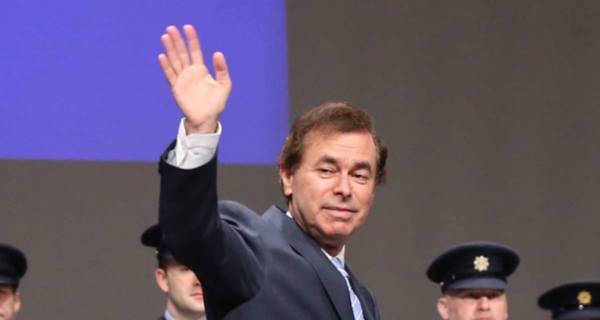
The greatest minister of them all was done down by supine elements of the media, who now have egg on their pasty faces. Let’s stand up and fight this political correctness that saw group-think hound a good man from office. So say all of us.
The above is a mish-mash of the sentiment expressed in some corners of the media and politics following the publication of Cooke last Tuesday. Among another element of the media — let’s call it the paramilitary wing of the Garda press office — they don’t really give a fiddler’s about Shatter, now that he’s gone. They are, however, thrilled to have a little order restored to a world in which the ombudsman doesn’t mess around with their sources.
There are disturbing matters contained in the 64 pages of the report, but probably more disturbing is the reprise of the reaction that occurred last February when the story initially broke.
A few basic conclusions can be drawn from Cooke. The report confirmed GSOC’s statement of February 10 last that there was no credible evidence that the offices had been bugged. The Sunday Times over-egged its story on the bugging, which was based on a leaked report into the security sweep done of GSOC’s offices.
Two of the three security threats identified by British firm, Verrimus, could, according to Cooke, be given credible alternative explanations. The third could not. Two other possible surveillance operations, one electronic and the other physical, were mentioned, but not examined in detail by Cooke, because they did not fall within the inquiry’s terms of reference. And an attempt to influence the inquiry by some shadowy security figure was not further examined because, Cooke said, it didn’t succeed.
Much of the above will have escaped public attention under the welter of headlines, such as the one in the Irish Independent on Wednesday — ‘GSOC office was never bugged’. (Really? Never, ever? How do they know that?)
When the story broke in February, the reaction in government, Garda management and elements of the media was to divert. The public was told that the main issues were that GSOC had not informed the minister for justice that it had conducted an investigation into bugging, and that there was a mole in GSOC, who leaked to the Sunday Times. The possibility that the Garda watchdog could be under surveillance was completely ignored. All of the power centres had another imperative — avoid scandal within the force at all costs.
This time around, the tactics were similar. Cooke was published at 8.45pm on Tuesday, leaving just enough time for the evening news and current affairs programmes and the following day’s papers to get the bare bones of the story. The bare bones, as presented, was that Cooke has found no definitive evidence of bugging.
Ahead of the publication, this line was leaked to a number of reporters, to ensure that the narrative would be forged.
On the Six O’Clock News on Tuesday, David Davin Power said that he understood that the pending report would discount the claims of bugging.
“It would be ironic in the extreme if at the end of the day these claims turn out to be a bottle of smoke,” he said. The metaphorical bottle of smoke previously popped up in February, when Mr Shatter rubbished the story.
The narrative was thus set, and continued into the following day. There was no room for proper analysis of, for instance, the suspicious sightings of a white van in the vicinity of GSOC’s office, the photographer seen at the airport, other suspicious movements, all of which were in the report. It was as if the only thing that mattered was that Cooke had dealt with the bottle of smoke and everybody could move on. The first proper examination of the report was on the following evening’s drivetime radio programmes, but by then the narrative had been well and truly imprinted on the public consciousness.
By Thursday, it was all about the leak. RTÉ News led on a line about the search for the mole, who had leaked to the Sunday Times. The Indo’s headline on the story screamed: “Hunt for mole who breached security at Garda watchdog”. The notion of crime reporters going all po-faced about leaks from security sources is beyond laughable. Everybody knows that the culture of crime reporting in this country is dominated by leaks from Garda sources. The main thing, though, was to divert attention from the still unexplained goings-in at GSOC’s offices and immediate environment.
Then there’s poor Alan Shatter. He was right all along, the spin goes. Vindicated! Shatter’s issues around this story were not whether or not he guessed right about the bugging, but the manner in which he had handled things.
From the off, he didn’t want to know whether there was any security threat. His main concern was that he hadn’t been informed of the investigation into possible bugging. He told the Dáil that the security sweep was “routine“. In fact, it was in reaction to heightened suspicions in GSOC. He presented the views of GSOC chair Simon O’Brien in a manner that was at variance with O’Brien’s own characterisation 24 hours later.
Then, he had his own review of the alleged bugging by a security firm that did the job in three days, which he presented as definitive evidence. Cooke took three months to do the same thing, and he came to different conclusions than those of Shatter’s pet firm.
Shatter’s problem here was the same as it was in the matter of the whistleblowers. Instead of acting as an overseeing arbiter, he immediately sided with Garda management and thereafter proceeded in a bull-headed manner. By doing so, he dragged the Government into controversies which could have been avoided.
In the GSOC issue, he even roped in Enda Kenny, by briefing the Taoiseach erroneously on the law. Those in the know suggest that after that incident, Kenny began to lose confidence in his minister, ultimately leading to Shatter’s career demise. (Ironically, Shatter could claim to have been unfairly criticised in the Guerin report, but again, that was just one of a succession of incidents that did for him).
The ultimate outcome of Cooke is questions unanswered, and a worrying lack of interest in what really went on. The alleged political will to ensure proper oversight of the gardaí is once more up for grabs. GSOC has been weakened as a result of the report, and particularly, the manner in which the report has been spun. The power centres have closed ranks. Nothing to see here, folks. Move along, and let’s all put this behind us.