Aspen stands out in summer
I was admiring one the other day and trying to figure out what it was that made it so attractive. It’s a slender, elegant tree which develops fine leaf colour in the autumn, with an emphasis on buttery yellows. But what makes the aspen stand out is sound and movement during the summer. The leaf stalks are flattened and flexible so that the leaves flutter in the slightest breeze and hit against each other, making a rustling sound. In mixed woodland you’ll often hear an aspen before you see it.
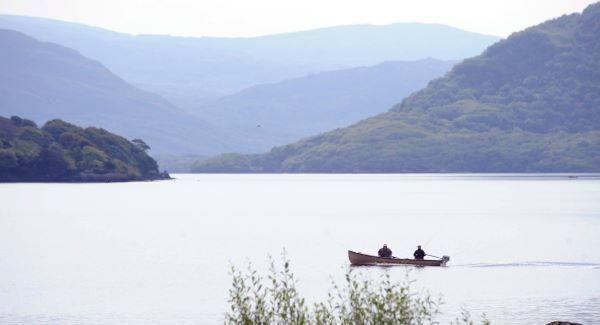
Unfortunately aspens are not common, although they’re fairly widespread in damp soils. Large specimens (they are capable of reaching a height of 30 metres) are even rarer. The finest I know are on the shores of Lough Leane in Killarney. They are dioecious, male and female catkins growing on separate trees and pollination being carried out by the wind. Because they’re so sparsely distributed this doesn’t seem to happen very often in Ireland and we never get the huge swathes of autumn colour they provide in Scandinavia.
They are members of the poplar family, probably the only poplars native to Ireland. I say probably because it has been suggested that the black poplar is also a rare native of the Shannon basin. There certainly are some fine black poplars growing along the banks of the Shannon but this theory is discredited nowadays.
But, like many other poplars, the aspen tends to throw up lots of root suckers, often at a surprising distance from the parent tree. This means that it regularly forms groves of same-sex trees which are all clones of the parent. Small root suckers can be dug up, pruned and replanted in the autumn and this is probably the best way to propagate this species. One of the reasons for the tree’s comparative rarity is that even when viable seed is formed, which doesn’t happen very often, it has a very short shelf life. In the wild ripe seed has to land on bare, damp soil and germinate within two to three days of leaving the parent female tree or else it dies.
Aspen is not really a useful tree. It’s timber can’t be used for much, except possibly making matchsticks, and is no good even as firewood.
Its value as a tree lies purely in its elegance and in its rarity. But it’s a species that any collector of native trees should seek out and, if possible, acquire both a male and a female specimen. Because it was one of the earliest colonisers of this country its been here for nearly 10,000 years. It would be a shame if it disappeared.
CONNECT WITH US TODAY



Be the first to know the latest news and updates