Shatter was no poster boy for justice and department should be disbanded
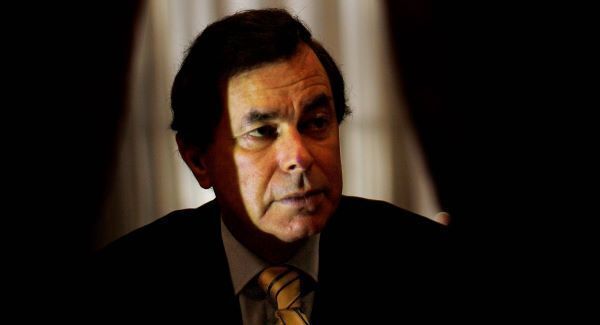

The resignation of Justice Minister Alan Shatter, and the deeply shocking Guerin Report that precipitated it, have made the local and European elections an irrelevancy.
Mind you, I had been struggling anyway to say something interesting about those elections. Elections that underpin transformation in local government in Ireland? Hardly.
The most important European vote since Ireland entered the EEC (as I heard the Taoiseach saying in a party political broadcast)? I don’t think so.
In fact, they seem more like the Stepford elections. I’ve never seen so many pretty young things on posters — beautifully coiffed hair, made up to within an inch of their lives, as they all pose with dazzling teeth on show, and not a laugh line or a wrinkle to be seen anywhere.
And that’s just the male candidates. Seriously, whoever is supplying the airbrushing software must have made a fortune. It’s a terrible pity, because some of the faces are full of character and personality, and every ounce of it has been replaced by the same plastic identikit look. And there seems to be an upper age limit — none of the candidates is allowed to look older than 22. They must have raddled looking paintings in their attics, a la Dorian Gray, because they look far younger on the posters than their ages suggest.
That’s certainly the case in Dublin. You long to see a poster of some grumpy old fella, a face that suggests the candidate has life experience. But such posters are pretty thin on the ground. I was in Limerick at the weekend, and at least there they have allowed a few candidates who are older than my grandchildren.
On the subject of posters: I was on the receiving end of a tirade from former Senator Eoghan Harris because, apparently, I hadn’t given him credit for two of the best candidate posters ever — Proinsias De Rossa’s “breath of fresh air” poster in the 1989 European elections, and Mary Robinson’s “president with a purpose” poster.
Harris should relax. I’ve never claimed credit for either poster — I only wish I was responsible for them, because they put all of the current posters to shame. The Robinson poster was modelled on the earlier one for De Rossa, and they were both largely (though not entirely) Harris’s concept.
People who know me well say I’m a visual illiterate, so my chances of ever winning a design award are slim. The only effective poster for which I can claim some credit was much earlier, in the 1981 general election, and, as far as I know, it was the only campaign poster that didn’t feature a picture of the candidate, or even his surname.
That was because the candidate, Toddy O’Sullivan, in Cork, didn’t need a picture. He had just been the city’s Lord Mayor, he had a great first name, and an instantly recognisable face, with great, bushy eyebrows (you couldn’t airbrush them if you tried).
So, a plain, white poster that simply said “Toddy’s the Man!” did the trick perfectly.
But even if these current elections really mattered — which they don’t, in and of themselves, even though the results may well have far-reaching consequences — they would still be knocked into a complete irrelevance by the Guerin Report.
Chapter 19 of that report ought to be compulsory reading for every policy-maker — maybe for every citizen — in Ireland. It reveals, beyond any shadow of a doubt, that the administration of justice in Ireland has been the property of an entirely closed system and culture, to the point where it has been irredeemably corrupted.
When Clare Daly, TD, says that An Garda Siochána needs to be entirely reconfigured, so that it is no longer a police force but a police service, she is absolutely right.
But that doesn’t go far enough.
The Department of Justice needs to be disbanded, and replaced by an administration that understands that good policing must be informed by a respect for human rights, and not just by its own interests.
Anyone who has ever criticised the gardaí is familiar with its tendency to circle the wagons. There’s nothing surprising about that narrative in the Guerin Report.
But what is absolutely shocking is the revelation that, despite a legal obligation to act independently, the Minister for Justice and the department connived in that self-protection.
They behaved in exactly the same way as the religious orders did when faced with prima facie evidence of child abuse.
The facts are simple.
An allegation was made against the Garda Commissioner. The person making the allegation needed to protect his own identity, because he had been harassed and threatened. He was entitled to do that. Once the allegation was made, the Minister for Justice had a legal responsibility to have it investigated.
The Minister for Justice’s Secretary General knows the minister’s legal responsibilities. In order to help the minister to discharge them, he sends the allegation to the Garda Commissioner and invites him to investigate them. That’s mind-boggling enough.
BUT the commissioner then replies. The tone of his letter is threatening, because he makes it clear that he knows who has made the allegations. He then announces that he has done an investigation (into himself!) and is satisfied that he has no case to answer. The department and the Minister for Justice accept this at face value, without any query whatever, and blithely tell the person making the original allegation against the Commissioner that the Commissioner has investigated the allegation against himself and has found that he is in the clear.
Except that it’s so serious, it’s like the plot of a Gilbert and Sullivan opera. Sergeant Maurice McCabe, who had made the allegations and was entitled to an entirely independent investigation, must have wondered what kind of country he had been living in.
As do I. And as do, I suspect, many of us. If behaviour like this is not rank corruption, then it is certainly an enormous step on the way to corruption. Maurice McCabe sought to expose a certain level of corruption — the way he was treated suggests a deeper level of corruption than he was aware of.
Look, we don’t need more commissions of enquiry. We don’t need to spend years deciding what’s the right thing to do. The administration of justice in Ireland — and the policing system on which it depends — needs a new beginning.
It needs new law, new principles, and new leadership. Not a change in culture, but a new and different one. There is no more urgent task.
CONNECT WITH US TODAY



Be the first to know the latest news and updates