Racism exposed in a world where hi-tech recordings catch you out
NEVER mind the morality, consider the electronic threat. That’s arguably the key message emerging from racism controversies on both sides of the Atlantic at the moment.

Racism exposed in a world where hi-tech recordings  catch you out

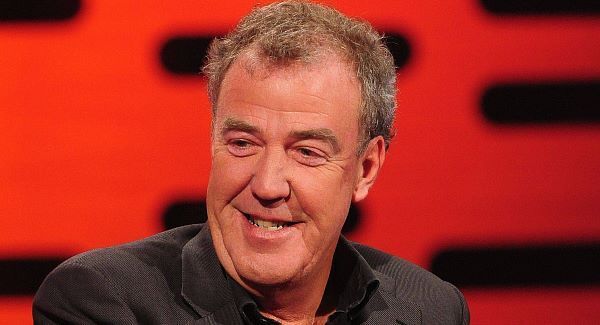
First of all, there’s Jeremy Clarkson, who, for some reason which escapes all of us, deployed the old “Eenie, Meanie, Minie, Moe” nursery rhyme to indicate the difficulty of choosing between two equally attractive cars, and in the course of so doing, seemed to use the ‘N’ word. Because his programme, Top Gear, is sold all over the world, all hell broke loose.

Secondly, Donald Sterling, the owner of the Los Angeles Clippers basketball team, more than 70% of whose players are black, ranted in a telephone call to his personal assistant (and/or mistress) that she shouldn’t be seen associating with black people. He warned her she should not bring black people (and you can guess that he did not use that term) to LA Clippers games.

One of those to be kept away was Earvin ‘Magic’ Johnson, who, before his retirement, was one of the most famous basketball players in the world and to this day remains a deeply loved public figure in America.

Each of these communications caused unprecedented controversy. Neither of them was meant for the public ear. Clarkson’s mumbled use of what sounded like the ‘N’ word happened in an out-take which was not used in the final programme he was making. Sterling’s outburst came in a private phone call which was recorded.

Both the out-take from Clarkson’s show and the recorded phone call between Sterling and his PA were leaked to media. Clearly, either someone doesn’t like them, or sees an opportunity to make a little extra dosh out of them. Or both.

Comment has been universally condemnatory, with US president Barack Obama describing Sterling’s as “incredibly offensive racist statements”.

The BBC has been bombarded with calls for the firing of Jeremy Clarkson, who has offered an apology which satisfies nobody and puzzles everybody, with its description of the TV star as trying to avoid using the offending word and making an emotional plea for everybody to understand that he is not now, and never has been, a racist.

Marginally better defences of Clarkson than his own have been made by others who point out that he is a man of his time and that, back in the day when he would have become familiar with the “Eenie meanie” counting game, the ‘N’ word was not just included, but meant little or nothing to British children of his generation. It was just a word, just as “curds and whey” was just a phrase which was without meaning to 20th century children who used it in another nursery rhyme. After all, the best selling mystery book in the history of publishing was Agatha Christie’s 1939 offering, which, in addition to its title; Ten Little N*****s had the ‘N’ word recurring throughout the plot. When the book was published in America, another section of the same nursery rhyme; “And then There were None,” was used.

Nobody ever suggested that Dama Agatha was racist. She was in and of her time, which was a period when a staple toy of the British nursery was a golliwog.

An argument can and perhaps should be made that each generation comes hard-wired with terminology learned in childhood, and that, whether it’s an elderly Irish politician talking about people “working like blacks” or others who refer to the Traveller community in the terms their parents used, an accidental use of an out-dated and currently unacceptable term should not be taken as indicating deep and deliberate racism on the part of the user.

Indeed, many of his fans would suggest that it simply wouldn’t be possible for a racist to have reached Clarkson’s present enviable position, given the amount of contact he would of necessity have had with the variety of races typical of showbiz. This argument notes that his guests have included sprinter Usain Bolt, singer Lionel Richie, and Formula One champion Lewis Hamilton, among others.

However, the Sterling episode demonstrates that a man steeped in a sport founded by a man who went out of his way to be inclusive; a sport dominated for decades by black athletes, does not necessarily become more open or less bigoted as a result of the proximity of other races.

Despite the fact that Sterling comes from a line of Ashkenazi Jews, which would normally presuppose a likelihood that he would be consciously and assertively anti-racist, despite the generic likelihood of his inheriting the exceptionally high IQ characteristic of Ashkenazi Jews (Einstein was Ashkenazi), and despite the fact that black Americans make up the bulk of the team he owns, the reality is that nothing other than “rabid racist” fits the bill as a descriptor of him.

Long before the recent eruption, Sterling had form when it came to racism. A lot of form. As a landlord, in the last decade, he wouldn’t countenance Hispanics in his properties, because, he maintained, they would “smoke and drink and just hang around the building”, while black tenants would “smell and just attract vermin”.

To give him his due, Sterling seems to have put aside his anti-Hispanic views — at least initially — when dealing with his PA, the former Maria Vanessa Perez, to whom he gave a house worth $1.8m (€1.3m), as well as a Ferrari, two Bentleys, and a Range Rover. (His wife of more than 50 years is suing the 31-year-old PA for the return of these gifts and Sterling doesn’t seem to be killing himself to stop his missus going legal.)

But the sight of Perez posing with Magic Johnson seems to have provoked him to telephone her and unload his prejudices in the vomitous stream which has resulted in fines of millions and an NBA order to sell the Clippers.

The publication of the rant, the shocked distaste it evoked, and the expensive consequences might have brought Sterling to an epiphany and a change of heart. In fact, he remarked, it had brought him to the realisation that he should have paid Perez off sooner. Somewhat set in his crude ways at 80+ is Mr Sterling.

The Top Gear and LA Clippers men are linked by a 21st century truth: Everybody is being recorded all of the time and that privacy is a quaintly outdated aspiration.

Up to now, the view has been that, to paraphrase Mrs Patrick Campbell, if they didn’t do it in the streets and frighten the horses, bigots were free to express themselves in private. It’s possible that such privacy served to sustain a plague reservoir of racial prejudice. Fear of electronic exposure and consequent career, reputation, and financial damage may actually dry up that reservoir.

Since attitude follows behaviour, rather than the other way around, if it’s not safe to say it, even in private, racism may reduce, shorn of the reinforcement offered by hearing oneself express it aloud.

x

More in this section

Revoiced

Newsletter

Sign up to the best reads of the week from irishexaminer.com selected just for you.

Cookie Policy Privacy Policy Brand Safety FAQ Help Contact Us Terms and Conditions

© Examiner Echo Group Limited