Labour pains coming fast and furious for beleaguered Gilmore
Rather it speaks of toil, pain, and under appreciation. The name, of course, has its origins in the honest labour of workers, but that is not what comes to mind when thinking of the Irish Labour Party.
It’s rarely been easy being Labour. There is an expectation of angst and conscience-examining when the party is in opposition, let alone in Government. It leaves little time for the trumpeting of successes, and anyway that sort of behaviour is looked on as somehow unseemly.
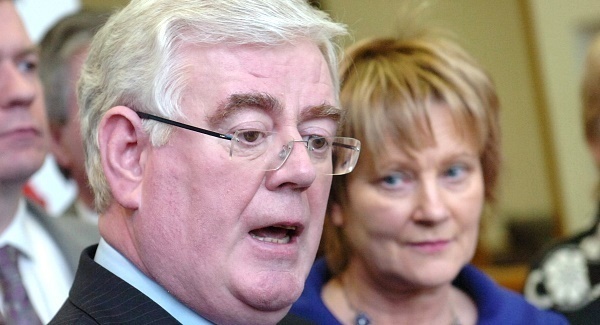
This week Phil Prendergast, a Labour MEP, had a huge rush of blood to the head (following on a poll rating of just 4%) and declared that party leader and Tánaiste Eamon Gilmore should be replaced as leader. There were further difficulties with the friction between Fine Gael and Labour on the water charges.
The signs of trouble for the party were all there from the beginning of this administration. It settled into a pattern pretty quickly where Fine Gael were largely forgiven for doling out the bitter medicine, while their junior coalition partners were trashed.
From the early days you’d hear the Fine Gael boys, in casual conversation, mention patronisingly how important it was to present such and such an initiative in a way that helped Labour, because they were yet again under pressure.
Eamon Gilmore went from shouting about how he’d tame that crowd in Frankfurt, to essentially telling his parliamentary party that this was a long game and the political glory would come eventually, hopefully in the form of an economic turnaround ahead of the next general election. This was the responsible thing to do, he stressed, and Labour would take their burden of that load.
Indeed it was an indication of their apparent sincerity, to see how the Government’s first budget was split over two days. On the first day Minister for Public Expenditure and Reform Brendan Howlin stood in the Dáil and essentially told people how they were going to suffer financially, and the next day Finance Minister Michael Noonan announced the tax changes.
Internally, the party dynamic has been poor with a rocky relationship between Eamon Gilmore and his deputy leader Joan Burton. She felt screwed over by not being given the finance portfolio by Gilmore when Cabinet places were being divvied out.
After that there’s been a pattern of the party getting little if any credit for things that it has brought about, and the constant sense that, no matter what, they are damned if they do and damned if they don’t.
From the outside it’s difficult to understand how they’ve held it together for this long. From what you can gather there is respect for Gilmore as leader and a belief that he is sincere, honest and hard working, but nobody reaches for the word inspirational or motivating. Many find there is a remoteness to him.
The Labour party leader has had a definite problem making a connection with the voters, especially given the impressive way he managed this when opposition leader. It’s old territory, but him remaining in the Department of Foreign Affairs for so long after it was clearly a poor choice, is inexplicable. Even at that he hasn’t set the European Union stage alight, although he did seem to finally relax a little, or at least look happy, during the recent visit of President Michael D Higgins to the UK.
He, of course, is now guaranteed his place in history as the man who was Tánaiste when the country saw off the troika and re-asserted it’s financial independence.
This is what makes it all the more interesting that despite his attributes, or lack of them, his party has stuck with his “responsible” approach — albeit they’ve had the losses of Patrick Nulty, Roisín Shortall, Tommy Broughan, Colm Keaveney and the now returned Willie Penrose. It’s also true to say that the rank and file party members have never truly owned the austerity approach, or for that matter, sold it to the public, and this makes them even more vulnerable to the criticism that comes their way.
There is an almost religious quality to this philosophy that they must do good, suffer for it and hope for eventual electoral salvation. That seems like a rather impossible call from voters who hold them to a very high standard and always like to have someone to blame, particularly the smaller party in whatever coalition exists at the time.
There was an inevitability to all of this, apart at all from the country being bust when the Government took over. We already know that Irish voters like a smaller party to ride shotgun on the major party and after that no matter what way they choose to operate – calling for political “heads” on a weekly basis, or keeping a stoic silence regardless of the calumnies heaped upon them, they’ll be made to suffer.
If they were to have called for the head, for example of Health Minister James Reilly, or more recently Justice Minister Alan Shatter, there is every likelihood they would be accused of de-stabilising the Government and in turn the country. Then when they do actually end up achieving something, like say, an independent policing authority, no one really notices and they don’t spell it out.
LABOUR might also highlight how Fine Gael entering into Government wanted to get our national finances in order with a rough ratio of three-parts cutbacks to one-part tax hikes. These figures are difficult enough to pin down, for instance is a water charge a tax or an expenditure reduction? But what has actually occurred, roughly, according to Labour is a situation closer to 2:1 or on other occasions 50/50, which have contributed to the social cohesion we managed to maintain even through the worst of austerity times.
But if Labour was to run around shouting these figures from the roof tops they risk falling into that same trap of humiliating Fine Gael, sounding self-obsessed, and ensuring that the something similar does not happen with next year’s budget.
The gone, but not forgotten, Progressive Democrats did buck the junior partner trend occasionally, managing to get the upper hand on Fianna Fáil but largely being the “smaller party” in an Irish coalition is a thankless job.
What is Labour to do? If it starts bigging up its own achievements within Government the party is criticised for failing to realise that when the country is experiencing a time of unprecedented economic crisis they shouldn’t be so self-obsessed.
A few months back, when there was some other tussle between the two parties and Labour was attempting to assert as a separate party within government a senior Fine Gael person said to me rather sniffily: “You’ll notice that Enda never uses the words Fine Gael.”
It’s probably too late in the day for this incarnation of the Labour Party to shift gears. The inter governmental dynamic has been well established. They have much to blame themselves for, but also much to feel aggrieved about. It’s a poor comfort to imagine that their reward will be in heaven.