Breeding between the lines
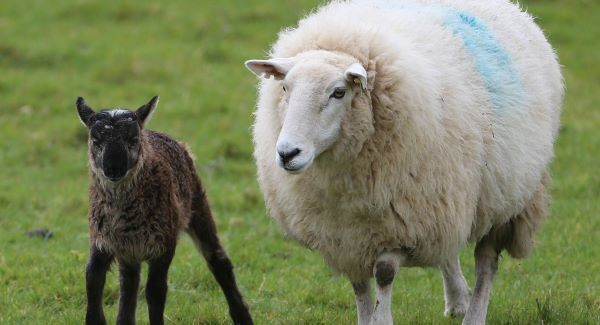
These animals’ high profiles in the Holy Book did not, however, prevent ‘unnatural practices’ from occurring on a Co Kildare farm, where a sheep-goat hybrid has been born.
Breeding across the species divide, although rare, is fairly widespread in the animal kingdom. The melting of the ice cap, for example, has brought polar bears and grizzlies into such proximity that they sometimes interbreed.
The blue whale, the largest animal ever to have lived, might seem an unlikely philanderer but hybrids with fin whales are occasionally recorded. The offspring are usually infertile but a blue-fin female, killed by whalers off Iceland, turned out to be pregnant. Swallows and house martins occasionally mate. Indeed, over 10% of bird species are known to hybridise. This is surely an underestimate; most birds, unlike swallows and martins, nest secretly and hybrid young seldom survive long enough to be noticed. Nor are we without sin; our DNA contains Neanderthal markers, although the extent to which our ancestors cavorted with their ancient cousins isn’t known.
Interbreeding is relatively common among animals in captivity. A ‘liger’ is the offspring of a lion and a tiger. The union of a male donkey and a female horse produces a mule, generally more sure-footed and hardier than its mother, more intelligent and less obstinate than the father. Cross-breeding, therefore, can be useful but its results are more likely to be negative. American ruddy ducks escaped from wildfowl collections in Britain and began nesting in the wild. Then they interbred with white-headed ducks in Spain, threatening the survival of that native species.
Only closely-related animals can interbreed. Our Irish sheep and goats seem very dissimilar but appearances can be deceptive. Being members of the goat-antelope family, the caprinae, they are closely related. Breeds of sheep and goats, elsewhere in the world, may resemble each other so closely that it’s difficult to tell them apart.
Goats have beards and hold their tails upwards, whereas sheep tails hang down. The goat’s eye has a horizontal pupil; all-round vision provides security. Beloved of artists depicting the Devil, the dark slit stands out against the pale iris. Seen from a distance, sheep eyes appear dark, giving the animal a gentler appearance; they too have horizontal pupils but they are less obvious against dark irises. Although a sheep has 54 chromosomes and a goat has 60, this is not an insurmountable obstacle to interbreeding; after all, the horse and donkey parents of mules have different numbers of chromosomes.
The sheep’s wild ancestor was the mouflon, still found in the mountainous regions of present-day Iraq, where it’s thought to have been domesticated some 10,000 years ago. The coat is red-brown and short-haired. Rams have impressively curved horns. The mouflon appears on the Cyprus Euro coin and the logo of Cyprus Airways is a stylised representation of the animal. Cypriot mouflons are not native; it’s thought that they were introduced to the island in Roman times.
Like the sheep, the goat is one of the most successful large animals of all time. According to the UN Food and Agriculture Organisation, there are over 924 million goats alive today, in over 300 distinct breeds. DNA analysis suggests that goats were domesticated from the wild ibex of Western Asia 8,000 to 9,000 years ago. The Alpine ibex of France and Italy is a close relative.
A sheep-goat hybrid born in Botswana in 2000 was found to have 57 chromosomes, intermediate between the numbers its parents had.
Although vigorously sexually active, he was infertile. However, a hybrid born in New Zealand in 1990 turned out to be pregnant following mating with a ram. There was also a case in France in 1988 where a female hybrid produced an offspring with 54 chromosomes. Paddy Murphy’s ‘geep’, therefore, should be of interest to Science; an ideal subject for some budding PhD student?