Where does your bird sleep?
All birds sleep but some birds, like swifts and a few sea-birds, do it in flight, showing their sleep is somewhat different to ours. The majority of Irish birds sleep at night, though owls are an obvious exception, and snipe, woodcock and some ducks and geese are less obvious ones. Very few birds sleep in their nests outside the breeding season, though again there are some exceptions. Wrens and long-tailed tits build very well-insulated domed nests and sometimes roost in them in cold weather. Several birds will often crowd into one nest for extra warmth.
Communal roosting normally occurs among species that spend the day in flocks, at least outside the breeding season. Examples would be starlings or geese. But again there are exceptions. Cormorants and pied wagtails are not flocking birds but they normally roost together in large numbers. The reason for communal roosting is argued about among ornithologists. The three main theories are that it provides extra warmth in winter, it provides protection from predators or when the birds wake in the morning, it improves the foraging success of the individual.
There are problems with all three theories. For example communal roosting is just as common in warm climates as cold ones, it occurs among some species, like birds of prey, that don’t have to worry about predation and among other species, like the cormorants and pied wagtails, that don’t forage together. So it’s still a bit of a mystery. Some magpies and gulls in cities have taken to roosting on street lights in winter. This appears to be for the extra warmth. If so it is an indication of a rapid evolution in roosting habits.
The majority of the birds in your garden don’t roost together and don’t roost on street lights. At dusk they simply fly into a hedge or bush and sleep perched on a twig. At this time of year it’s vital they pick a sheltered spot. The largest single cause of mortality among most resident species is hypothermia. They normally die in the night and wind and rain more dangerous for them than frost.
Feathers are a marvellously efficient insulating material but they lose most of this efficiency when they’re wet. In cold weather birds will seek out dense evergreen cover to get the maximum protection from wind and rain. Some of them even squeeze in through tiny cracks in my conservatory and I find them there in the morning, unable to locate the way out until I open the door for them.
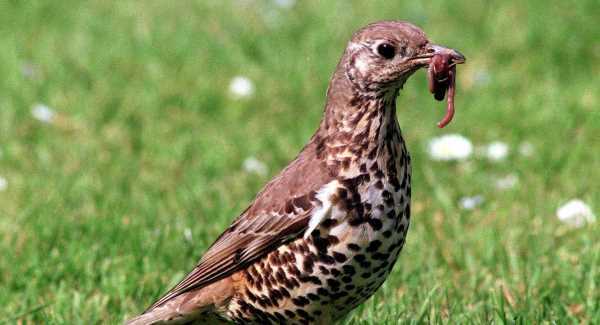
The first songbird of the year to perform is usually a mistle thrush. They sound like inexpert blackbirds and often sing in January and nest as early as February.
The name comes from mistletoe thrush because of their fondness for mistletoe berries, at least in England where the plant is fairly common. But their habit of starting to sing early in the year, whatever the weather, has given them another name —- the storm cock. They are also often called jay thrushes in Ireland.
A good berry tree, a rowan, hawthorn or holly, will be defended fiercely by a pair of mistle thrushes against birds of all species. It’s this ability to protect a food source that allows them to come into breeding condition so early in the year.
They seem to be quite a recent addition to our native birds, the first pair being recorded as breeding in 1807.
CONNECT WITH US TODAY



Be the first to know the latest news and updates